
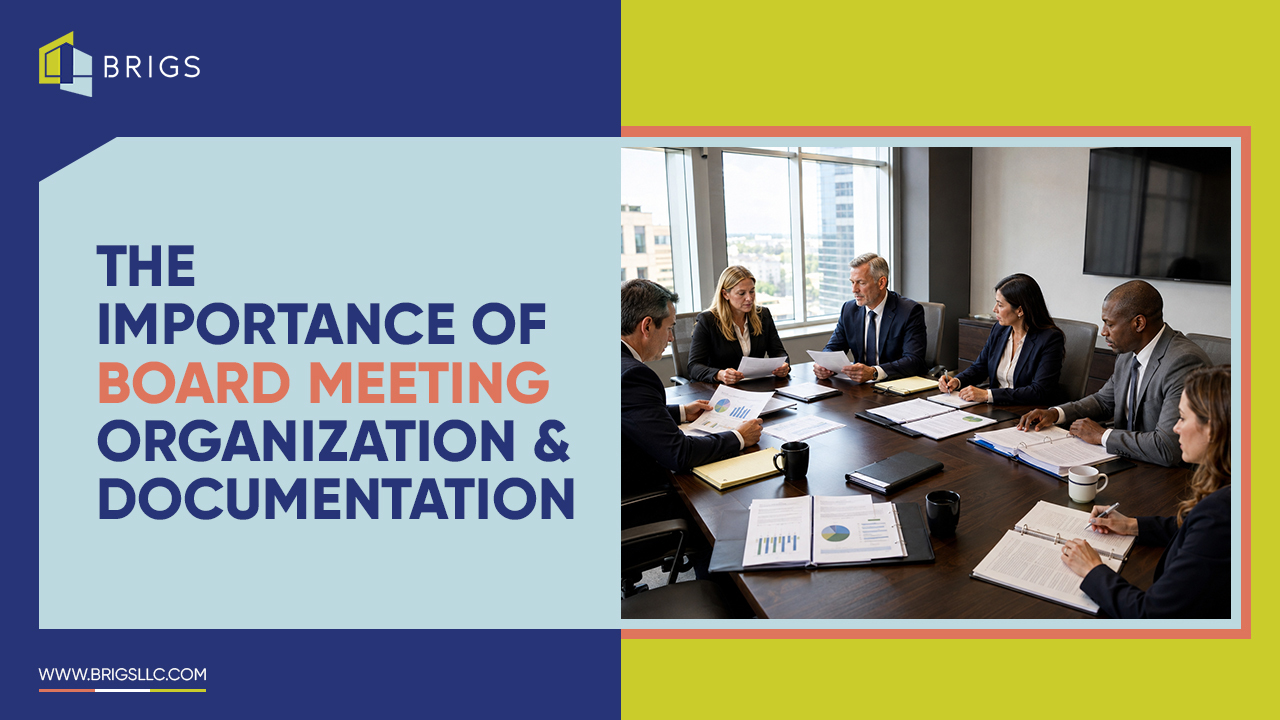
HOA and condominium board meetings are where many of a community’s most important decisions take place. Annual budgets are approved, major projects are discussed, vendor contracts are evaluated, maintenance priorities are established, policies are considered, and financial decisions are made that can affect homeowners for years.
Yet the effectiveness of those decisions depends on more than simply gathering board members around a table or joining a virtual meeting.
Strong community governance requires organized meetings, clear agendas, useful supporting information, accurate documentation, and reliable records of the decisions that were made. Without those fundamentals, boards can spend significant amounts of time revisiting previous discussions, searching for information, resolving misunderstandings, or trying to determine why a decision was made months or years earlier.
For communities with changing board membership, documentation becomes even more important. Directors and trustees may serve for only a few years, while the association itself may exist for decades. A capital project discussed by one board may not begin until another board is seated. A vendor agreement negotiated today may remain in effect years from now. A financial strategy established by current directors may influence reserve funding long after their terms have ended.
The association therefore needs an institutional memory that extends beyond the individuals currently serving on the board.
Meeting agendas, minutes, management reports, financial information, contracts, engineering reports, project documentation, and other association records collectively create that history. When these materials are organized and maintained consistently, future board members can understand not only what decisions were made but also the broader context surrounding the community’s operations.
Professional property management can play an important role in creating this structure. Management helps prepare boards for meetings, organize relevant information, document decisions, maintain association records, track follow-up items, and provide continuity as board membership changes.
The result is more than better paperwork.
Organized meetings and reliable documentation can help boards make better decisions, operate more efficiently, improve accountability, and provide stronger long-term governance for the communities they serve.
One of the most common misconceptions about board meetings is that the work begins when the meeting is called to order. In reality, productive meetings often depend heavily on what happens beforehand.
Board members are volunteers with limited time. When they arrive at a meeting without an agenda, supporting information, financial reports, proposals, or sufficient background on the decisions requiring their attention, much of the meeting may be spent simply trying to understand the issues. Discussions become longer, decisions are postponed, and directors may leave with additional questions that could have been addressed in advance.
Preparation changes that dynamic.
A well-organized meeting should give board members a clear understanding of what will be discussed and what decisions may be required. The agenda provides the structure, while supporting materials give directors the information necessary to participate meaningfully in the discussion.
If the board will be evaluating a landscaping contract, for example, directors may need the existing agreement, proposed pricing, information about current service concerns, and any competing proposals before the meeting. If a major capital project is being considered, relevant engineering recommendations, preliminary budgets, reserve information, and project updates may be necessary. If the annual budget is being reviewed, directors should have sufficient financial information to understand significant changes and assumptions.
Providing these materials ahead of time gives board members an opportunity to review the information at their own pace and arrive prepared with questions.
The agenda itself should also help the board prioritize its time. Routine operational updates are important, but they should not necessarily consume the majority of a meeting if significant financial or strategic decisions require attention. Organizing the agenda around the issues that require board discussion can help prevent meetings from becoming dominated by relatively minor matters while important long-term topics are repeatedly postponed.
This is particularly important for communities facing major capital projects, financial decisions, insurance changes, vendor transitions, or other complex issues. These topics often require thoughtful discussion and may involve recommendations from engineers, attorneys, accountants, insurance professionals, or other specialists. Allocating sufficient time allows the board to evaluate those recommendations rather than rushing through them at the end of an already lengthy meeting.
Management can help establish this structure by working with board leadership before each meeting to identify important agenda items, determine which materials should be distributed, and clarify where decisions may be necessary. This preparation also allows management to anticipate questions and gather information that could otherwise require additional follow-up after the meeting.
Organization should not mean eliminating discussion. Board members should ask questions, challenge assumptions, and consider different perspectives. The objective is to make those conversations more productive by ensuring everyone begins with the same information.
Good preparation also helps distinguish between issues that require board involvement and those that can be handled through normal property management operations. Not every maintenance request, resident question, or vendor interaction needs to become a board agenda item. When management handles routine operational matters within its established authority, meeting time can remain focused on governance, financial oversight, policy decisions, capital planning, and other issues where board involvement creates the greatest value.
Over time, this creates a more effective rhythm between the board and management company. Management handles day-to-day operations and prepares information requiring board attention. Directors review that information before meetings. Meetings focus on meaningful discussion and decisions. Management then carries out the board’s direction and reports back on progress.
When that process works effectively, board meetings become less about catching up on what happened during the previous month and more about providing informed leadership for what happens next.
The most productive board meetings, therefore, rarely begin when everyone sits down at the table.
They begin with the preparation that ensures everyone arrives ready to govern.
A well-structured agenda is one of the simplest tools an HOA or condominium board can use to improve the quality of its meetings. Without a clear agenda, discussions can easily move from one topic to another, routine issues can consume disproportionate amounts of time, and important decisions may be rushed or postponed because the meeting has already run too long. A thoughtful agenda creates a framework that helps everyone understand what needs to be accomplished.
The agenda should reflect the board’s priorities rather than simply serve as a list of everything happening within the community. Routine management activities can often be summarized through reports, while meeting time is reserved for matters requiring discussion, direction, or formal board action. This allows directors to spend more of their limited time evaluating financial decisions, capital projects, contracts, policies, community priorities, and other issues where board involvement is necessary.
Consistency can also make meetings easier to navigate. While the exact structure will vary by association and applicable requirements, boards often benefit from following a relatively consistent format from meeting to meeting. Financial reporting, management updates, unfinished business, new business, project discussions, and other recurring topics can appear in predictable sections. Board members become familiar with the process, and important responsibilities are less likely to be overlooked.
The agenda should also clearly distinguish between informational items and items requiring a decision. If management is simply updating the board on the progress of a previously approved paving project, directors may only need to review the information and ask questions. If the board needs to approve a change order or select a contractor, that should be apparent before the meeting. Knowing where action is expected allows directors to give those materials additional attention in advance.
Supporting documentation should align with the agenda. If a vendor contract is being considered, the relevant proposal and comparison information should be included with the meeting materials. If the board is discussing a budget variance, the appropriate financial reports should be readily available. If an engineer has provided a recommendation regarding a capital project, directors should have access to that information before being asked to make a significant decision.
This approach reduces one of the most common causes of inefficient meetings: trying to make decisions without sufficient information. A board may spend twenty minutes discussing a contractor proposal only to discover that no one knows whether a particular service is included. The decision is then postponed while management gathers additional information, and the same discussion begins again at the next meeting. Identifying information requirements in advance can help avoid this cycle.
Time management is equally important. Some topics naturally require more discussion than others, and agendas should reflect that reality. A multimillion-dollar capital project should not receive the same amount of attention as a minor operational update simply because both appear as individual agenda items. Board leadership and management can identify significant topics in advance and ensure sufficient time is available for meaningful discussion.
Boards should also be careful about allowing individual issues to dominate meetings indefinitely. A discussion may be important, but there comes a point when the board has gathered the available information and needs to either make a decision, request specific additional information, or establish a clear next step. Repeatedly revisiting the same issue without determining what is necessary to move forward can consume substantial board and management time.
Resident participation should also be incorporated into the meeting structure according to the association’s governing framework and applicable requirements. Providing an established process for homeowner comments can help residents understand when and how they can raise concerns while allowing the board to maintain an organized meeting. Without clear procedures, meetings can become difficult to manage when individual concerns interrupt unrelated agenda items or discussions repeatedly return to issues outside the board’s planned business.
The property manager can help board leadership maintain this structure throughout the meeting. Management can provide background information, clarify operational details, identify previous decisions, explain financial information, and document items requiring follow-up. When conversations begin moving deeply into operational details that do not require board action, the manager can also help identify what can be handled outside the meeting and reported back later.
Action items should be clearly identified before moving to the next topic. If management needs to obtain additional proposals, if an engineer needs to provide further information, or if the board has approved a particular course of action, everyone should leave the discussion with the same understanding of what happens next. This creates accountability and makes the following meeting more productive because progress can be measured against clearly established responsibilities.
An organized agenda ultimately does more than make meetings shorter. It improves the quality of board governance. Directors receive better information, important issues receive appropriate attention, decisions are easier to track, and management receives clearer direction.
For volunteer board members balancing community responsibilities with careers, families, and other commitments, that efficiency matters. A board should not need a three-hour meeting to accomplish what could have been addressed effectively in ninety minutes with better preparation and organization.
The objective is not simply to hold meetings.
It is to create a structure in which the board can use its time effectively, make informed decisions, and provide clear direction for the management of the community.
If the agenda provides the structure for an effective board meeting, meeting minutes provide the lasting record of what the board accomplished. Minutes are more than an administrative formality. They create continuity between meetings, document board actions, and become an important part of the association’s institutional history.
This is particularly important because board membership changes over time. A director serving today may have no firsthand knowledge of a decision made three or five years ago, yet that decision may still influence a vendor relationship, capital project, financial strategy, or community policy. Well-maintained meeting minutes allow future boards and management teams to understand what actions were taken without relying on the memories of individuals who may no longer be involved with the association.
Effective minutes should clearly document the decisions and actions that occurred during the meeting. They should provide enough information to establish an accurate record without attempting to reproduce every comment or conversation word for word. The objective is generally to capture what the board did, not create a transcript of everything every participant said.
Consider a board evaluating proposals for a major paving project. The discussion itself might involve questions about materials, scheduling, contractor experience, warranties, pricing, parking logistics, and engineering recommendations. The minutes do not necessarily need to document every question raised during that discussion. They should, however, accurately record the resulting board action, such as the approval of a particular contractor, the authorized project amount, and any significant conditions associated with the approval.
That distinction helps keep minutes useful. Excessively detailed minutes can become difficult to review and may create an unnecessarily complicated historical record. Minutes that are too vague, however, may leave future board members unable to determine what was actually decided. Associations benefit from a consistent approach that captures meaningful board actions clearly and accurately.
Motions and votes are particularly important to document appropriately. When the board formally approves a budget, contract, policy, capital expenditure, or other significant action, the association should have a reliable record of that decision. Depending on the association’s governing documents and applicable requirements, additional information regarding motions, voting, attendance, or other meeting procedures may also need to be maintained. Boards should work with management and qualified legal counsel when necessary to ensure their documentation practices are appropriate for their community.
Minutes can also help prevent disagreements about previous decisions. Several months after a meeting, board members may remember a conversation differently. One director may believe management was authorized to proceed with a project, while another remembers the board requesting additional proposals first. Clear documentation provides a reference point that allows everyone to return to the actual action taken rather than relying on individual recollections.
This becomes particularly valuable during long-term projects. A significant capital improvement may be discussed across numerous meetings and involve multiple approvals along the way. The board might first authorize an engineering study, later approve a project scope, then select a contractor, approve financing, and eventually consider change orders during construction. Meeting minutes create a chronological record of those decisions and help management maintain continuity throughout the project.
Minutes also support accountability. When the board approves a course of action, management needs clear direction regarding what should happen next. If a decision requires management to obtain additional information, negotiate with a vendor, coordinate with an engineer, or proceed with a project, documenting that action helps ensure the responsibility does not disappear between meetings.
Draft minutes should generally be prepared while the meeting is still relatively recent so that the record can be reviewed for accuracy through the association’s established process. Once finalized, minutes should be maintained as part of the association’s organized records and remain accessible according to the community’s governing requirements and applicable law.
Technology can make this process considerably easier. Digital document management allows meeting records to be organized chronologically and made searchable, reducing dependence on paper files or individual email accounts. Over time, a well-maintained digital archive can allow management and authorized board members to locate previous decisions far more efficiently.
Artificial intelligence may eventually make these records even more useful. With appropriate safeguards and oversight, AI-assisted systems could help management search years of meeting records, identify when a particular project was approved, locate previous discussions involving a vendor, or summarize the history of a recurring issue. The usefulness of these capabilities, however, depends on the quality and organization of the underlying records. Technology cannot reliably retrieve institutional knowledge that was never properly documented in the first place.
For this reason, meeting minutes should be viewed as part of the association’s long-term information infrastructure. Along with contracts, financial records, reserve studies, engineering reports, project documentation, and governing documents, they help preserve knowledge that should belong to the association rather than any individual board member or property manager.
Boards change. Property managers may change. Vendors change. Years pass.
The association’s decisions and obligations continue.
Accurate, organized meeting minutes provide the historical record that connects those different generations of community leadership and helps ensure future boards understand the decisions that shaped the property they have been elected to oversee.
One of the greatest challenges in HOA and condominium governance is that the people responsible for making decisions change while the needs of the property continue. Board members complete their terms, new directors are elected, committee members change, and management personnel may transition over time. Without organized documentation, valuable knowledge can leave the community whenever one of those individuals does.
This is why association recordkeeping should extend well beyond meeting minutes. Minutes document formal board actions, but effective community management depends on a much broader collection of information. Vendor contracts, engineering reports, reserve studies, insurance documents, warranties, maintenance histories, financial records, project files, inspection reports, governing documents, correspondence, proposals, and other materials collectively tell the story of how the property has been managed.
When these records are organized and accessible, they create institutional continuity. A newly elected board member should not need to rely exclusively on another director’s memory to understand why a particular contractor was selected or why a capital project was postponed. A new property manager should be able to review historical information about a recurring building problem rather than starting the investigation from the beginning. Future boards should be able to understand the decisions and investments made by previous boards even when none of the original participants remain involved.
Consider a recurring roof leak as an example. Over several years, the association may have received resident complaints, completed multiple repairs, consulted roofing contractors, commissioned an engineering assessment, and discussed replacement during board meetings. If those records are scattered across individual email accounts, paper files, contractor invoices, and the memories of former directors, determining the complete history of the problem can be difficult.
With organized documentation, management can instead review the repair history, previous recommendations, project costs, warranties, photographs, board approvals, and other relevant information together. That historical context can lead to a much more informed decision about what should happen next.
The same principle applies to vendor management. An association may work with a landscaping, snow removal, cleaning, security, or maintenance contractor for many years. During that time, pricing may change, service concerns may arise, scopes of work may be modified, and contracts may be renegotiated. Maintaining organized vendor files allows future boards and management teams to understand how the relationship evolved rather than evaluating each renewal without historical context.
Capital projects make documentation even more important. Major improvements can span several years from initial investigation through planning, funding, bidding, construction, and completion. The board that first identifies the need may not be the board that ultimately approves construction. Maintaining engineering reports, proposals, contracts, meeting decisions, change orders, project correspondence, warranties, and closeout documents provides continuity throughout the entire lifecycle of the project.
This information remains valuable after construction ends. If a problem develops several years later, management may need to determine which contractor performed the work, what materials were installed, whether warranty coverage remains available, and what maintenance requirements were established. A well-organized project file can make those answers readily available.
Digital document management has made maintaining this institutional history considerably easier. Instead of relying on physical filing cabinets or documents stored across individual computers, associations can maintain centralized records that are organized by category, project, vendor, or year. Appropriate access controls can ensure that authorized individuals can retrieve the information they need while sensitive records remain protected.
Consistency is critical. Simply storing documents digitally does not automatically make them useful. Files should follow logical naming conventions and organizational standards so that someone unfamiliar with the original document can locate it years later. Important association information should not exist exclusively within an individual board member’s personal email account or computer.
Property management companies can provide valuable structure around this process. Because management remains involved in the association’s daily operations, the management team is often responsible for maintaining many of the records that connect one board term to the next. An organized management process can help ensure that contracts, reports, meeting materials, financial information, and project documentation become part of the association’s institutional record rather than remaining scattered among individual participants.
Good documentation also makes board transitions significantly easier. When new directors join, they can be provided with foundational information about the association rather than attempting to learn everything through informal conversations. Governing documents, recent meeting minutes, current financial information, the reserve study, major contracts, active project information, and other key records can help a new board member understand the community much more quickly.
This reduces one of the risks associated with board turnover: repeatedly reconsidering issues that previous boards have already investigated extensively. New directors should absolutely evaluate existing strategies and ask questions, but they should also have access to the information necessary to understand why previous decisions were made. Historical context allows a new board to build upon previous work rather than unintentionally starting over.
Strong documentation therefore does more than preserve records. It preserves knowledge.
For communities that may exist for generations, that knowledge is an asset. Individual board members are temporary stewards of the association, but the decisions they make can influence the property for decades. Creating an organized institutional record ensures that future boards inherit not only the community itself, but also the information necessary to understand how it arrived where it is today.
Organized meetings and accurate records are valuable, but their greatest benefit comes when they help turn board decisions into action. An HOA or condominium board can have a productive discussion and reach the right decision, but that decision provides little value if responsibilities are unclear, deadlines are missed, or the issue quietly disappears before the next meeting.
This is where documentation becomes an important management tool rather than simply a historical record. At the conclusion of a discussion, there should be a clear understanding of what the board decided, what happens next, who is responsible for taking action, and whether the matter needs to return to the board for additional consideration.
Consider a board discussing deteriorating pavement. The board may decide that additional information is necessary before determining whether repairs or replacement should be included in the upcoming capital plan. Simply documenting that the board “discussed pavement conditions” provides limited value. Management should also understand the next step, whether that means obtaining an engineering assessment, requesting contractor proposals, reviewing the reserve study, or developing preliminary cost estimates for a future meeting.
The same principle applies to vendor performance. If the board expresses concerns about landscaping quality, the meeting should ideally conclude with a defined course of action. Management may be directed to meet with the contractor, document specific deficiencies, review the existing scope of work, or obtain alternative proposals. At the next meeting, the board can then evaluate what has occurred rather than beginning the same conversation again.
Tracking action items between meetings helps create this continuity. Management can maintain a list of outstanding responsibilities, upcoming decisions, requested information, and project milestones so that important matters continue progressing after the meeting ends. Some items may be resolved before the next board meeting, while others may require additional discussion or formal approval. Either way, there is a documented process for moving them forward.
This becomes particularly important when multiple long-term initiatives are underway simultaneously. A community may be planning a roof replacement, renegotiating an insurance policy, reviewing a landscaping contract, updating its reserve study, addressing a recurring drainage problem, and preparing the following year’s budget at the same time. Without a structured system for tracking these activities, deadlines and responsibilities can easily become difficult to manage.
Property managers provide valuable continuity in these circumstances because they remain involved between board meetings. While directors may meet monthly, quarterly, or according to another schedule, management continues coordinating vendors, gathering information, monitoring projects, communicating with professionals, and carrying out the board’s approved direction throughout the intervening period.
The management report can then serve as an important bridge between meetings. Rather than simply listing everything that occurred at the property, an effective report can help the board understand progress on significant initiatives, outstanding issues, completed action items, and matters requiring additional direction. This allows the next meeting to begin with a clearer understanding of where things stand.
Documentation is particularly important for decisions that unfold over several meetings. Major capital projects are a common example. One meeting may result in authorization to obtain an engineering assessment. Several months later, the board may approve a project scope. Another meeting may involve contractor selection, followed later by approvals for change orders or additional work. Maintaining an organized record of these decisions helps ensure that everyone understands how the project evolved and what authority has already been granted.
Financial decisions benefit from the same discipline. If the board approves an expenditure up to a certain amount, management should have a clear record of that authorization. If directors request that a proposed expense be incorporated into the next year’s budget rather than approved immediately, that direction should be tracked so it is not forgotten during the budgeting process.
Clear documentation can also reduce unnecessary repetition. Boards sometimes spend considerable time revisiting matters because no one remembers exactly where the previous discussion ended. Directors may recall different conclusions, management may be uncertain whether formal authorization was provided, or requested information may never have been obtained. A consistent record of decisions and follow-up responsibilities allows the board to continue from where it left off rather than repeatedly restarting the conversation.
Technology can make this process increasingly efficient. Digital task management, property management platforms, shared project records, and automated reminders can help management teams track responsibilities and deadlines across numerous communities. Over time, these systems can create greater visibility into which initiatives are progressing, which are awaiting board action, and which require additional attention.
However, technology is only as effective as the processes behind it. An automated task reminder cannot compensate for a meeting that ended without clear direction. The foundation remains disciplined communication: determine what was decided, establish what needs to happen next, assign responsibility, and document the outcome.
This also creates accountability on both sides of the board-management relationship. Management should be accountable for carrying out the board’s approved direction and reporting on progress. The board should be accountable for providing decisions when management requires authorization to move forward. When either side is waiting for the other, organized documentation makes that dependency easier to identify.
Over time, this creates a much more effective governance cycle. Board members receive information before meetings, discuss the issues requiring their attention, make informed decisions, and provide clear direction. Management documents those decisions, carries out the appropriate next steps, tracks progress, and reports back to the board.
The next meeting then becomes a continuation of an organized process rather than an isolated event.
That continuity is one of the greatest benefits of strong board meeting organization and documentation. Decisions do not simply exist within meeting minutes. They become part of a structured management process that helps ensure the community’s priorities continue moving forward.
HOA and condominium boards are responsible for making decisions on behalf of an entire community. Those decisions can affect association finances, property conditions, homeowner assessments, community policies, and long-term property values. Because of that responsibility, homeowners reasonably expect their association to operate in an organized and accountable manner. Strong documentation helps create the structure necessary to support that expectation.
Transparency does not mean that every operational detail or sensitive matter should be distributed throughout the community. Boards routinely encounter information involving delinquencies, legal matters, personnel issues, contracts, resident disputes, and other subjects that may require appropriate confidentiality. Instead, transparency means maintaining reliable records, following established governance procedures, and ensuring that association decisions can be understood and supported by appropriate documentation.
Meeting records are an important part of that process. When significant decisions are properly documented, the association can demonstrate that the board considered an issue and took formal action through the appropriate governance process. If homeowners later ask when a project was approved, when a policy changed, or how a particular expenditure was authorized, the association has a record to reference rather than relying on individual recollections.
Financial oversight benefits from the same discipline. Boards regularly approve budgets, contracts, capital expenditures, reserve allocations, and other financial decisions. Maintaining clear documentation connecting those decisions with the appropriate meeting records, proposals, contracts, invoices, and supporting materials creates a more complete financial history for the association. This can be particularly valuable when large expenditures span multiple fiscal years or board terms.
Documentation can also strengthen the relationship between the board and management company. Clear records establish what the board authorized and what management is responsible for carrying out. If a question later arises about whether a contractor was approved, whether management was directed to obtain additional proposals, or whether a project was authorized to proceed, both parties can refer to the documented decision.
This reduces ambiguity and creates accountability without requiring constant oversight. The board can evaluate whether its direction has been implemented, while management has a clear record of the authority provided by the board.
Vendor management provides another example. Over the course of a long-term relationship, a board may approve contract renewals, pricing adjustments, scope changes, or service modifications. Without organized documentation, future boards may have difficulty understanding how the current agreement developed. Maintaining contracts alongside relevant proposals and board approvals creates a clearer record of the relationship and gives directors better information when the agreement is reviewed again.
Accurate records can also be important when questions or disagreements arise within the community. A homeowner may remember a previous board handling an issue differently, or a current director may believe a particular policy was established years earlier. Instead of debating different recollections, the association can review its governing documents, meeting records, policies, and other historical materials to determine what actually occurred.
This does not mean documentation will eliminate disagreement. Boards will continue to make decisions that some homeowners support and others oppose. However, an organized record can demonstrate that decisions were made through an established process and provide context for future boards evaluating those actions.
Good documentation also encourages consistency. When previous decisions are easy to locate, boards can understand how similar situations have historically been addressed. That does not prevent a current board from changing direction when appropriate, but it allows directors to make that change knowingly rather than unintentionally creating different standards because earlier information was unavailable.
This can be especially important for policies and recurring community issues. If one resident request is handled one way and a similar request is handled differently several years later, the board should ideally understand why. Historical records provide context that can help directors evaluate whether circumstances have changed, whether a previous approach should continue, or whether a new policy is necessary.
Professional management can support this transparency by maintaining organized records and helping the board retrieve information when questions arise. Rather than important documents residing across multiple personal email accounts, filing cabinets, and individual computers, centralized recordkeeping creates a more reliable source of association information.
Technology continues to make that process easier. Searchable digital archives can allow authorized users to locate meeting minutes, contracts, reports, and project information significantly faster than traditional paper systems. As document-management and artificial intelligence tools evolve, associations may eventually be able to search years of records by topic and quickly reconstruct the history of a particular project, vendor, policy, or board decision.
However, the effectiveness of those technologies will always depend on the quality of the underlying documentation. A sophisticated search platform cannot locate an approval that was never recorded or explain a decision for which no supporting records were retained.
Strong governance therefore begins with disciplined processes rather than technology alone.
Meetings should be organized. Decisions should be clear. Significant actions should be appropriately documented. Supporting records should be retained. Responsibilities should be tracked. Sensitive information should be handled appropriately. When questions arise later, the association should have a reliable institutional record to consult.
For boards, these practices provide greater confidence that the association is operating consistently and responsibly. For management, they create clearer direction and accountability. For future directors, they preserve the knowledge necessary to understand previous decisions.
And for the community as a whole, they reinforce something fundamental to successful association governance: important decisions should not depend solely on what someone remembers happening.
They should be supported by an organized record of what actually happened.
One of the less obvious benefits of better meeting organization and documentation is that it can change how a board spends its time. When information is difficult to locate, previous decisions are unclear, and responsibilities are not consistently tracked, board meetings can become heavily focused on revisiting old conversations and resolving administrative questions.
That leaves less time for the issues that have the greatest long-term impact on the community.
Effective HOA and condominium boards need to address immediate concerns, but they also need sufficient time to think strategically about the future of the property. Reserve funding, capital improvements, preventive maintenance, insurance, vendor performance, financial planning, building conditions, regulatory requirements, and community priorities all require attention beyond routine monthly operations.
An organized meeting process creates more room for those conversations.
When financial reports are distributed in advance, board members can arrive prepared to discuss meaningful trends rather than spending meeting time reviewing every individual line item. When management reports clearly identify issues requiring board direction, directors can focus on decisions rather than sorting through routine operational activity. When previous decisions and action items are documented, the board can evaluate progress instead of repeatedly determining what was discussed at the prior meeting.
This allows the agenda to become more forward-looking.
For example, instead of spending significant meeting time reviewing individual maintenance requests that management is already addressing, the board might examine whether maintenance data reveals a broader trend. Several recurring plumbing problems could indicate that a building system deserves further evaluation. Increasing repair expenses might suggest that replacement should be considered in the capital plan. Repeated complaints about a vendor could prompt a broader contract or service review.
The board’s role is not necessarily to manage each individual occurrence. It is to recognize when those occurrences collectively indicate a larger issue requiring governance-level attention.
Financial discussions can evolve in the same way. Rather than focusing exclusively on whether the association is currently operating within budget, an organized board can spend time considering whether reserve contributions remain appropriate, which major expenses are approaching, how insurance costs are changing, and whether current financial decisions adequately prepare the community for future obligations.
This distinction between operational management and strategic governance is important. Property management professionals should handle many of the community’s routine day-to-day responsibilities within the authority established by the board and management agreement. The board provides oversight, establishes priorities, approves significant decisions, and considers the association’s longer-term direction.
When every operational matter becomes a board discussion, that distinction begins to disappear. Meetings become longer, management may need approval for relatively routine decisions, and board members can find themselves increasingly involved in responsibilities that professional management was hired to perform.
Strong organization helps prevent that outcome.
Before adding an item to the agenda, it can be useful to consider whether the matter actually requires board discussion. Does the board need to make a decision? Is management requesting direction? Does the issue have meaningful financial, policy, legal, or long-term implications? Is there a recurring trend that warrants broader consideration?
If not, the issue may be better handled through normal management operations and summarized for the board as appropriate.
This approach does not reduce board oversight. In many ways, it strengthens it. Directors can spend less time managing individual transactions and more time evaluating whether the association is achieving its broader objectives.
Board members can ask higher-level questions. Are our major building systems being maintained appropriately? Are reserves aligned with anticipated capital needs? Are our vendors delivering the expected value? Are there recurring resident concerns that suggest a larger problem? What risks should we be preparing for? Which major decisions will this board need to make during the next one, three, or five years?
Those are governance questions.
Management can help facilitate these conversations by providing information in a way that highlights trends, priorities, upcoming decisions, and potential risks. A strong management report should not simply tell the board what happened. It should help directors understand what deserves their attention and what may be coming next.
Over time, this can create a healthier relationship between the board and management company. The board establishes direction and provides oversight. Management executes that direction, handles day-to-day operations, tracks progress, and brings significant issues back to the board. Each meeting becomes part of an ongoing management cycle rather than an isolated discussion about whatever issues happened to arise that month.
For volunteer directors, this also makes board service more manageable. Board members have careers, families, and responsibilities outside the association. Their time should be used where their judgment and authority are genuinely necessary. Better organization helps ensure that hours spent preparing for and attending meetings contribute to meaningful community decisions.
Ultimately, the quality of a board meeting should not be measured by how many topics were discussed or how long the meeting lasted.
It should be measured by whether directors had the information they needed, whether important issues received appropriate attention, whether clear decisions were made, and whether the association left the meeting better prepared to move forward.
When organization and documentation create that environment, board meetings become more than a requirement of association governance. They become one of the board’s most valuable tools for protecting the community’s long-term interests.
Board meetings may represent only a few hours each month, but the decisions made during those meetings can influence an HOA or condominium community for years. Budgets are established, contracts are approved, capital projects move forward, policies are adopted, and priorities are set that affect the financial and physical health of the property.
That makes the organization surrounding those meetings far more important than it may initially appear.
An effective meeting process begins before directors ever sit down together. Clear agendas establish priorities. Supporting materials allow board members to prepare. Management reports provide operational context. Financial information helps directors understand the association’s position. When the meeting begins, the board can spend its time discussing the issues that actually require its judgment and authority.
What happens after the meeting is equally important.
Accurate minutes preserve the board’s decisions. Action-item tracking ensures responsibilities continue moving forward. Organized association records provide context for future decisions. Contracts, engineering reports, financial information, project documentation, and historical meeting records collectively create an institutional memory that remains available even as individual board members change.
Together, these practices create continuity.
That continuity is particularly important for HOA and condominium associations because many of their most significant responsibilities extend well beyond a single board term. Reserve funding strategies may span decades. Capital projects can require years of planning. Vendor relationships evolve over time. Building conditions develop gradually. Decisions made by one board frequently become the responsibility of another board to implement or continue.
Future directors should not have to reconstruct that history from scattered emails or individual memories.
They should inherit an organized record that helps them understand what happened, what was decided, what remains outstanding, and why certain strategies were established.
Professional property management plays an important role in maintaining that structure. An experienced management company can help prepare meeting materials, organize agendas, provide financial and operational reporting, document board direction, track follow-up items, maintain association records, and preserve continuity as board membership changes.
At BRIGS, we view board meeting support as part of a much larger responsibility to the communities we manage. Our role is not simply to attend meetings and provide updates. It is to help boards have the information, organization, and professional guidance necessary to make informed decisions and then help turn those decisions into action.
That means helping directors understand what requires their attention while managing routine operations appropriately between meetings. It means maintaining records that allow previous decisions to be understood years later. It means tracking projects and responsibilities so important initiatives continue progressing. And it means providing the institutional knowledge that allows new board members to become effective participants more quickly.
The strongest board-management relationships create a consistent cycle: management gathers and organizes information, the board reviews and evaluates it, directors make informed decisions, management carries out that direction, and progress is documented and reported back to the board.
Each meeting builds upon the one before it.
When that process is organized effectively, board meetings become more productive, responsibilities become clearer, decisions become easier to track, and valuable institutional knowledge remains with the association.
Ultimately, meeting organization and documentation are not simply administrative best practices.
They are fundamental components of responsible community governance.
For boards entrusted with protecting association finances, maintaining valuable property assets, and making decisions on behalf of their neighbors, creating a clear and reliable record of that governance is an investment in the community’s future.