
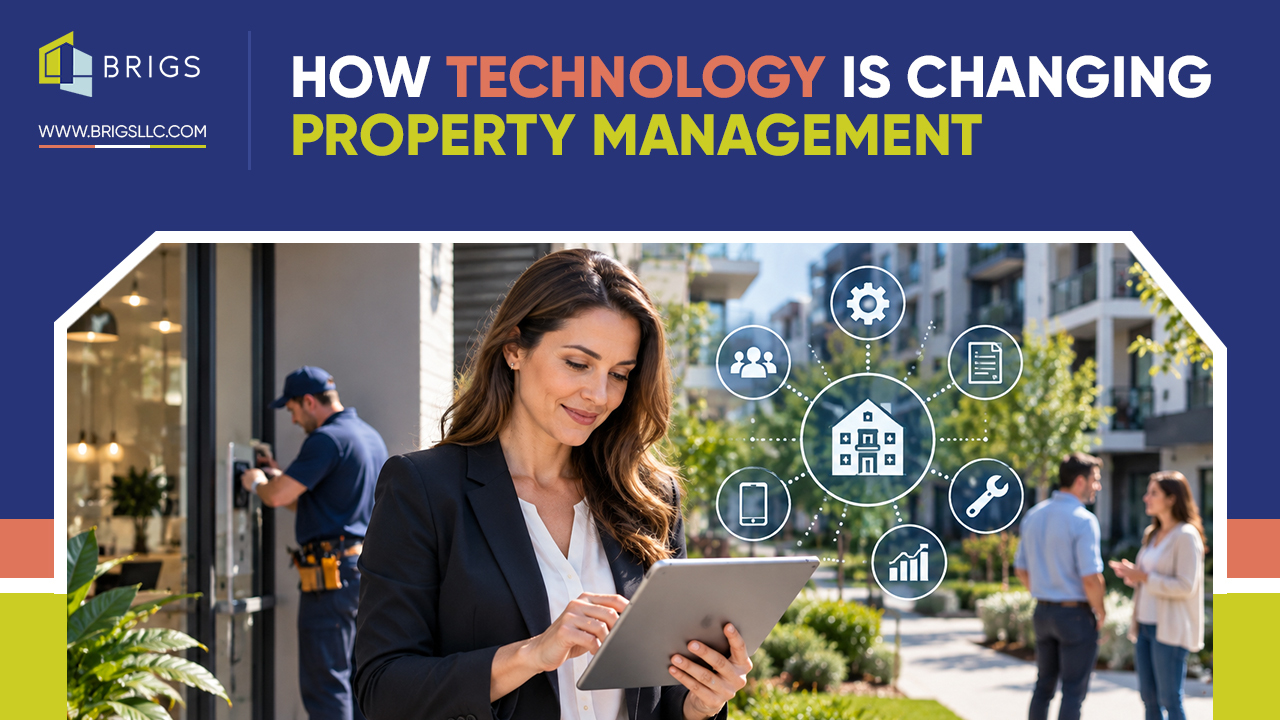
Property management has always depended on people. Property managers coordinate maintenance, communicate with residents, oversee vendors, manage budgets, support boards and property owners, respond to emergencies, and help communities plan for long-term needs. Those responsibilities have not disappeared as technology has become more sophisticated. What has changed is how much information property managers can access, how quickly they can act on it, and how efficiently they can coordinate the many moving pieces involved in operating a property.
Technology is increasingly becoming part of nearly every aspect of property management. Resident portals centralize maintenance requests and community communications. Digital payment systems make it easier to collect assessments and other payments. Property management platforms organize financial information, vendor records, work orders, and important documents. Building systems can provide alerts when equipment requires attention, while reporting tools can help management identify trends that might otherwise remain buried across spreadsheets, invoices, emails, and service records. Artificial intelligence is beginning to add another layer by helping property management teams analyze information, organize communications, automate repetitive administrative work, and identify issues that may require attention.
The result is not necessarily a property that requires less management. Instead, technology creates the opportunity for better-informed and more proactive management.
One of the most significant changes technology has introduced is greater visibility into property operations. Historically, much of the information required to manage a property could be fragmented across paper files, spreadsheets, individual emails, accounting systems, vendor records, and the institutional knowledge of individual employees. Finding the complete history of an issue might require reviewing several different sources or speaking with multiple people.
Modern property management technology can bring more of that information together. A maintenance request can be submitted digitally, assigned to the appropriate person, updated as work progresses, and documented when completed. Over time, those individual records can create a much clearer history of what is happening throughout the property.
That history can become extremely valuable. Management may discover that the same plumbing issue has occurred repeatedly in one section of a building. An HVAC system may be generating increasingly frequent service calls. A particular type of repair may be becoming more expensive each year. Certain resident complaints may repeatedly involve the same building component. Individually, each incident may appear to be routine. When the information is organized and reviewed collectively, a larger pattern can become visible.
This is one of the ways technology can help property managers move from reactive management toward a more proactive approach. Instead of simply responding when something breaks, management can use historical information to identify patterns, investigate recurring problems, and determine whether a larger maintenance or capital need may be developing.
Consider a property that experiences several incidents of water intrusion over a two-year period. If each incident is treated as an isolated repair and the information is never reviewed collectively, management may continue addressing individual leaks without recognizing the broader problem. When those incidents are documented in a centralized system, management may notice that several of them occurred in the same area of the building. That information can lead to a broader investigation of the roof, façade, windows, drainage, or other potential sources before the condition becomes more extensive.
Technology does not determine what is wrong with the building. It gives experienced professionals better information with which to investigate the problem and make decisions.
The same principle applies to financial management. Modern systems can give boards and property owners greater visibility into budgets, expenses, reserve balances, vendor costs, outstanding receivables, and other financial information. Reporting that once required significant manual preparation can increasingly be generated, organized, and reviewed more efficiently.
Better access to financial information can help management and ownership identify issues earlier. If maintenance expenses for a particular building system have increased substantially over several years, that trend can be compared against the potential cost of replacement. If utility expenses suddenly increase, management can investigate what changed. If a vendor proposes a significant price increase at renewal, historical costs and service records can be reviewed more easily.
The real advantage is not simply having more data. It is being able to use that data to ask better questions and make more informed decisions.
Technology is also changing the way residents interact with property management. Residents increasingly expect to submit maintenance requests online, receive digital updates, access important documents, make payments electronically, and receive timely information about what is happening in their communities. These tools can make communication significantly more efficient, particularly in larger multi-family communities where management may be coordinating information for hundreds of residents.
However, providing a digital platform does not automatically create a better resident experience. An online portal is only useful if requests submitted through it are actually managed effectively. An automated confirmation that a maintenance request was received provides limited value if the resident receives no meaningful update for the next several weeks.
Technology should support strong property management processes rather than attempt to compensate for weak ones. A good system can make it easier to acknowledge requests, assign responsibilities, document progress, and communicate updates. Management still needs to ensure that someone is responsible for moving the issue toward resolution.
Artificial intelligence is likely to accelerate this transformation. AI can potentially help property management teams process large amounts of information more efficiently, summarize documents, organize service histories, draft routine communications, identify patterns in property data, compare information, and make important records easier to retrieve.
For a property management company responsible for many communities, the potential efficiency can be significant. Managers spend substantial amounts of time processing emails, reviewing documents, preparing communications, locating information, coordinating administrative tasks, and determining which issues require attention. Technology that reduces some of that administrative burden can allow managers to spend more time addressing the situations where their experience and judgment provide greater value.
But artificial intelligence does not eliminate the need for professional judgment.
An AI system may identify that maintenance costs for an elevator have increased significantly, but someone still needs to determine what that means. Is the equipment approaching the end of its useful life? Were several unusual repairs required during a single year? Are replacement parts becoming difficult to obtain? Would modernization be financially preferable to continued repairs? Those decisions require context, professional input, financial analysis, and an understanding of the property.
The same applies to vendor management. Technology can help organize proposals, maintain insurance documents, track contracts, monitor work orders, and compare historical costs. It cannot fully determine which contractor will communicate effectively with residents, respond during an emergency, stand behind its work, or successfully manage a complicated project within an occupied community.
Property management remains a relationship-driven business.
Residents dealing with a significant issue may need to speak with someone who understands their circumstances. Boards making major financial decisions need professional guidance rather than simply another dashboard. Capital projects require coordination among ownership, engineers, contractors, consultants, residents, and management. Emergencies frequently involve conditions that do not fit neatly into a predetermined workflow.
This is why the most effective use of technology is not necessarily replacing human involvement. It is helping property management professionals focus their time where human involvement matters most.
Automation can handle repetitive administrative work. Centralized systems can make information easier to retrieve. Reporting tools can help identify trends. Digital communication can distribute information more efficiently. Building technology can provide earlier warnings when certain conditions occur. Artificial intelligence can help organize and analyze increasing amounts of information.
Property managers can then apply experience, judgment, communication, and problem-solving to that information.
This distinction will become increasingly important as technology becomes more capable. Property management companies will have access to more tools promising automation, artificial intelligence, predictive analytics, smart building capabilities, and operational efficiencies. Not every technology will provide meaningful value simply because it is new.
Property owners and management companies should evaluate technology based on the problems it actually solves.
Does it help management identify maintenance issues earlier? Does it improve financial visibility? Does it make communication clearer? Does it reduce repetitive administrative work? Does it create better documentation? Does it make important information easier to access? Does it help management respond faster or make better decisions?
If the answer is yes, the technology can become a meaningful part of the management process.
If it simply adds another system that managers, boards, vendors, and residents have to navigate without improving outcomes, it may create more complexity rather than less.
The future of property management will likely involve significantly more technology than the industry uses today. Buildings will generate more operational data. Artificial intelligence will become more capable. Administrative workflows will become increasingly automated. Owners and boards will expect greater transparency into property performance, and residents will expect faster access to information.
The fundamental purpose of property management, however, will remain largely unchanged.
Properties still need to be maintained. Budgets still need to be managed. Vendors still need to be held accountable. Residents still need clear communication. Boards and property owners still need guidance. Capital projects still need to be planned. Emergencies still require experienced people who can assess circumstances and make decisions.
Technology can make each of those responsibilities easier to manage.
The opportunity is not to remove the human element from property management. It is to give property management professionals better information, stronger tools, and more efficient processes so they can spend more of their time managing properties proactively.
For property owners, boards, and residents, that is ultimately the technology transformation that matters most: not simply a more digital property management experience, but a better-managed property.
One of the most important ways technology is changing property management is in how buildings are maintained.
Traditional property maintenance has often been reactive. A resident reports a leak, an elevator stops working, a heating system fails, or a property manager notices a problem during an inspection. Management then investigates the issue, contacts the appropriate vendor, and coordinates the repair.
That process will always be necessary for unexpected problems, but technology is making it increasingly possible to identify certain conditions before they become major failures.
Modern buildings can generate substantial amounts of operational information. HVAC systems, boilers, pumps, elevators, access-control systems, water meters, electrical equipment, leak detection devices, and other building components can increasingly be monitored through connected systems and sensors. Depending on the technology installed, management may receive information about equipment performance, temperature changes, water usage, operating conditions, faults, or other unusual activity.
This creates an opportunity to move from reactive maintenance toward preventive and predictive maintenance.
Preventive maintenance is based on maintaining equipment according to an established schedule. Filters are replaced, systems are inspected, equipment is serviced, and components are evaluated before failure occurs. Predictive maintenance takes that concept further by using actual performance information to help determine when attention may be required.
Consider a building’s HVAC equipment. Under a purely reactive model, management may not become aware of a problem until residents begin reporting uncomfortable temperatures or the system stops operating. With better monitoring and maintenance data, changes in system performance may become visible earlier. A qualified technician can then investigate whether maintenance or repair is appropriate before the problem develops into a complete failure.
Water management provides another important example.
Water damage can become extremely expensive in multi-family properties because a relatively small problem can affect multiple units, common areas, building materials, and electrical or mechanical systems. Depending on the building, leak detection technology and water monitoring systems can provide alerts when unusual conditions are detected.
Early notification can dramatically change the response.
A leak discovered shortly after it begins may require a relatively contained repair. The same leak left undetected for hours or days could result in substantially more damage, restoration work, resident disruption, and potentially an insurance claim.
Technology can also help management identify patterns that individual service calls may not reveal.
Suppose a property has multiple plumbing repairs over the course of a year. Each repair may appear routine when considered independently. When maintenance records are centralized and analyzed together, management may discover that many of the problems involve the same section of piping, the same type of component, or similar conditions.
That information can change the conversation from, “How do we repair this problem?” to, “Why does this problem keep happening?”
The second question is often more valuable.
Recurring maintenance data can help management determine when continued repairs should lead to a broader professional evaluation. That evaluation may ultimately reveal a capital need that should be incorporated into the property’s long-term planning.
This is particularly valuable for aging properties.
As buildings get older, property managers often have to determine whether individual components should continue to be repaired or whether replacement should be considered. Technology cannot make that decision independently, but better maintenance histories can give management, boards, property owners, engineers, and contractors more information with which to evaluate it.
Imagine an elevator that has required increasingly frequent service over several years. A digital maintenance history can help ownership understand how often the equipment has been unavailable, how much has been spent on repairs, which components have repeatedly failed, and whether service frequency is increasing.
That information can then be compared with the potential cost and benefits of modernization.
The same approach can be applied to HVAC equipment, roofing, plumbing, electrical systems, pavement, building envelopes, and many other property components.
Technology also improves the ability to schedule and document preventive maintenance.
In a large community, management may be responsible for dozens or hundreds of recurring tasks. Fire protection systems require inspections. HVAC equipment needs servicing. Elevators require maintenance. Roofs should be inspected. Drainage systems may need cleaning. Generators need testing. Landscaping follows seasonal schedules.
Managing these responsibilities through individual calendars, spreadsheets, emails, or personal reminders creates opportunities for important tasks to be overlooked.
Property management platforms can help centralize those schedules and create recurring workflows. Management can track when work was completed, who performed it, what was discovered, and when the next service should occur.
Over time, the property develops a more complete maintenance history.
That documentation has value beyond day-to-day operations.
When a board changes, a property is sold, a new manager takes responsibility, or a capital project is being evaluated, historical maintenance records can help explain what has occurred at the property. Instead of relying primarily on institutional memory, the management team can review documented information.
Vendor management can benefit from the same visibility.
If a contractor is responsible for recurring maintenance, management can track whether scheduled visits occurred, what work was performed, what recommendations were made, and whether identified problems were resolved. That creates greater accountability and makes vendor performance easier to evaluate.
Technology can also help prioritize maintenance requests.
Not every issue requires the same level of response. A system that helps categorize requests, document urgency, assign responsibility, and track unresolved items can give management a clearer view of what requires immediate attention and what can be scheduled through the normal maintenance process.
The technology itself, however, is only as effective as the processes surrounding it.
Installing sensors does not prevent equipment failure if alerts are ignored. Creating preventive maintenance schedules does not protect the property if tasks are continually postponed. Collecting maintenance data provides little value if no one reviews it for patterns.
The goal should not be to generate more information simply because technology makes it possible.
The goal is to turn information into action.
This is where experienced property management remains essential. Managers need to understand which alerts require immediate attention, when a recurring repair may indicate a larger issue, when a vendor recommendation deserves additional investigation, and when maintenance information should become part of a broader capital planning discussion.
Technology can make those signals easier to see.
Property managers still need to determine what they mean.
For property owners and boards, this shift toward more proactive maintenance can provide significant long-term benefits. Problems may be identified earlier. Maintenance histories can become more complete. Vendors can be held more accountable. Capital needs can become visible sooner. Emergency failures may sometimes be avoided or reduced in severity.
The result is a more informed approach to maintaining the property.
Instead of waiting for the building to communicate its needs through failures, complaints, and emergency repairs, technology increasingly gives property managers the ability to recognize warning signs earlier and respond more strategically.
That is one of the most meaningful ways technology is changing property management: helping management address tomorrow’s problems before they become today’s emergencies.
Technology is also changing one of the most visible parts of property management: how residents interact with their management company and receive information about their community.
In a multi-family property, communication can quickly become complicated. Management may be responsible for communicating with hundreds of residents about maintenance requests, scheduled repairs, inspections, construction projects, community policies, weather events, emergencies, meetings, payments, and other operational issues.
Historically, much of that communication depended on phone calls, paper notices, mailed correspondence, and individual emails. Those methods still have a place, but digital tools allow management teams to communicate more quickly and consistently while giving residents easier access to information.
Resident portals are one of the clearest examples.
A well-designed portal can give residents a central location to submit maintenance requests, review account information, access community documents, receive announcements, and complete other routine tasks. Instead of determining which person to email or calling the management office during business hours, residents can initiate many interactions directly through the system.
The convenience is significant, but the greater benefit may be visibility.
When a resident submits a maintenance request through a structured system, there is a record of when the request was received, what information was provided, who was assigned to address it, and what actions were subsequently taken. Depending on the platform and management process, residents may also receive updates as the request progresses.
That can reduce one of the most common sources of frustration in property management: uncertainty.
Residents do not necessarily expect every issue to be resolved immediately. They do, however, want to know that their concern has been received and is being addressed. Technology can make that acknowledgment almost immediate while helping the management team ensure that the request does not disappear into an individual employee’s inbox.
Digital communication becomes even more valuable when information needs to reach an entire community quickly.
If a building will experience a temporary water shutdown, management can distribute a notice electronically. If a storm affects operations, residents can receive an update. If a paving project changes parking arrangements, instructions can be communicated before work begins. If an elevator will be temporarily unavailable, affected residents can be notified.
The ability to communicate quickly is particularly important during emergencies.
A significant weather event, utility interruption, fire-related incident, water problem, or building-system failure can create rapidly changing circumstances. Management may need to provide an initial notification, follow with additional instructions, and continue updating residents as new information becomes available.
Digital communication tools can make that process considerably more efficient than relying entirely on individual phone calls or physical notices.
Technology can also help management communicate with the appropriate audience.
Not every message needs to reach every resident. A maintenance issue affecting one building does not necessarily require an announcement to an entire multi-building community. Work occurring on a particular floor may only affect a smaller group of residents.
More sophisticated communication systems can allow management to segment messages so residents receive information that is relevant to them without being overwhelmed by notices that do not apply.
This matters because more communication is not automatically better communication.
If residents receive too many messages, particularly messages that have little relevance to them, they may begin ignoring community communications altogether. Important notices can then become lost among routine announcements.
Technology should help management improve the relevance and timing of communication, not simply increase its volume.
Document access is another area where technology can improve the resident experience.
Residents and owners may periodically need governing documents, meeting information, forms, policies, financial information, insurance documentation, or other community records. Making appropriate documents available through a secure online system can reduce the need for residents to contact management every time they need routine information.
It can also help create consistency.
Instead of different versions of documents circulating through old emails or personal files, residents can be directed to the current information maintained through the community’s established system.
Digital payment capabilities have similarly changed expectations.
Owners and residents increasingly expect convenient ways to make payments, review balances, and access account information. Electronic payment options can make transactions easier for residents while reducing some of the administrative work associated with processing payments manually.
These tools can also improve recordkeeping and financial visibility when they are properly integrated with the property’s accounting processes.
Artificial intelligence may further change resident communication in the coming years.
AI can assist management teams with drafting routine notices, summarizing resident inquiries, organizing incoming requests, retrieving information from community documents, and identifying common questions. In larger communities, these capabilities could reduce the amount of time managers spend repeatedly answering basic administrative questions.
However, resident communication is another area where automation needs to be implemented carefully.
A resident reporting a serious water leak should not become trapped in an automated system that fails to recognize the urgency of the situation. Someone dealing with a complicated account issue may need a knowledgeable person who can review the circumstances. A resident affected by a significant building problem may reasonably expect communication that reflects the specifics of the situation rather than a generic automated response.
Efficiency should not come at the expense of accessibility.
Property management companies should therefore think about technology as a way to improve the communication process rather than remove people from it.
Routine interactions are excellent candidates for automation. Confirming that a request was received, providing standard documents, sending reminders, distributing scheduled notices, and answering straightforward procedural questions can often be handled more efficiently with technology.
Complex situations require a different approach.
Disputes, emergencies, sensitive resident concerns, significant maintenance problems, financial questions, and major community decisions often require context and professional judgment. Technology can provide the manager with better information, but the interaction itself may still benefit from direct human involvement.
There is also a responsibility to consider residents who may be less comfortable with technology.
A digital-first communication strategy can improve efficiency for much of a community, but management should be cautious about assuming that every resident uses technology in the same way. Depending on the property and resident population, alternative communication methods may still be necessary for certain important notices or interactions.
The objective should be accessibility, not technology for its own sake.
The best systems make it easier for residents to interact with management while making it easier for management to respond consistently.
When implemented effectively, technology can reduce administrative friction on both sides. Residents spend less time trying to determine whom to contact or where to find information. Management spends less time processing repetitive requests and searching through disconnected communications.
That creates an opportunity for property managers to spend more time on the interactions where their involvement provides the greatest value.
Ultimately, the resident experience is not improved simply because a community has an app, portal, or automated communication system.
It improves when residents receive useful information, requests are handled consistently, communication is timely, and management remains accessible when circumstances require personal attention.
Technology can make all of that easier.
But the standard should remain the same: better communication, greater transparency, and a more responsive management experience.
Technology will continue to change property management, but the most important transformation may not be any single platform, artificial intelligence system, smart building device, or automation tool.
It will be the way all of these technologies allow property managers to operate differently.
For decades, property management has required professionals to manage enormous amounts of information while simultaneously handling the day-to-day realities of operating buildings. A manager might spend the same day reviewing financial reports, responding to resident questions, coordinating contractors, investigating maintenance problems, preparing for a board meeting, reviewing proposals, following up on insurance matters, and responding to an unexpected emergency.
Much of that work has traditionally been fragmented across different systems, emails, spreadsheets, documents, phone calls, and individual relationships.
Technology provides an opportunity to connect more of that information and make it useful.
When maintenance records, financial data, vendor performance, resident requests, building information, and project histories are better organized, property managers can spend less time searching for information and more time determining what should be done with it.
That shift has the potential to make property management significantly more proactive.
A manager should not have to rely solely on memory to recognize that the same piece of equipment has required six repairs in the past year. Historical service information should make that pattern visible.
A board should not have to discover during an emergency that a major building component was approaching the end of its useful life. Maintenance data, inspections, reserve planning, and professional evaluations should help identify that need earlier.
A resident should not need to send multiple emails simply to determine whether a maintenance request was received. The management process should provide visibility into what is happening.
A property owner should not have to wait until the end of the year to recognize that a particular expense category is substantially exceeding expectations. Better reporting should help make meaningful financial changes visible sooner.
These are not futuristic concepts.
They represent a broader transition toward property management that is increasingly driven by organized information.
Artificial intelligence could accelerate that transition substantially.
As AI tools become integrated into property management systems, they may be able to help managers identify patterns across thousands of records that would be difficult for a person to review manually. Maintenance histories, vendor invoices, financial reports, resident requests, inspection documents, contracts, and other property information could potentially become easier to analyze and retrieve.
Imagine a manager preparing for a board meeting who wants to understand why plumbing expenses increased over the previous two years. Instead of manually reviewing dozens of invoices and work orders, technology could help organize the relevant information, identify recurring service locations, summarize costs, and highlight trends.
The manager would still need to determine what those findings mean.
Perhaps several unrelated emergencies occurred. Perhaps an aging section of piping is beginning to fail repeatedly. Perhaps vendor pricing increased. Perhaps a broader engineering evaluation should be considered.
AI can help surface the information.
Professional experience helps determine the appropriate response.
This relationship between technology and judgment will become increasingly important.
Property management involves decisions that affect people’s homes, significant financial resources, building safety, property values, and long-term community planning. Many of those decisions require context that cannot be reduced to a simple automated recommendation.
A system may identify the lowest contractor proposal. A property manager still needs to understand whether the proposals contain comparable scopes, whether the contractor has appropriate experience, whether important exclusions exist, and whether the company has demonstrated an ability to perform within an occupied community.
Technology may identify increasing repair costs. Management still needs to determine whether the correct response is additional maintenance, replacement, professional evaluation, or continued monitoring.
AI may generate a resident communication in seconds. Someone still needs to determine whether the message is accurate, appropriate, and sufficiently clear for the situation.
The strongest property management organizations will likely use technology to make professional judgment more effective rather than attempting to eliminate it.
This also means property management companies need to be selective about the technology they adopt.
The industry will continue to see new platforms promising automation, artificial intelligence, predictive maintenance, smart building management, improved resident experiences, and greater operational efficiency.
Adding more technology does not automatically produce better property management.
Every new platform introduces its own requirements. Employees need training. Data needs to be maintained. Systems may need to integrate with one another. Residents and board members may need to learn new processes. Poorly implemented technology can create additional administrative work instead of reducing it.
The appropriate question is therefore not, “What technology can we add?”
It is, “What problem are we trying to solve?”
If a platform improves maintenance tracking, that value should be measurable through better visibility and follow-through. If a resident communication system is implemented, it should make information easier to distribute and access. If AI is introduced into an administrative workflow, it should reduce repetitive work while maintaining appropriate oversight.
Technology should simplify the management process rather than create another layer of complexity.
Data security and privacy will also become increasingly important as property management becomes more digital.
Management companies may maintain financial information, resident records, vendor documentation, access information, contracts, communications, and other sensitive data. As more information moves into cloud platforms and interconnected systems, selecting appropriate technology providers and maintaining responsible data practices become important parts of operational risk management.
Convenience should not come at the expense of security.
Property owners and boards should therefore consider technology capabilities when evaluating a management company, but the conversation should extend beyond whether the company offers a resident portal or uses modern software.
The more important questions concern how technology is actually being used.
Does management have visibility into open maintenance issues? Can recurring problems be identified? Are important property documents organized and accessible? Can financial information be reviewed efficiently? Are vendor records maintained consistently? Are resident communications documented? Does the management team use the information it collects to improve decision-making?
A sophisticated platform provides limited value if the management processes behind it are weak.
The opposite is also true.
Experienced property managers can become substantially more effective when they have better tools.
At BRIGS, we believe technology should support the fundamentals of strong property management: proactive maintenance, financial oversight, vendor accountability, resident communication, capital planning, documentation, and informed decision-making.
The objective is not to automate the relationship between a property manager and the communities they serve.
It is to remove unnecessary administrative friction so managers can devote more attention to the work that requires experience, judgment, coordination, and leadership.
As property management technology continues to evolve, owners and boards will have access to more information than ever before. Buildings themselves will generate more data. Administrative processes will become increasingly automated. Artificial intelligence will make it easier to analyze large amounts of information and retrieve answers quickly.
The competitive advantage will not simply come from possessing that technology.
It will come from knowing what to do with the information it provides.
The future of property management is therefore not technology replacing people. It is technology giving experienced property management professionals better visibility, faster access to information, and more effective tools for managing increasingly complex properties.
When technology and professional expertise work together, the result can be more proactive maintenance, stronger financial oversight, better communication, more informed capital planning, and ultimately better-managed properties.
That is where technology has the greatest potential to change property management.