
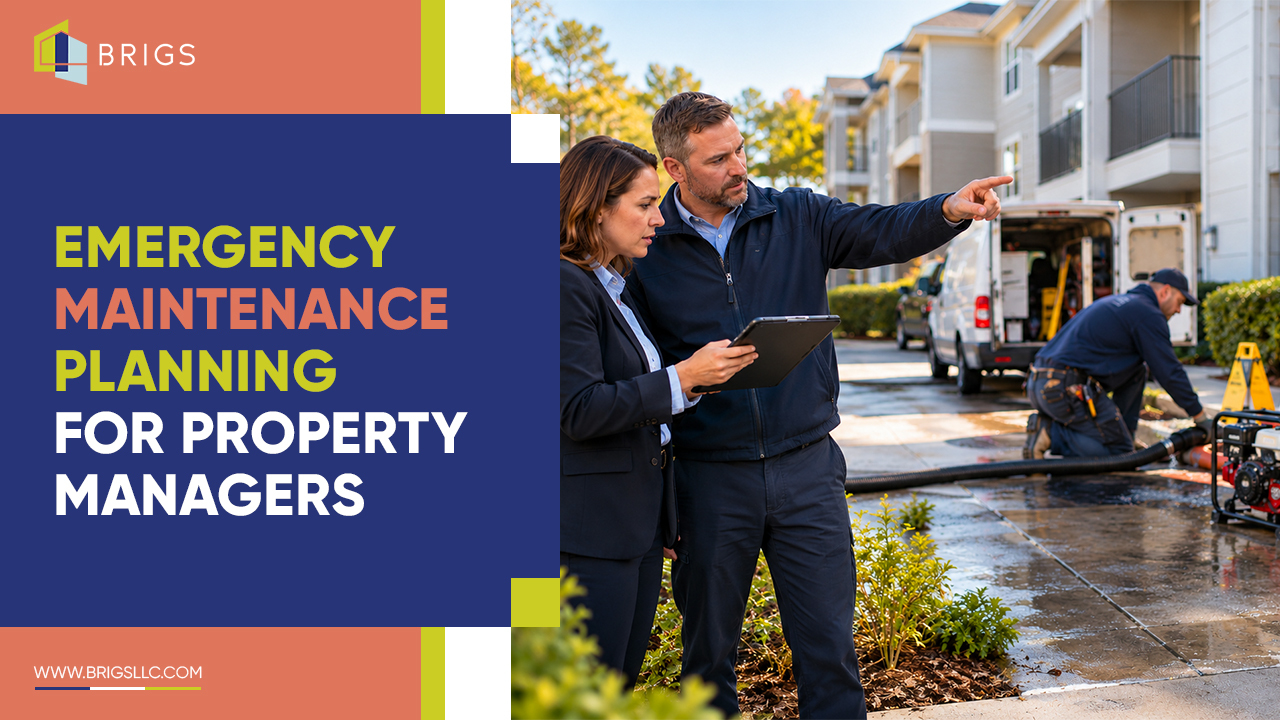
Property emergencies can occur without warning, creating immediate challenges for property managers, condominium associations, homeowners associations (HOAs), and residential communities. A burst pipe, major roof leak, electrical failure, severe storm, or malfunctioning building system can disrupt daily operations, threaten resident safety, and result in significant property damage if not addressed promptly.
While emergencies cannot always be prevented, their impact can often be reduced through effective planning, clear communication, and established response procedures. For property managers, emergency maintenance planning is not simply about responding to unexpected repairs. It involves identifying potential risks, coordinating qualified service providers, establishing communication protocols, and ensuring that critical decisions can be made quickly when an urgent situation arises.
The complexity of emergency maintenance varies considerably depending on the type of property being managed. A condominium building with shared plumbing systems, elevators, mechanical equipment, and multiple residential units presents different operational challenges than a homeowners association responsible for private roads, drainage systems, recreational facilities, and common-area infrastructure. However, both types of communities benefit from having a structured approach to emergency preparedness.
For condominium and HOA boards, emergency maintenance planning is particularly important because volunteer directors may not be available to coordinate every unexpected situation. Property managers must understand their responsibilities, the association’s governing documents, established spending authority, and the procedures for escalating situations that require board involvement.
Without adequate preparation, even a relatively contained maintenance issue can become a larger operational problem. Delayed contractor responses, unclear responsibilities, incomplete maintenance records, and inconsistent homeowner communication can increase the severity of an incident and complicate recovery efforts.
At BRIGS, we recognize that proactive property management involves preparing for unexpected challenges before they occur. Effective emergency maintenance planning helps communities protect their properties, coordinate necessary repairs, and maintain continuity when circumstances require immediate action.
Emergency maintenance planning provides a framework for managing unexpected property conditions that require prompt attention. Unlike routine maintenance, which can generally be scheduled and completed according to established timelines, emergency maintenance involves situations where delays may create immediate safety concerns, interrupt essential services, or result in substantial property damage.
A water leak affecting multiple condominium units, for example, may require immediate coordination among residents, plumbing contractors, restoration professionals, and building personnel. An electrical failure affecting common-area lighting or essential equipment may require specialized technical assistance and temporary safety measures. Severe weather may create multiple simultaneous problems involving roof damage, fallen trees, flooding, or blocked access routes.
In each situation, the property manager must determine the nature of the emergency, identify appropriate resources, communicate with affected parties, and coordinate an effective response.
These responsibilities become considerably more difficult when procedures have not been established in advance.
A property manager who must locate an available contractor during a major storm may face longer response times than one who has already established relationships with qualified emergency service providers. Similarly, an association that has not clarified emergency spending authority may experience unnecessary delays while determining who can authorize essential work.
Emergency planning helps address these challenges by establishing a practical framework for decision-making before an incident occurs.
One of the first steps in developing an effective emergency maintenance plan is establishing clear criteria for evaluating maintenance requests.
Not every unexpected problem constitutes an emergency, and treating every service request as equally urgent can strain resources, increase expenses, and make it more difficult to respond to genuinely critical situations.
Routine maintenance generally involves work that can be scheduled without creating an immediate safety concern or significant risk of property damage. Examples may include minor cosmetic repairs, nonessential fixture replacements, or ordinary landscaping concerns.
Urgent maintenance involves problems that require prompt attention but may not present an immediate threat to safety or essential property operations. A malfunctioning common-area door, a localized plumbing issue, or an equipment problem affecting resident convenience may fall into this category depending on the circumstances.
Emergency maintenance typically involves conditions that threaten life safety, create an immediate risk of substantial damage, or interrupt essential services. Examples may include active flooding, suspected gas leaks, significant electrical hazards, structural instability, or loss of critical building systems.
However, the classification of an incident depends on its actual circumstances. A plumbing issue that appears minor in one setting may become an emergency if water is entering electrical equipment or affecting multiple occupied units.
Property managers should therefore establish procedures that consider the severity of the condition, the potential consequences of delayed action, and the number of residents or building systems affected.
When there is an immediate threat to life or safety, emergency services should be contacted rather than relying solely on routine maintenance procedures.
Clearly defined maintenance classifications help property managers allocate resources appropriately and communicate realistic expectations to homeowners and board members.
One of the most significant reasons to establish an emergency maintenance plan is the potential financial impact of delayed repairs.
Property damage can escalate quickly when the underlying cause of an emergency is not addressed.
For example, an active plumbing leak may initially affect a single area but eventually damage flooring, walls, ceilings, insulation, and neighboring units. Water intrusion can also create additional restoration needs if affected materials are not evaluated and dried appropriately.
Similarly, a damaged roof following severe weather may allow continued moisture penetration, resulting in more extensive building envelope repairs.
These situations demonstrate why early intervention is often critical to controlling the scope of property damage.
However, emergency repairs can also involve substantial costs, particularly when specialized contractors, after-hours service, temporary equipment, or restoration services are required.
For condominium associations and HOAs, these expenses may affect operating budgets, reserve funds, insurance deductibles, or other financial resources.
The association’s financial responsibility will depend on the nature of the incident, its governing documents, applicable law, and insurance coverage.
Property managers should therefore understand the association’s emergency expenditure procedures and maintain appropriate records of work performed.
Documentation is especially important when repairs involve insurance claims, multiple affected homeowners, or questions about maintenance responsibility.
A well-organized emergency response process can help limit avoidable costs while supporting accurate financial oversight.
Although property damage and repair expenses are important considerations, resident safety must remain the primary concern during a maintenance emergency.
Residential communities depend on numerous building systems and common-area facilities that support safe daily operations. These may include electrical infrastructure, heating equipment, plumbing systems, fire protection equipment, elevators, access controls, and emergency lighting.
When these systems fail, the consequences can extend beyond inconvenience.
For example, an elevator outage may create significant accessibility challenges for residents who cannot easily use stairs. A heating failure during freezing temperatures may affect habitability and increase the risk of frozen pipes. A malfunction involving fire protection equipment may require immediate coordination with qualified contractors and the appropriate authorities.
Property managers must understand which systems are essential to the community and how failures should be escalated.
This requires familiarity with the property’s infrastructure, access procedures, service contracts, and emergency contacts.
It also requires recognizing when a situation exceeds the property manager’s technical expertise.
Property managers should not attempt to diagnose or repair hazardous electrical conditions, structural concerns, gas leaks, or other specialized problems unless they are appropriately qualified and authorized.
Instead, their responsibility is to coordinate an appropriate response, communicate with affected parties, and ensure that qualified professionals and emergency responders are involved when necessary.
A strong emergency maintenance plan supports these responsibilities by identifying the resources and procedures necessary to respond effectively.
Condominium properties often present particularly complex emergency maintenance scenarios because building systems and structural components are shared among multiple residences.
A plumbing failure in one unit may affect neighboring units or common areas. A roof leak may create damage across several floors. A malfunctioning mechanical system may interrupt essential services throughout an entire building.
These interconnected conditions can make it difficult to isolate the source of a problem and determine the appropriate response.
Emergency maintenance planning for condominium communities should account for shared infrastructure, building access requirements, and the potential for incidents to affect multiple homeowners simultaneously.
For example, when a major water leak occurs, management may need to coordinate access to several units to identify the source and prevent further damage. Residents may be unavailable, and the governing documents may establish specific procedures regarding emergency access.
The property manager must understand these procedures and work within the association’s legal authority.
Insurance considerations can also become more complicated when damage affects both common elements and individual units.
The association’s master insurance policy, individual homeowner policies, governing documents, and applicable legal requirements may all influence how responsibilities are allocated.
Property managers should avoid making assumptions about coverage or liability before the relevant information has been reviewed.
Instead, they should focus on coordinating appropriate emergency action, documenting the incident, and involving the association’s insurance professionals or legal counsel when necessary.
For condominium boards, these complexities reinforce the importance of working with a management provider that understands shared building operations and the need for coordinated emergency response.
Homeowners associations may face a different set of emergency maintenance challenges, particularly when they are responsible for extensive outdoor infrastructure or shared amenities.
Depending on the community’s governing documents, association responsibilities may include private roads, stormwater drainage systems, retaining walls, landscaping, recreational facilities, common-area lighting, and other shared property.
Severe weather can create significant operational concerns for these communities.
Heavy rainfall may overwhelm drainage infrastructure, causing flooding or erosion. Strong winds may damage trees or common-area structures. Winter storms may create hazardous access conditions, particularly when snow removal and ice management are association responsibilities.
These emergencies often affect multiple areas of the community and may require coordination among several contractors.
For example, a major storm may result in fallen trees blocking a private road, damaged drainage structures, and electrical service interruptions affecting common facilities.
The property manager must evaluate which conditions present the greatest immediate risk and coordinate resources accordingly.
HOA emergency plans should therefore consider the community’s physical layout, infrastructure responsibilities, geographic conditions, and potential access limitations.
The plan should also distinguish between infrastructure maintained by the association and systems controlled by municipalities, utilities, or individual homeowners.
Clear responsibility boundaries help prevent confusion and allow management to contact the appropriate parties when an emergency occurs.
Emergency maintenance planning and preventive maintenance are closely connected.
Although preventive maintenance cannot eliminate every unexpected failure, regular inspections and scheduled servicing can help identify developing problems before they become more serious.
For example, routine roof inspections may reveal deteriorating flashing or drainage concerns that could contribute to water intrusion during severe weather. Regular mechanical equipment servicing may identify worn components or performance issues before a complete system failure occurs.
Similarly, inspections of drainage systems, exterior structures, and common-area infrastructure may reveal conditions requiring corrective action.
These activities provide property managers with information that can support maintenance planning and reduce avoidable emergencies.
Preventive maintenance records are also valuable when an emergency does occur.
A contractor responding to a mechanical failure may benefit from access to the equipment’s service history, previous repair recommendations, and manufacturer information.
Likewise, documentation of previous water intrusion incidents may help professionals identify recurring problems or potential sources of damage.
For boards, preventive maintenance should be viewed as part of the association’s broader risk management and financial planning responsibilities.
Regular maintenance requires ongoing investment, but deferred maintenance can contribute to more extensive repairs and unexpected operational disruptions.
The appropriate inspection and maintenance schedule will depend on the property’s systems, age, manufacturer recommendations, professional guidance, and applicable requirements.
By integrating preventive maintenance with emergency preparedness, associations can develop a more comprehensive approach to protecting their communities.
The most effective emergency maintenance strategies combine preparation, timely decision-making, and coordinated action. Property managers must understand the risks associated with the communities they oversee and establish procedures that allow those risks to be addressed appropriately.
This requires more than maintaining a list of emergency contractors. It involves understanding the property’s infrastructure, identifying critical systems, defining responsibilities, and establishing reliable communication procedures.
Emergency preparedness guidance from FEMA and Ready.gov similarly emphasizes assessing potential hazards, identifying available resources, developing response procedures, and practicing those procedures before an incident occurs.
For condominium and HOA boards, these practices can help reduce uncertainty during unexpected events and support more informed decisions about property maintenance, resident safety, and financial responsibilities.
An effective emergency maintenance plan should also be reviewed periodically as building conditions, vendor relationships, personnel, and operational requirements change.
The next step is translating these principles into a documented emergency maintenance response plan that clearly identifies who is responsible for responding, which contractors should be contacted, how residents will be notified, and how emergency repairs will be authorized and documented.
An effective emergency maintenance response plan provides property managers, condominium associations, and homeowners associations with a structured process for responding to unexpected property emergencies. While every community faces different operational risks, the fundamental objective remains the same: establish clear procedures that allow urgent situations to be identified, evaluated, and addressed before they escalate into more serious problems.
Without a documented emergency maintenance plan, property managers may find themselves making critical decisions under pressure without the information or resources necessary to respond efficiently. Contractor availability, emergency access procedures, homeowner communication, financial authorization, and insurance considerations can all become obstacles when responsibilities have not been established in advance.
For condominium and HOA boards, these challenges can be particularly significant because directors are often volunteers who may not be immediately available when an emergency occurs. Property managers must therefore understand which actions they are authorized to take, when board approval is required, and how urgent decisions should be escalated.
A comprehensive emergency maintenance plan should reflect the property’s infrastructure, governing documents, operational responsibilities, and available resources. It should also establish procedures for coordinating qualified contractors, protecting residents, documenting incidents, and restoring normal operations.
The first step in developing an emergency maintenance plan is understanding which types of emergencies are most likely to affect the property and what consequences those incidents could create.
Not every residential community faces the same risks. A multi-story condominium building with elevators, centralized mechanical equipment, and shared plumbing systems requires a different emergency response strategy than an HOA responsible for private roads, drainage infrastructure, and outdoor amenities.
Property managers should begin by reviewing the community’s physical characteristics, maintenance history, infrastructure condition, and known operational vulnerabilities.
For example, an older condominium building may have experienced recurring plumbing failures, roof leaks, or electrical equipment problems. These historical issues can help identify systems that warrant closer monitoring and more detailed emergency response procedures.
A community located in an area susceptible to heavy rainfall may need to prioritize drainage maintenance, water intrusion prevention, and flood response coordination. Properties exposed to severe winter weather may require additional planning for snow removal, frozen pipes, heating failures, and emergency access.
The assessment should also consider the potential consequences of a failure rather than focusing exclusively on how frequently a particular problem occurs.
A malfunction involving a critical building system may be relatively uncommon but could create substantial safety concerns or affect numerous residents simultaneously.
For example, the failure of a central heating system during freezing temperatures may require an immediate response even if the equipment has historically operated reliably.
Property managers should work with the board and qualified professionals to identify critical infrastructure, evaluate known risks, and determine which emergencies require specialized response procedures.
This assessment provides the foundation for developing a plan that addresses the community’s actual needs rather than relying on generic emergency maintenance guidelines.
A property management emergency plan should clearly identify the systems and infrastructure that are essential to maintaining safe and functional community operations.
For condominium buildings, these may include domestic water distribution, electrical service, heating and cooling equipment, fire protection systems, elevators, emergency lighting, building access controls, and drainage infrastructure.
For HOA communities, critical infrastructure may include private roads, stormwater systems, retaining walls, common-area utilities, recreational facilities, and other association-maintained property.
Property managers should understand where important equipment is located, which contractors service it, and what procedures apply when a malfunction occurs.
For example, a major plumbing emergency may require qualified personnel to locate and operate an appropriate water shutoff valve. An electrical failure may require coordination with a licensed electrician, utility provider, or emergency responder. A malfunctioning fire protection system may require immediate involvement from a qualified service contractor and the appropriate authorities.
The emergency plan should identify these resources and explain how they can be accessed.
However, property managers should distinguish between knowing where critical infrastructure is located and being authorized or qualified to operate it.
Certain systems require specialized training, professional licensing, or specific safety procedures. Emergency planning should establish which personnel are authorized to take action and when outside professionals must be contacted.
For larger buildings, equipment documentation, system diagrams, service histories, and access instructions may be maintained in a secure location that is accessible to authorized personnel.
Maintaining accurate infrastructure information can reduce response delays and help contractors identify the appropriate equipment when time is critical.
One of the most important components of emergency maintenance planning is establishing reliable relationships with qualified service providers before an emergency occurs.
When a major plumbing failure, electrical problem, or storm-related incident takes place, property managers may have limited time to locate available contractors.
This challenge becomes more significant during widespread weather events, when numerous properties may require emergency assistance simultaneously.
A well-organized emergency maintenance plan should identify primary and alternate service providers for the types of emergencies most relevant to the property.
These may include plumbing contractors, electricians, HVAC specialists, roofing contractors, water damage restoration companies, tree removal services, elevator maintenance providers, and other specialized professionals.
The plan should include current contact information, after-hours availability, relevant service agreements, and procedures for requesting emergency assistance.
Property managers should also understand whether existing vendor contracts include emergency response provisions.
For example, an elevator maintenance agreement may specify procedures for reporting equipment failures and requesting after-hours service. A plumbing contractor may offer emergency response services but charge different rates outside normal business hours.
Understanding these arrangements in advance can help the association make informed decisions and avoid unnecessary delays.
However, simply maintaining a contractor’s telephone number does not guarantee immediate availability.
Property managers should periodically verify contact information, review service expectations, and identify alternative providers when appropriate.
For properties with specialized building systems, emergency planning should also account for the availability of contractors qualified to service the specific equipment installed.
A reliable contractor network is not only about responding quickly. It is about ensuring that the professionals responding to an emergency have the appropriate expertise, equipment, and authorization to address the problem safely.
Emergency response becomes significantly more difficult when property managers, board members, residents, and contractors are uncertain about their responsibilities.
A documented emergency maintenance plan should establish who receives emergency notifications, who evaluates the situation, who contacts service providers, and who is responsible for communicating with affected parties.
For example, a homeowner reporting an active water leak may contact an emergency maintenance number. The designated management representative must then determine whether immediate contractor assistance is required and whether the situation should be escalated to emergency services.
The board may need to be notified if the incident involves substantial property damage, significant financial exposure, or decisions outside the management company’s established authority.
Contractors are responsible for evaluating and performing work within their professional qualifications, while the property manager coordinates the operational response and maintains appropriate documentation.
These responsibilities should be established before an incident occurs.
The association’s management agreement and governing documents may define the authority delegated to the property manager, including circumstances under which emergency expenditures can be authorized.
Where the documents are unclear, the board should work with appropriate legal professionals to establish procedures consistent with applicable requirements.
Clear responsibility assignments help prevent situations in which multiple individuals assume someone else is coordinating the response.
They also reduce the likelihood of conflicting instructions being provided to contractors or residents.
For larger properties, the plan may identify additional responsibilities involving on-site personnel, building engineers, security staff, or other authorized representatives.
The objective is to establish a coordinated response structure that supports timely action while preserving appropriate board oversight.
Unexpected maintenance emergencies often require immediate expenditures, sometimes before the board can convene or review multiple contractor proposals.
This creates an important financial management consideration for condominium and HOA associations.
A property manager may need to authorize emergency plumbing repairs, water extraction, temporary roof protection, or other work necessary to prevent further damage.
However, the authority to approve these expenditures should be established in advance.
The association’s governing documents, management agreement, adopted policies, and applicable legal requirements may determine which expenditures management can authorize independently and which require board approval.
For example, a management agreement may permit certain emergency expenditures when immediate action is necessary to protect property or address a safety concern.
Other situations may require approval from designated board officers or directors.
The emergency maintenance plan should clarify these procedures and establish a reliable process for contacting authorized decision-makers.
Associations may also benefit from identifying alternative approval contacts when the primary board representative is unavailable.
Financial controls remain important even during urgent situations.
Property managers should document the nature of the emergency, the reason immediate work was necessary, the contractor engaged, the authorization obtained, and the associated expenses.
When feasible, estimates and service terms should be reviewed before work begins. However, the urgency of an incident may limit the time available for competitive bidding or extensive proposal evaluation.
In those situations, documentation becomes especially important.
The association should also understand that emergency expenses may not be fully covered by insurance and that deductibles, exclusions, and responsibility allocations can affect the ultimate financial impact.
Clear emergency spending procedures help balance the need for rapid action with the association’s obligation to maintain responsible financial oversight.
Communication is one of the most important aspects of emergency maintenance response.
When an incident affects multiple residents or essential building services, homeowners need timely and accurate information about the situation, the actions being taken, and any precautions they should follow.
Without a clear communication process, uncertainty can lead to repeated inquiries, misinformation, and frustration.
A property management emergency plan should identify how residents will be notified, who is responsible for issuing updates, and which communication channels will be used.
Depending on the community, these channels may include email notifications, resident portals, telephone calls, text alerts, posted notices, or direct communication with affected homeowners.
The appropriate method will depend on the urgency of the incident and the number of residents involved.
For example, a planned interruption to a building’s water supply may allow management to provide advance notice through established communication channels.
An unexpected major water leak, however, may require immediate notification to affected units while contractors work to isolate the problem.
Similarly, a storm-related road closure may require rapid communication so residents understand which access routes are unavailable.
Emergency notifications should focus on verified information and practical instructions.
Residents should understand what has occurred, which areas or services are affected, whether immediate action is required, and when additional updates can reasonably be expected.
Property managers should avoid providing speculative repair timelines or making promises that depend on contractor findings, utility restoration, or other factors outside management’s control.
When emergency responders issue instructions involving evacuation, sheltering, or other safety measures, those instructions should take precedence over routine property management communications.
The goal is to provide consistent information that helps residents make informed decisions while allowing contractors and emergency personnel to perform their responsibilities.
Property emergencies do not follow normal business hours.
Major plumbing failures, heating outages, electrical problems, and severe weather incidents frequently occur during evenings, weekends, and holidays.
For this reason, an emergency maintenance plan must establish procedures for responding when the property management office is closed.
Homeowners should understand how to report an after-hours emergency and which types of situations require immediate contact.
A designated emergency telephone number or answering service can provide a centralized method for receiving urgent requests, depending on the management arrangement.
However, the effectiveness of an after-hours system depends on what happens after the initial call is received.
The plan should identify how requests are evaluated, who is responsible for contacting contractors, and how unresolved issues are escalated.
For example, an after-hours report involving an active water leak may require immediate coordination with a plumbing contractor and notification to authorized management personnel.
A routine maintenance concern that does not present an immediate risk may be documented and addressed during normal business hours.
These distinctions should be communicated clearly to residents to help prevent emergency resources from being overwhelmed by nonurgent requests.
Property managers should also verify that after-hours contact procedures remain functional when personnel change or service providers update their availability.
For associations, reliable after-hours response procedures are an important component of maintaining operational continuity and protecting the property.
Although a general emergency maintenance plan provides an overall response framework, certain incidents require more detailed procedures.
A major water intrusion event, for example, presents different operational challenges than an elevator malfunction or storm-related tree damage.
Property managers should therefore consider developing incident-specific response guidelines for the most significant risks identified during the property’s emergency assessment.
For water-related emergencies, the procedures may address contacting qualified plumbing professionals, coordinating authorized access, notifying affected residents, documenting damage, and arranging appropriate restoration services.
For electrical emergencies, the plan should emphasize maintaining safe distances from hazardous equipment, contacting qualified professionals, and involving emergency services or utility providers when appropriate.
For severe weather, the plan may address monitoring official alerts, coordinating snow and ice management, assessing common-area damage, and arranging emergency contractor assistance.
For building system failures, the procedures may identify service providers, relevant equipment information, communication requirements, and any applicable regulatory notifications.
These guidelines should not attempt to replace technical emergency response instructions provided by qualified professionals.
Instead, they should help property managers coordinate the appropriate resources and understand the operational steps required to support a safe and organized response.
Incident-specific procedures are particularly valuable for communities with recurring vulnerabilities or specialized infrastructure.
For example, a condominium building with a history of water intrusion may benefit from clearly documented procedures for coordinating emergency plumbing and restoration services.
A community with extensive private roads may require more detailed plans for maintaining access during major storms.
By tailoring procedures to the property’s actual risks, management can improve preparedness and reduce uncertainty during urgent situations.
Accurate documentation is essential during and after a property maintenance emergency.
Emergency situations often involve multiple contractors, affected homeowners, insurance representatives, and board members. Without organized records, it can become difficult to establish what occurred, which actions were taken, and what additional work remains necessary.
Property managers should maintain an incident record that includes the date and time of the event, the nature of the reported problem, the affected areas, relevant communications, contractor involvement, and actions taken.
Photographs, inspection findings, service reports, invoices, and other supporting documentation may also be important.
For example, following a major water leak, the association may need records showing when the incident was reported, when contractors arrived, what conditions were observed, and which emergency repairs were completed.
These records can help support insurance coordination, financial reporting, and future maintenance planning.
Documentation is also valuable when multiple homeowners are affected and questions arise about the source of damage or responsibility for repairs.
However, property managers should avoid making unsupported determinations regarding liability, insurance coverage, or technical causes.
Those matters may require evaluation by insurance professionals, engineers, contractors, attorneys, or other qualified specialists.
The property manager’s role is to preserve relevant information, coordinate appropriate services, and ensure that the board has an accurate understanding of the incident.
Well-organized documentation can also help identify recurring problems.
If a building experiences repeated plumbing failures or stormwater issues, reviewing previous incident records may reveal patterns that warrant additional investigation.
In this way, emergency documentation becomes a valuable component of the property’s broader maintenance strategy.
Property emergencies frequently create insurance-related questions, particularly when incidents involve significant damage to buildings, common areas, or individual residences.
For condominium associations, determining the appropriate insurance response may be complicated by the relationship between the association’s master policy and individual unit owner policies.
The governing documents, applicable law, policy language, deductibles, and circumstances of the incident may all influence how a claim is handled.
Property managers should understand the association’s established insurance notification procedures and the appropriate contacts for reporting potentially covered incidents.
However, emergency maintenance action should not be delayed solely because insurance coverage has not yet been determined when immediate measures are necessary to address safety concerns or prevent additional damage.
The property manager should coordinate with the board and insurance professionals regarding appropriate documentation and claim procedures.
For example, a severe storm may damage a condominium roof and allow water to enter multiple units.
The immediate response may involve arranging qualified contractors to assess the condition, implement appropriate temporary protective measures, and address active water intrusion.
At the same time, management may need to notify the association’s insurance representative and preserve relevant records.
The recovery process may continue well beyond the initial emergency.
Restoration work, contractor evaluations, insurance inspections, homeowner coordination, and permanent repairs may require weeks or months depending on the severity of the incident.
A comprehensive emergency maintenance plan should therefore account for both immediate response and longer-term recovery coordination.
This distinction is important because resolving the initial emergency does not necessarily mean that all resulting damage has been repaired.
An emergency maintenance plan should not remain unchanged after it has been developed.
Property conditions, personnel, vendor relationships, contact information, and operational requirements evolve over time.
A plan that was appropriate several years ago may no longer reflect the community’s current needs.
Property managers should periodically review emergency contact lists, contractor availability, access procedures, and communication protocols.
For example, a contractor previously designated as the primary emergency plumbing provider may no longer offer after-hours service. A board officer identified as an emergency approval contact may have completed their term. A building access system may have been replaced, requiring updated instructions for authorized personnel.
These changes can create significant problems if the emergency plan is not maintained.
The association should also consider reviewing its procedures following significant incidents.
An emergency response may reveal that a contractor was difficult to reach, residents did not receive timely updates, or important building documentation was unavailable.
Rather than treating these issues as isolated frustrations, management can use them to improve future preparedness.
For larger properties or communities with complex infrastructure, tabletop exercises or coordinated emergency planning discussions may help identify weaknesses before an actual incident occurs.
These exercises can involve reviewing a hypothetical scenario and discussing how management, board members, contractors, and other relevant parties would respond.
The objective is not to predict every possible emergency. It is to ensure that essential procedures are understood and that the community has the resources necessary to respond effectively.
Emergency preparedness is most effective when it is incorporated into routine property management operations rather than treated as a separate administrative responsibility.
Maintenance inspections, vendor coordination, financial planning, homeowner communication, and recordkeeping all contribute to the community’s ability to respond to unexpected events.
For example, a preventive maintenance program can help identify equipment that may be approaching the end of its useful life. Updated vendor records can improve contractor coordination. Accurate financial reporting can help boards understand available resources for unexpected repairs.
Similarly, consistent homeowner communication can make it easier to distribute urgent information when an emergency occurs.
These operational practices reinforce one another.
An association that maintains accurate building records, established contractor relationships, and clear decision-making procedures is generally better positioned to coordinate an emergency response than one that relies on informal processes and incomplete information.
At BRIGS, we recognize that emergency preparedness is an important component of responsible property management.
By understanding a community’s infrastructure, coordinating qualified service providers, maintaining organized records, and supporting proactive maintenance planning, property managers can help associations prepare for unexpected challenges.
A documented emergency maintenance response plan provides the foundation for these efforts, but the quality of the response ultimately depends on how effectively those procedures are implemented.
The next important consideration is how property managers can coordinate emergency repairs, manage contractors, communicate with residents, and support the recovery process when an actual emergency occurs.
Developing an emergency maintenance plan is an essential first step, but the true effectiveness of that plan becomes apparent when an unexpected incident occurs. Property managers must be prepared to move quickly from planning to execution, coordinating the appropriate professionals, communicating with affected residents, and maintaining operational oversight while conditions continue to evolve.
For condominium associations, homeowners associations, and residential properties, emergency maintenance incidents can create significant challenges because multiple responsibilities often need to be addressed simultaneously. A major plumbing failure may require immediate contractor assistance, access to several residential units, coordination with restoration professionals, and communication with the association’s board. Severe weather may create multiple maintenance emergencies involving damaged roofs, fallen trees, drainage problems, and interruptions to essential services.
In these situations, effective property management requires more than contacting the nearest available contractor. It involves assessing the severity of the incident, establishing priorities, coordinating resources, documenting decisions, and maintaining clear communication throughout the response and recovery process.
The goal is to address immediate risks while preventing additional damage and ensuring that the association understands the work being performed, the anticipated financial implications, and the steps necessary to restore normal operations.
When a property emergency is reported, the initial assessment is critical to determining the appropriate response. Property managers must gather enough information to understand the nature of the incident, identify potential safety concerns, and determine which resources should be contacted.
This assessment should begin with the information provided by the individual reporting the problem. The location of the incident, visible conditions, affected building systems, and potential impact on residents can help management determine whether immediate professional assistance is necessary.
For example, a homeowner reporting water dripping from a ceiling may initially appear to be describing a localized plumbing concern. However, if water is entering electrical fixtures or affecting multiple units, the situation may require a more urgent and coordinated response.
Similarly, a report of a fallen tree may involve anything from minor landscaping damage to a blocked emergency access route or an electrical hazard involving downed power lines.
The property manager’s responsibility is to recognize potential risks and involve appropriately qualified professionals.
When an incident presents an immediate threat to life or safety, emergency services should be contacted. Residents should not be directed to approach downed electrical lines, enter structurally compromised areas, or attempt repairs involving hazardous equipment.
Once immediate safety concerns have been addressed by the appropriate responders, management can focus on coordinating property-related services and evaluating the operational consequences of the incident.
The initial response should also identify which areas or systems are affected and whether the incident is likely to create additional damage if corrective action is delayed.
This information helps establish priorities and supports more effective coordination with contractors and the association’s board.
Emergency maintenance incidents frequently require the involvement of multiple contractors, particularly when damage affects several building systems or residential units.
A major water intrusion event, for example, may involve plumbing professionals, water mitigation specialists, electricians, building maintenance personnel, and restoration contractors.
Each professional has a different responsibility, and their work may need to occur in a specific sequence.
The plumbing contractor may need to identify and address the source of the leak before restoration professionals can complete certain mitigation activities. Electrical professionals may need to evaluate affected equipment before it can be safely used. Additional inspections may be necessary to determine whether concealed damage exists.
Without effective coordination, contractors may arrive without the information or access they need, work may be duplicated, or important steps may be overlooked.
Property managers should establish a central point of coordination for the incident and maintain clear communication with the professionals involved.
This includes confirming the nature of the requested work, arranging authorized access, documenting contractor recommendations, and communicating significant findings to the board.
For larger incidents, management may need to coordinate multiple service providers while ensuring that responsibilities remain clearly defined.
For example, a severe storm may damage roofing materials, cause water intrusion, and leave fallen trees obstructing access to parts of the property.
Roofing contractors, tree removal professionals, restoration companies, and other service providers may all be needed.
The property manager should understand which conditions require immediate attention and coordinate work in a manner that supports safety and prevents additional damage.
Contractor coordination should also account for licensing, insurance, and professional qualifications where applicable.
Emergency conditions do not eliminate the importance of engaging appropriately qualified service providers.
One of the greatest challenges in emergency maintenance is securing qualified contractors when demand is unusually high.
Severe storms, extreme temperatures, flooding, and other widespread events may affect numerous properties simultaneously. During these periods, contractors can experience substantial increases in service requests, resulting in longer response times and limited availability.
For property managers overseeing multiple communities, these conditions can create competing demands for resources.
A well-established contractor network can help improve coordination, but it does not guarantee immediate service during a regional emergency.
Property managers should therefore maintain realistic expectations and communicate clearly with boards and residents when service availability is constrained.
For example, following a major winter storm, a community may experience multiple fallen trees, damaged common-area structures, and hazardous conditions requiring professional attention.
The manager may need to prioritize incidents involving emergency access or immediate safety concerns while scheduling less urgent cleanup activities as resources become available.
When a primary contractor is unavailable, established relationships with alternative service providers can help reduce delays.
However, alternative contractors should still be evaluated for appropriate qualifications and suitability.
Property managers should also avoid making commitments about repair timelines before confirming contractor availability and understanding the scope of the work.
Transparent communication is particularly important during widespread emergencies because residents may be experiencing similar problems across the community.
Providing accurate updates about contractor coordination, current priorities, and known limitations helps manage expectations while maintaining confidence in the response process.
Emergency maintenance in condominium buildings often involves access challenges that are less common in other property types.
Shared plumbing systems, mechanical equipment, and structural components may be located within or adjacent to individually owned units.
A problem originating in one residence may affect neighboring units or common areas, requiring access to multiple locations to identify the source and coordinate repairs.
For example, a significant plumbing leak may require contractors to inspect units above and below the affected area.
If a homeowner is unavailable, the association may need to follow established emergency access procedures.
The property manager should understand the relevant provisions of the governing documents and applicable legal requirements before coordinating entry.
Emergency access rights and procedures can vary depending on the jurisdiction, property type, and circumstances of the incident.
Management should not assume that it has unrestricted authority to enter private residences simply because a maintenance concern has been reported.
Instead, the emergency response plan should identify appropriate procedures for contacting owners, obtaining authorized access, and escalating situations when immediate entry may be necessary.
When emergency responders are involved, property management personnel should coordinate with them as appropriate and follow applicable instructions.
Access to common mechanical rooms, utility areas, roofs, and other restricted spaces may also require coordination with authorized personnel.
Maintaining accurate access information can reduce delays, but keys, credentials, and security details should be protected through appropriate administrative controls.
Effective access coordination allows qualified professionals to perform necessary work while respecting homeowner rights and established association procedures.
Resident communication should remain a priority throughout an emergency maintenance incident, particularly when essential services are disrupted or multiple households are affected.
Homeowners may be concerned about the condition of their residences, the expected duration of repairs, potential financial responsibilities, and whether additional damage could occur.
When communication is inconsistent, uncertainty can quickly lead to frustration and repeated inquiries.
Property managers should provide timely updates based on verified information and communicate changes as the situation develops.
For example, if a condominium building experiences an unexpected water service interruption, residents should receive information about the affected areas, the reason for the interruption when known, and any relevant instructions.
As contractors evaluate the problem, management may be able to provide additional details about the anticipated repair process.
However, repair timelines should be presented carefully.
An initial estimate may change if contractors discover additional damage, replacement parts are unavailable, or further inspections are required.
Property managers should avoid promising restoration times that have not been reasonably confirmed.
Instead, communication should focus on the current status, actions being taken, and when residents can expect another update.
For incidents affecting only a limited number of homeowners, direct communication may be more appropriate than a community-wide announcement.
For larger emergencies, multiple communication channels may be necessary to reach residents effectively.
The association should also consider accessibility and language needs when communicating urgent safety information.
Effective communication helps homeowners understand the situation and reduces the administrative burden created by repeated requests for information.
The association’s board has important oversight responsibilities during a property emergency, particularly when the incident involves significant expenditures, insurance matters, or major decisions affecting the community.
However, emergency situations can develop rapidly, and property managers may need to coordinate immediate protective measures before a full board discussion is practical.
This is why emergency authority and escalation procedures should be established in advance.
The management agreement, governing documents, and applicable laws may define which actions management can authorize and when board approval is required.
During an incident, property managers should communicate significant developments to the appropriate board representatives while continuing to coordinate authorized response activities.
For example, a major water leak may require immediate plumbing assistance to address the source of the problem.
Once the initial response is underway, the board may need information about the extent of the damage, anticipated restoration work, insurance considerations, and potential financial exposure.
Management should present this information in an organized manner that distinguishes confirmed facts from preliminary assessments.
Contractor findings, photographs, estimates, and incident reports can help directors understand the situation and evaluate necessary decisions.
When additional expenditures or permanent repairs require board approval, management should explain the available options and relevant recommendations.
The objective is to maintain accountability without creating unnecessary delays in addressing urgent conditions.
Clear communication also helps prevent individual directors from issuing conflicting instructions to contractors or management personnel.
A defined board communication process supports coordinated decision-making during situations that may already be operationally complex.
One of the most important distinctions in emergency maintenance management is the difference between stabilizing an immediate problem and completing a permanent repair.
Emergency stabilization focuses on addressing immediate hazards, limiting additional damage, and restoring essential conditions when feasible.
Permanent repairs may require additional inspections, engineering evaluations, contractor proposals, permits, insurance coordination, or board approval.
For example, following a severe storm, a roofing contractor may install temporary protective materials to reduce water intrusion.
This action may help prevent additional damage, but it does not necessarily resolve the underlying roofing problem.
A permanent repair may require a more comprehensive evaluation of the affected roof components, materials, and installation requirements.
Similarly, an emergency plumbing repair may restore water service while leaving damaged walls, ceilings, or flooring that require subsequent restoration.
Property managers should ensure that boards understand which work has been completed and what remains outstanding.
This distinction is particularly important when temporary repairs create the appearance that the emergency has been fully resolved.
Without appropriate follow-up, underlying conditions may remain unaddressed and contribute to future incidents.
The emergency response process should therefore include a documented plan for evaluating permanent repair needs.
When specialized expertise is necessary, management should coordinate with qualified contractors, engineers, or other professionals.
The board can then review the recommendations and determine how to proceed based on the property’s needs, available resources, and applicable requirements.
Water-related emergencies are among the most operationally challenging incidents for condominium associations and residential properties because damage can spread beyond the original source.
A burst pipe, failed plumbing connection, roof leak, or drainage problem may affect multiple building materials and residential spaces.
The initial priority is to address immediate safety concerns and coordinate qualified professionals to identify and control the source of water when possible.
Once the source has been addressed, the property manager may need to coordinate water extraction, moisture assessment, drying, and other restoration activities.
These services should be performed by appropriately qualified professionals using methods suitable for the affected materials and conditions.
The scope of restoration may depend on how long materials were exposed to moisture, the source of the water, the extent of penetration, and other factors identified during professional evaluation.
Property managers should not assume that visible drying means all affected materials have been adequately assessed.
Concealed moisture may require additional investigation, particularly when water has entered wall assemblies, flooring systems, or other enclosed spaces.
In condominium communities, restoration activities may also require coordination among multiple homeowners and insurance representatives.
The association’s responsibilities may differ from those of individual unit owners depending on the governing documents, applicable law, and insurance arrangements.
Management should focus on coordinating appropriate professional evaluations, documenting the incident, and helping the board understand the work required.
Accurate records of contractor findings, restoration activities, and remaining repair needs are essential to maintaining continuity throughout the recovery process.
Severe weather can create multiple emergency maintenance concerns at the same time, making prioritization and coordination especially important.
Heavy rainfall, high winds, snowstorms, ice accumulation, and extreme temperatures can affect building systems, common areas, landscaping, and access routes.
For condominium buildings, storm-related emergencies may involve roof damage, water intrusion, exterior building components, mechanical equipment, and electrical service interruptions.
For HOA communities, significant concerns may include fallen trees, blocked private roads, drainage failures, damaged retaining walls, and hazardous conditions in shared outdoor spaces.
Property managers should monitor official weather alerts and coordinate appropriate preparations when advance notice is available.
However, certain conditions cannot be safely evaluated or repaired while severe weather is ongoing.
For example, roofing work during high winds or tree removal near energized electrical lines may present serious hazards.
Qualified professionals and emergency responders should determine when conditions are safe for their respective activities.
Once the immediate danger has passed, management can coordinate property assessments and prioritize necessary repairs.
The response may involve documenting damage, contacting contractors, communicating with residents, and evaluating whether temporary protective measures are required.
For communities with extensive infrastructure, recovery may occur in stages as contractors address the most urgent concerns before completing less critical repairs.
Property managers should maintain clear records of the damage and work performed, particularly when insurance claims or major restoration projects are involved.
Emergency maintenance incidents can create substantial financial obligations, especially when multiple contractors or specialized services are required.
After-hours labor rates, temporary equipment, restoration services, and urgent material purchases may increase the cost of addressing an incident.
For associations, these expenses can affect operating budgets, reserve planning, and other financial commitments.
Property managers should maintain organized records of emergency expenditures and communicate significant financial developments to the board.
When immediate action is necessary, the ability to obtain multiple competitive proposals may be limited.
However, management should still document the reasons for engaging a particular contractor, the scope of work authorized, and the expenses incurred.
As the situation stabilizes, the association may have additional opportunities to evaluate proposals for permanent repairs or restoration activities.
For example, an emergency contractor may complete temporary repairs necessary to address active water intrusion.
The association may then solicit proposals for the permanent replacement or repair of the affected building components, depending on the urgency and circumstances.
Insurance coverage may offset certain costs, but associations should not assume that every emergency expense will be reimbursed.
Policy exclusions, deductibles, coverage limits, and responsibility allocations can influence the final financial impact.
The association’s insurance professionals should be involved when appropriate to clarify reporting requirements and coverage questions.
Accurate financial documentation helps boards understand the cost of the incident and supports future budgeting decisions.
Significant property emergencies often require coordination with insurance representatives, restoration professionals, engineers, or other specialists.
The property manager’s role is to organize information, facilitate access, coordinate relevant service providers, and communicate with the board.
For example, following a major water damage incident, the association may need to provide photographs, maintenance records, contractor reports, invoices, and other documentation to its insurance representative.
An insurance adjuster may need access to affected areas to evaluate the reported damage.
If structural or mechanical concerns are involved, additional professional evaluations may be necessary.
Property managers should ensure that relevant documentation is preserved and that important findings are communicated accurately.
However, management should avoid making unsupported determinations about insurance coverage, liability, or technical causes.
These matters may require review by the appropriate insurance professionals, legal counsel, or qualified technical experts.
The association should also understand that insurance claim processing and property restoration do not always proceed on the same timeline.
Certain immediate protective measures may be necessary before all coverage questions have been resolved.
Property managers should coordinate these matters with the board and appropriate professionals while maintaining records of the work performed.
Organized communication can help reduce confusion and support a more efficient recovery process.
Some property emergencies can be resolved within hours, while others may require extended restoration or reconstruction activities.
Major water damage, structural repairs, mechanical equipment replacement, and significant storm damage can disrupt community operations for weeks or months.
During these periods, property managers must balance the demands of the recovery project with the community’s ongoing maintenance and administrative needs.
Routine services cannot necessarily be suspended simply because a major emergency has occurred.
Assessment collections, vendor coordination, homeowner communication, financial reporting, and other management responsibilities must continue.
For example, a condominium building undergoing extensive water damage restoration may still require regular cleaning, mechanical maintenance, security coordination, and other essential services.
The property manager should establish clear responsibilities for managing the recovery project while maintaining normal operations to the extent feasible.
For larger incidents, the association may benefit from a dedicated project tracking process that identifies outstanding tasks, contractor responsibilities, anticipated milestones, and board decisions.
Residents should receive appropriate updates regarding work schedules, access restrictions, and service interruptions.
The management company should also coordinate with qualified professionals regarding any temporary arrangements necessary to maintain safe conditions.
Extended recovery efforts can be demanding for residents and board members, making consistency and transparency particularly important.
Once the immediate emergency has been stabilized and recovery activities are sufficiently advanced, property managers should review how the incident was handled.
A post-emergency review provides an opportunity to identify what worked effectively, where delays occurred, and which procedures may need improvement.
For example, management may discover that an emergency contractor was difficult to reach, important equipment documentation was unavailable, or residents did not receive timely updates.
The incident may also reveal gaps in preventive maintenance, emergency access procedures, or financial authorization processes.
These findings should be evaluated constructively.
The purpose of the review is not simply to identify mistakes but to improve the property’s preparedness for future incidents.
Property managers can compare the actual response with established emergency procedures and determine whether those procedures remain appropriate.
The board may also benefit from reviewing the financial impact of the incident, including emergency expenditures, insurance deductibles, restoration costs, and any remaining repair obligations.
When recurring maintenance issues contributed to the emergency, additional professional evaluation may be warranted.
For example, repeated water intrusion events may indicate that isolated repairs have not adequately addressed an underlying building envelope problem.
A post-emergency review can help the association determine whether a more comprehensive maintenance or capital improvement strategy is necessary.
Every significant maintenance emergency provides information about the property’s condition, the effectiveness of existing procedures, and the reliability of its service provider network.
When this information is documented and evaluated, it can support better operational planning.
A property manager may identify opportunities to improve preventive maintenance schedules, strengthen contractor relationships, update emergency contact procedures, or clarify board approval requirements.
For condominium associations, recurring incidents involving shared building systems may highlight the need for additional infrastructure evaluations or long-term capital planning.
For HOA communities, storm-related emergencies may reveal drainage deficiencies, landscaping risks, or access concerns that warrant further attention.
These improvements should be prioritized based on the severity of the underlying issues, available resources, and professional recommendations.
At BRIGS, we recognize that effective emergency maintenance management requires both immediate responsiveness and long-term operational awareness.
Coordinating emergency repairs is essential, but so is understanding why incidents occur, how they affect the property, and what steps may reduce the likelihood or severity of future problems.
By maintaining organized records, coordinating qualified service providers, supporting clear communication, and helping boards evaluate ongoing maintenance needs, property managers can turn emergency response experience into more effective property oversight.
Ultimately, emergency maintenance management is not simply about restoring normal operations after an unexpected incident. It is about protecting residents, preserving property conditions, maintaining financial accountability, and strengthening the community’s ability to respond to future challenges.
The final consideration is how condominium and HOA boards can work with professional property management teams to establish long-term emergency preparedness, integrate risk management into maintenance planning, and create a more resilient community.
Emergency maintenance planning is one of the most important responsibilities in professional property management. While routine maintenance programs help preserve property conditions and support daily operations, unexpected emergencies can quickly expose weaknesses in communication, contractor coordination, financial planning, and operational oversight.
For condominium associations, homeowners associations, and residential communities, the consequences of inadequate emergency preparedness can extend well beyond the immediate repair. A significant plumbing failure, severe weather event, electrical emergency, or building system malfunction may affect multiple homeowners, interrupt essential services, and create substantial financial obligations.
The most effective approach to emergency maintenance combines proactive planning with organized response procedures and a commitment to long-term property protection. This requires understanding the community’s infrastructure, maintaining reliable relationships with qualified contractors, establishing clear communication protocols, and ensuring that boards have the information necessary to make informed decisions.
At BRIGS, we recognize that emergency maintenance is not an isolated function of property management. It is closely connected to preventive maintenance, financial oversight, vendor accountability, capital planning, and the overall condition of the community.
By taking a comprehensive approach to these responsibilities, property managers can help associations prepare for unexpected events while reducing avoidable operational disruptions.
One of the most important distinctions between reactive and proactive property management is how potential emergencies are addressed before they occur.
Reactive management focuses primarily on responding to problems after they have already disrupted operations. While timely emergency response is essential, relying exclusively on this approach can result in repeated repairs, unexpected expenses, and ongoing frustration among homeowners.
Proactive management emphasizes identifying potential risks, maintaining critical building systems, and establishing procedures that allow the community to respond effectively when unexpected conditions arise.
For example, a condominium association that experiences recurring water intrusion may repeatedly authorize temporary repairs without fully investigating the underlying cause. Although these repairs may provide short-term relief, the unresolved condition could eventually result in more extensive damage.
A proactive approach would involve reviewing maintenance records, coordinating appropriate professional evaluations, and determining whether a more comprehensive repair strategy is necessary.
Similarly, an HOA with recurring drainage problems may benefit from evaluating its stormwater infrastructure before another major weather event creates significant flooding or erosion.
Emergency preparedness should therefore be incorporated into the association’s regular management discussions rather than addressed only after a significant incident.
Property managers can help boards identify developing concerns, evaluate maintenance recommendations, and establish priorities based on the property’s condition and available resources.
This approach supports more informed decision-making and reduces the likelihood that known problems will remain unaddressed until they become emergencies.
Emergency maintenance planning and capital improvement planning are closely connected, particularly for communities with aging infrastructure.
Many significant property emergencies involve systems or building components that have experienced deterioration over time. Roofs, plumbing infrastructure, electrical equipment, mechanical systems, drainage structures, and exterior building components may eventually require major repairs or replacement.
When these needs are not adequately anticipated, associations may face unexpected financial obligations and difficult decisions about how to fund necessary work.
For condominium associations, reserve studies can provide valuable information about the anticipated repair and replacement needs of major common elements. These studies may help boards understand the estimated useful lives of certain components, projected replacement costs, and the financial resources necessary to support future capital expenditures.
However, reserve studies are planning tools rather than guarantees of equipment performance. A component may fail earlier than expected, and unforeseen conditions may require expenditures that were not anticipated.
Property managers should therefore help boards consider how emergency maintenance risks relate to the association’s broader capital planning strategy.
For example, a condominium building with an aging roof may face increasing maintenance costs and a greater risk of water intrusion. If the roof is approaching the end of its expected useful life, continued temporary repairs may need to be evaluated against the cost and timing of a planned replacement.
Similarly, recurring failures involving mechanical equipment may indicate that replacement planning deserves greater attention.
The appropriate course of action should be based on professional evaluations, financial considerations, and the association’s governing responsibilities.
By integrating emergency maintenance information into capital planning discussions, boards can better understand the financial implications of aging infrastructure and make more informed decisions about long-term property investments.
Even communities with comprehensive preventive maintenance programs can experience unexpected emergencies that require substantial expenditures.
A major plumbing failure, severe storm, or mechanical system breakdown may create costs that were not included in the association’s annual operating budget.
For this reason, emergency maintenance planning should include consideration of the community’s financial readiness.
Boards should understand the association’s available operating funds, reserve obligations, insurance deductibles, and procedures for authorizing emergency expenditures.
The appropriate funding strategy will depend on the property’s characteristics, governing documents, applicable requirements, and overall financial position.
Some associations may maintain designated operating contingencies to address unexpected expenses. Others may need to evaluate available funding sources when significant emergency repairs occur.
However, reserve funds may be restricted or designated for specific purposes, and boards should not assume that every emergency expense can be paid from reserves without reviewing applicable requirements.
Property managers can support financial preparedness by helping boards maintain visibility into anticipated maintenance needs and documenting the costs associated with recurring problems.
For example, if an association experiences multiple emergency repairs involving the same building system, the cumulative expense may warrant additional analysis.
The board may determine that continued reactive repairs are becoming financially inefficient compared with a planned capital improvement.
Emergency maintenance records can also help associations evaluate the financial impact of past incidents and identify areas where additional planning may be beneficial.
Financial readiness does not eliminate the cost of emergencies, but it can help reduce uncertainty and support more timely decisions when unexpected repairs are necessary.
Qualified contractors are essential to effective emergency maintenance response.
When a property experiences a major plumbing failure, electrical problem, roof leak, or other urgent condition, the quality and availability of professional assistance can significantly influence the outcome.
Property managers should therefore view emergency contractor relationships as an important component of long-term operational planning.
Maintaining current contact information is a basic requirement, but effective contractor coordination involves more than simply having a list of telephone numbers.
Management should understand the services each contractor provides, whether after-hours assistance is available, what contractual arrangements apply, and whether alternative providers may be necessary.
For properties with specialized equipment, contractor familiarity with the building’s systems can be particularly valuable.
For example, an elevator service provider that maintains a condominium building’s equipment may have access to relevant service records and technical information that can support troubleshooting.
Similarly, a plumbing contractor familiar with the building’s water distribution system may be better positioned to locate relevant infrastructure and understand previous repair work.
However, established relationships should not replace appropriate oversight.
Contractor performance, qualifications, responsiveness, and contractual compliance should be evaluated periodically.
If a vendor consistently fails to meet service expectations, management should communicate those concerns to the board and consider appropriate alternatives.
Strong contractor relationships support emergency preparedness by improving coordination, preserving operational knowledge, and helping the association access qualified assistance when unexpected problems occur.
Property emergencies can create significant anxiety and frustration for homeowners, particularly when incidents affect essential services or cause damage to residential units.
Residents may be concerned about the safety of their homes, the expected duration of repairs, potential financial responsibilities, and whether the problem will happen again.
These concerns can become more pronounced when information is delayed, incomplete, or inconsistent.
Effective communication should therefore remain a central component of the association’s emergency maintenance strategy.
Property managers should establish clear procedures for notifying residents about urgent conditions, explaining relevant service disruptions, and providing updates as additional information becomes available.
For example, following a major water leak, affected homeowners may need information about contractor access, restoration activities, temporary service interruptions, and the process for obtaining further assistance.
When the incident affects multiple units, communication should be coordinated to ensure that residents receive consistent information.
Property managers should also distinguish between confirmed facts and preliminary assessments.
An initial contractor evaluation may identify a potential source of damage, but additional investigation may be required before the cause can be established.
Similarly, an estimated repair timeline may change if unforeseen conditions are discovered.
Providing realistic information helps manage expectations and reduces the risk of misunderstandings.
For condominium and HOA boards, consistent communication also demonstrates that emergency concerns are being managed through an organized process.
While homeowners may not be satisfied with every aspect of an emergency situation, transparency can help preserve confidence in the association’s response.
Emergency maintenance planning should include procedures for reviewing incidents and evaluating whether the association’s response processes are functioning effectively.
Documentation provides the information necessary to understand what occurred, how the situation was addressed, and whether additional action is required.
Property managers should maintain organized records of significant emergency incidents, including relevant communications, contractor reports, authorized expenditures, and outstanding repair recommendations.
These records can help boards evaluate the financial and operational impact of emergencies.
They can also provide useful information for insurance coordination, future maintenance planning, and management transitions.
For example, an association that experiences repeated plumbing failures may benefit from reviewing the location, cause when established, and cost of previous incidents.
This information may reveal patterns that warrant further investigation by qualified professionals.
Similarly, recurring storm-related damage may indicate that certain common-area structures or drainage systems require additional attention.
Management reporting should provide boards with visibility into these concerns without overwhelming directors with unnecessary administrative details.
Significant incidents may warrant a formal summary identifying the nature of the emergency, actions taken, expenses incurred, and remaining recommendations.
The board can then determine whether additional professional evaluations, repairs, or policy changes are appropriate.
Accountability also requires following through on outstanding items after the immediate emergency has been resolved.
Temporary repairs, restoration recommendations, and unresolved maintenance concerns should remain visible until appropriate action has been completed or a documented decision has been made.
This helps prevent recurring problems from being overlooked once normal operations resume.
For residential communities in Massachusetts, New Hampshire, and Rhode Island, seasonal weather conditions can create significant emergency maintenance challenges.
Winter storms, freezing temperatures, heavy rainfall, strong winds, and coastal weather events may affect building systems, access routes, landscaping, and shared infrastructure.
Property managers should consider these regional risks when developing emergency maintenance procedures.
For example, winter preparedness may involve reviewing snow removal agreements, monitoring conditions that could contribute to frozen pipes, and ensuring that appropriate heating system service arrangements are in place.
Communities with private roads or extensive common areas may require additional coordination to maintain access during snow and ice events.
Heavy rainfall and coastal storms can create different concerns, including water intrusion, drainage problems, fallen trees, and damage to exterior building components.
Properties with known vulnerabilities may benefit from additional inspections or preventive measures before severe weather is expected.
However, emergency planning should remain specific to the property rather than relying exclusively on general regional assumptions.
A coastal condominium building may face different exposures than an inland HOA community, even when both are located within the same state.
The age of the property, condition of its infrastructure, surrounding environment, and maintenance responsibilities should all inform the plan.
Property managers should also monitor official weather alerts and coordinate with appropriate emergency authorities when conditions warrant.
Advance preparation cannot prevent every weather-related incident, but it can improve readiness and help communities respond more effectively when severe conditions occur.
Condominium and HOA board members have important governance and financial responsibilities, but they are not necessarily specialists in building systems, emergency restoration, construction, or insurance matters.
When a major emergency occurs, directors may be required to evaluate unfamiliar technical information while responding to homeowner concerns and significant financial pressures.
Professional property management can help organize this process by coordinating appropriate specialists, documenting relevant information, and presenting the board with clear operational recommendations.
For example, following a significant roof failure, the board may need to consider temporary protection measures, professional inspections, contractor proposals, insurance notifications, and potential funding requirements.
These decisions may involve multiple parties with different areas of expertise.
The property manager can help coordinate communication among contractors, engineers, insurance professionals, and other relevant parties while ensuring that directors understand which decisions require their approval.
This support is especially valuable when an emergency evolves into a larger capital improvement project.
A temporary repair may address the immediate condition, but a permanent solution could require additional evaluations, design work, permits, and substantial expenditures.
Boards need accurate information to determine how these responsibilities should be addressed.
The management company’s role is to facilitate organized decision-making rather than replace the board’s authority or the expertise of qualified professionals.
Clear coordination can reduce administrative pressure on volunteer directors and help ensure that important matters receive appropriate attention.
At BRIGS, we understand that effective property management requires preparation for both routine operational needs and unexpected challenges.
Emergency maintenance situations can create significant pressure for condominium associations, homeowners associations, and residential property owners. When essential building systems fail or severe weather causes property damage, boards need clear information, reliable coordination, and an organized process for addressing urgent concerns.
Our approach to property management emphasizes proactive maintenance planning, communication, financial visibility, and coordination with qualified service providers.
We recognize that every community has different infrastructure, maintenance responsibilities, and operational priorities. An effective emergency maintenance strategy should reflect those differences.
For condominium buildings, this may involve understanding shared mechanical systems, coordinating access to common infrastructure, and helping boards evaluate recurring maintenance concerns.
For HOA communities, emergency preparedness may focus on common-area conditions, drainage infrastructure, private roads, landscaping, and other association-maintained property.
Regardless of the property type, organized maintenance records and clear operational procedures are essential.
We believe that property management should help boards understand developing maintenance concerns before they become more serious whenever possible.
This includes supporting preventive maintenance, identifying recurring problems, coordinating appropriate professional evaluations, and helping associations establish priorities that reflect their long-term needs.
When emergencies do occur, effective coordination and communication can help communities navigate the response and recovery process with greater clarity.
By connecting emergency preparedness with broader property management responsibilities, associations can develop a more comprehensive strategy for protecting their buildings, infrastructure, and residents.
Emergency maintenance planning should be viewed as an essential component of responsible property management rather than an administrative task completed only when problems arise.
Unexpected incidents can affect any residential community, regardless of its age, location, or maintenance history. While some emergencies result from severe weather or unforeseen equipment failures, others may be influenced by deferred maintenance, aging infrastructure, or operational weaknesses.
A comprehensive emergency maintenance strategy helps associations prepare for these challenges by establishing clear responsibilities, maintaining reliable contractor relationships, organizing important property information, and supporting timely communication.
It also creates opportunities to improve long-term maintenance planning.
When emergency incidents are documented and evaluated, boards can better understand recurring property concerns and determine whether preventive maintenance, infrastructure improvements, or additional financial planning may be necessary.
For condominium associations, this approach is particularly important because shared building systems can create significant consequences when failures affect multiple residences.
For HOA communities, effective preparedness can help protect common-area infrastructure, maintain access, and reduce disruption following severe weather or unexpected maintenance problems.
In both settings, the objective is to create a more resilient community through organized planning and consistent operational oversight.
A successful emergency maintenance program should help property managers and boards answer several fundamental questions: What are the property’s most significant risks? Who is responsible for coordinating the response? Which professionals should be contacted? How will residents receive information? What financial procedures apply? And how will the association ensure that temporary repairs are followed by appropriate long-term solutions?
When these questions are addressed before an emergency occurs, communities are better positioned to respond with confidence and minimize avoidable confusion.
At BRIGS, we believe the most effective emergency maintenance strategy begins long before an emergency happens. Through proactive planning, organized maintenance coordination, and a commitment to long-term property protection, associations can strengthen their preparedness while supporting the safety and well-being of their communities.
With offices in Boston, MA; Holliston, MA; and Salem, NH, BRIGS serves condominium associations, homeowners associations, and residential communities throughout Massachusetts, New Hampshire, and Rhode Island.