
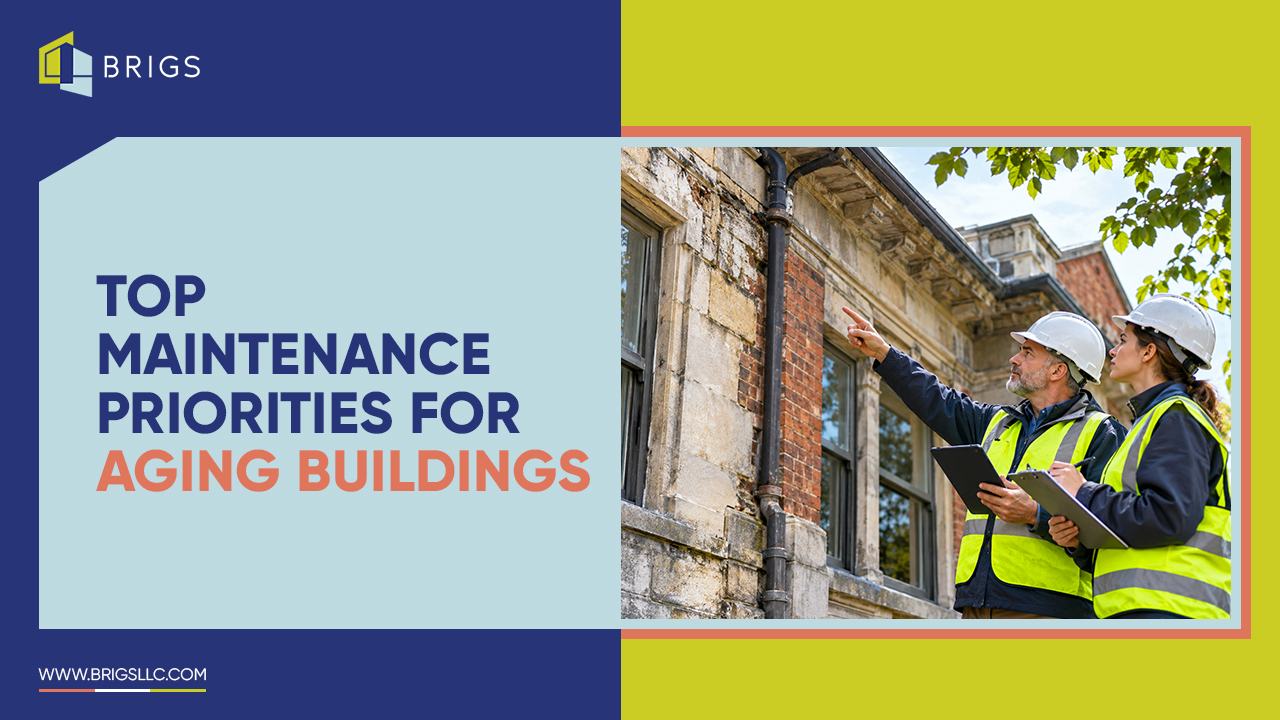
As residential buildings age, their maintenance requirements become increasingly complex. Building components that once required only routine servicing may begin to show signs of deterioration, mechanical systems may operate less efficiently, and infrastructure that has served a community for decades may approach the end of its useful life. For condominium associations (COAs), homeowners associations (HOAs), and residential property owners, managing these changes requires a proactive approach that balances immediate maintenance needs with long-term financial planning.
One of the biggest challenges facing aging buildings is that deterioration rarely occurs in isolation. A compromised roofing system can contribute to water intrusion, which may damage insulation, interior finishes, and structural components. Aging plumbing infrastructure can result in recurring leaks that affect multiple residential units. Deteriorating drainage systems can contribute to foundation problems, pavement damage, and moisture accumulation. When maintenance issues are addressed independently without considering their underlying causes, associations may find themselves repeatedly spending money without resolving the broader problem.
For property managers and association boards, the objective should be to identify developing maintenance concerns before they escalate into more expensive repairs, significant service interruptions, or potential safety hazards. This requires regular property assessments, organized maintenance schedules, qualified professional inspections, and a clear understanding of which building components present the greatest operational and financial risks.
Throughout Massachusetts, New Hampshire, and Rhode Island, aging residential buildings face additional challenges associated with New England’s climate. Seasonal temperature fluctuations, freeze-thaw cycles, heavy snowfall, prolonged moisture exposure, and summer humidity can accelerate deterioration across a variety of building systems. Communities that fail to account for these regional conditions may experience increasing maintenance demands and unexpected capital expenditures.
At BRIGS, we understand that maintaining aging buildings requires more than responding to service requests. Effective property management involves helping associations understand the condition of their infrastructure, prioritize maintenance activities, coordinate qualified professionals, and prepare financially for future repairs and replacements.
By establishing clear maintenance priorities, property managers and association boards can help preserve property conditions, protect community resources, and support a safe and comfortable living environment for residents.
Every building experiences deterioration over time, regardless of its original construction quality or the effectiveness of its maintenance program. Roofing materials degrade, plumbing components experience corrosion, mechanical equipment becomes less reliable, and exterior building materials are subjected to years of environmental exposure. Although regular maintenance can help extend the useful life of these components, it cannot eliminate the need for eventual repairs and replacements.
The difficulty for many residential communities is determining when routine maintenance is no longer sufficient. A building may appear to be in relatively good condition while concealed infrastructure continues to deteriorate. Plumbing systems located behind walls, structural components beneath exterior finishes, and electrical equipment housed in mechanical rooms may develop problems that are not immediately visible to residents or association board members.
This creates a significant challenge for communities that rely primarily on reactive maintenance. By the time a problem becomes noticeable, the underlying condition may have progressed considerably. A small ceiling stain, for example, may be the first visible indication of a roofing or plumbing issue that has existed for an extended period. Similarly, recurring electrical interruptions may indicate that certain components require professional evaluation rather than another temporary repair.
Property managers and association boards should therefore approach aging building maintenance as an ongoing process of condition assessment, risk identification, and resource allocation. Rather than treating every maintenance request as an isolated event, they should examine whether recurring issues indicate broader infrastructure concerns.
Understanding the relationships between building systems is particularly important. Water intrusion can affect structural materials and electrical equipment, inadequate ventilation can contribute to moisture accumulation, and deteriorating drainage infrastructure can place additional stress on foundations. Evaluating these interconnected conditions helps associations develop maintenance strategies that address underlying problems rather than repeatedly treating their symptoms.
Although the age of a building provides useful context for maintenance planning, it does not necessarily determine its overall condition. Two buildings constructed during the same period may have significantly different maintenance requirements depending on construction materials, environmental exposure, renovation history, occupancy patterns, and the quality of previous maintenance programs.
A well-maintained building constructed several decades ago may have more reliable infrastructure than a newer property that has experienced extensive deferred maintenance. Similarly, an older residential building that has undergone systematic roof replacements, plumbing upgrades, and mechanical improvements may have fewer immediate maintenance concerns than its age initially suggests.
Association boards should therefore avoid making maintenance decisions based exclusively on the age of the property. Instead, they should evaluate the condition, performance, maintenance history, and anticipated remaining useful life of individual building components. Qualified inspections and professional assessments can help determine whether a particular system requires routine servicing, targeted repairs, rehabilitation, or complete replacement.
Historical maintenance records are particularly valuable during this process. Information about previous repairs, equipment installations, inspection findings, and contractor recommendations can help property managers identify patterns that might otherwise go unnoticed. For example, a heating system that has required increasingly frequent service calls over several years may warrant a broader evaluation of its reliability and replacement timeline.
Maintaining accurate building records also helps associations avoid unnecessary expenditures. Components that remain in satisfactory condition may not require immediate replacement simply because they have reached a commonly cited life expectancy. Conversely, systems that are deteriorating prematurely may require attention well before their anticipated replacement date.
A condition-based approach allows boards to allocate resources more effectively and develop maintenance priorities that reflect the actual needs of the property.
Deferred maintenance occurs when necessary repairs, inspections, or servicing activities are postponed, often because of budget limitations, competing priorities, or uncertainty about the severity of a particular condition. Although postponing maintenance may reduce immediate expenditures, it can create substantially greater financial challenges over time.
Consider an aging condominium building with deteriorating exterior sealants around windows and façade penetrations. Replacing damaged sealants may initially represent a manageable maintenance expense. However, if the condition is ignored, moisture may penetrate the building envelope and contribute to damage involving interior finishes, insulation, masonry, or structural materials. What began as a relatively limited maintenance concern may eventually require a more extensive restoration project.
Similar patterns can occur across mechanical, plumbing, roofing, and drainage systems. Equipment that receives insufficient servicing may experience declining performance and more frequent breakdowns. Minor plumbing leaks may contribute to extensive water damage. Deteriorating pavement may require complete reconstruction if underlying drainage and surface conditions remain unaddressed.
For condominium associations and HOAs, deferred maintenance can also place significant pressure on reserve funds. When major repairs become necessary earlier than anticipated, the association may have insufficient funds available to complete the work. Depending on the circumstances, boards may need to consider special assessments, borrowing, adjustments to reserve contributions, or changes to other planned capital projects.
These financial pressures can create additional challenges for homeowners, particularly those who are unprepared for substantial unexpected expenses. They may also contribute to disagreements within the community regarding maintenance priorities and financial decisions.
Property managers can help boards address these challenges by organizing maintenance information, coordinating professional evaluations, and communicating the potential consequences of postponing recommended work. Although not every maintenance concern requires immediate action, associations should understand the risks associated with delaying repairs and incorporate those considerations into their decision-making processes.
Maintenance programs that were appropriate during the early years of a building’s life may become insufficient as its infrastructure ages. Newer buildings often require relatively predictable servicing, routine inspections, and minor repairs. As components approach the later stages of their useful lives, maintenance becomes increasingly dependent on condition monitoring, preventive interventions, and coordinated replacement planning.
A proactive maintenance strategy helps property managers identify these changing requirements. Instead of waiting for equipment failures or visible deterioration, management teams can coordinate scheduled inspections, review maintenance histories, monitor recurring problems, and obtain professional recommendations when necessary.
For example, an aging boiler system may continue operating despite declining efficiency and increasing repair requirements. A proactive approach would involve evaluating its condition, reviewing historical operating expenses, and helping the board prepare for eventual replacement. This allows the association to explore available options before an unexpected failure creates an urgent need for new equipment.
The same principle applies to roofing systems, elevators, plumbing infrastructure, electrical equipment, and exterior building components. Understanding their current condition and anticipated maintenance needs allows associations to coordinate projects more effectively and reduce reliance on emergency decision-making.
Proactive maintenance also provides opportunities to combine related projects. If a building requires façade repairs and window sealant replacement, coordinating these activities may reduce certain mobilization costs and minimize disruption to residents. Similarly, planned plumbing improvements may be coordinated with other renovations when doing so is technically appropriate and financially beneficial.
Although proactive maintenance cannot prevent every equipment failure or unexpected repair, it can provide associations with greater control over maintenance scheduling, financial planning, and operational priorities.
One of the most important responsibilities facing property managers and association boards is determining which maintenance activities should receive immediate attention and which can be incorporated into longer-term planning. Aging buildings often have multiple components requiring repairs or replacement, making it impractical to address every concern simultaneously.
An effective prioritization strategy should consider the potential consequences of component failure, the severity of existing deterioration, the likelihood of additional damage, and the impact on residents. Conditions involving structural integrity, fire protection, electrical safety, or other significant hazards generally require prompt professional evaluation. Maintenance concerns that could contribute to extensive water damage or prolonged service interruptions may also warrant elevated priority.
Other projects may be important but less urgent. Cosmetic improvements, certain common-area renovations, and nonessential upgrades may be scheduled around more pressing infrastructure requirements. This does not mean that appearance and resident experience are unimportant. Rather, associations must balance these considerations against the need to maintain safe, functional, and financially sustainable buildings.
For example, a condominium association may be considering renovations to its lobby while simultaneously facing deteriorating roofing materials and aging plumbing infrastructure. Although lobby improvements could enhance the resident experience, professional assessments may indicate that addressing water intrusion risks and plumbing reliability should take precedence.
Property managers can support these decisions by helping boards organize inspection findings, contractor recommendations, maintenance histories, and financial information. When directors have a clearer understanding of the risks associated with each project, they are better positioned to establish defensible maintenance priorities.
Resident safety should remain a fundamental consideration when establishing maintenance priorities for aging buildings. Structural components, fire protection systems, electrical infrastructure, elevators, emergency lighting, and other essential building systems require appropriate inspections and maintenance to support safe operations.
As these systems age, their performance may become less predictable. Electrical components may deteriorate, mechanical equipment may become less reliable, and structural materials may experience damage associated with moisture exposure, corrosion, or other environmental conditions. In some cases, older systems may also require upgrades to comply with applicable requirements.
Association boards should work with property managers and qualified professionals to understand the inspection, testing, and maintenance obligations associated with their buildings. Requirements vary depending on the property’s location, construction, occupancy, equipment, and applicable regulations.
It is also important to recognize that property managers are not substitutes for licensed engineers, electricians, fire protection specialists, or other qualified professionals. Their role includes coordinating appropriate inspections, documenting recommendations, communicating findings to the board, and facilitating authorized corrective work.
When a potentially hazardous condition is identified, associations should avoid relying on informal observations or temporary repairs as substitutes for professional assessment. Addressing safety-related concerns promptly helps protect residents and supports responsible building management.
Aging residential buildings throughout New England face environmental conditions that can accelerate the deterioration of building materials and infrastructure. Repeated freeze-thaw cycles, snow accumulation, ice formation, heavy rainfall, and seasonal humidity can place considerable stress on roofing systems, exterior walls, foundations, drainage infrastructure, and paved surfaces.
Water is a particularly significant concern. Moisture that enters cracks in masonry, concrete, or other exterior materials can freeze and expand during colder temperatures, contributing to further deterioration. Over time, repeated exposure may result in damaged mortar joints, deteriorating concrete, compromised sealants, and increased water intrusion.
Winter conditions can also place additional demands on roofing and drainage systems. Snow accumulation, ice dams, blocked gutters, and frozen drainage components may contribute to moisture-related problems. Older buildings with inadequate insulation or ventilation may be particularly susceptible to certain winter-related maintenance concerns.
During warmer months, heavy rainfall and humidity can expose weaknesses in building envelopes, basement waterproofing, and ventilation systems. Drainage infrastructure that is unable to manage stormwater effectively may contribute to recurring flooding, foundation moisture, or deterioration of surrounding pavement.
Property managers should account for these seasonal conditions when developing maintenance schedules. Certain inspections and repairs may be most effective when completed before winter, while other activities may be scheduled during warmer months when contractors can safely and efficiently perform exterior work.
For associations in Massachusetts, New Hampshire, and Rhode Island, incorporating regional climate considerations into maintenance planning is an important part of protecting aging infrastructure and preparing for predictable seasonal challenges.
Aging building maintenance cannot be separated from long-term financial planning. As major components approach the end of their useful lives, associations must prepare for increasingly significant repair and replacement expenditures. Without a coordinated capital planning strategy, boards may find themselves repeatedly responding to urgent infrastructure needs without adequate financial resources.
Reserve studies provide an important foundation for this process. A professionally prepared reserve study can help associations identify major common-area components, estimate their remaining useful lives, evaluate anticipated replacement costs, and develop funding recommendations. However, reserve studies should be considered alongside current inspection findings and actual building conditions rather than treated as fixed maintenance schedules.
For example, a roofing system may be projected to require replacement in seven years, but subsequent inspections could reveal deterioration that requires earlier intervention. Alternatively, a component may remain in satisfactory condition longer than originally anticipated. These developments should be considered when reviewing capital plans and reserve funding strategies.
Property managers can help boards coordinate reserve study updates, organize contractor estimates, track completed projects, and identify changes in maintenance requirements. This information allows associations to adjust their financial planning as building conditions evolve.
The objective is to create a maintenance and capital planning strategy that reflects both immediate operational requirements and anticipated future expenditures. By connecting maintenance priorities with financial planning, associations can reduce their dependence on emergency funding decisions and better prepare homeowners for the costs associated with maintaining aging buildings.
A comprehensive maintenance strategy begins with understanding which building systems require the greatest attention. Roofing, building envelopes, structural components, plumbing, electrical infrastructure, HVAC equipment, elevators, and fire protection systems each present distinct maintenance challenges as properties age. Evaluating these systems individually, while recognizing how they interact, provides the foundation for a more effective and sustainable building maintenance program.
Maintaining an aging residential building requires a comprehensive understanding of the systems that contribute to its structural integrity, operational reliability, energy efficiency, and resident safety. While every property has unique maintenance requirements, certain building components deserve particular attention because their deterioration can affect multiple areas of the property and result in significant financial consequences.
For condominium associations and HOAs, establishing maintenance priorities involves more than identifying which components are oldest. Property managers and board members must consider how each system functions, the consequences of potential failure, the availability of replacement components, and the relationship between individual maintenance projects. A roofing problem, for example, may initially appear to be an isolated concern but can eventually affect structural materials, electrical infrastructure, and interior living spaces if water intrusion remains unresolved.
A comprehensive maintenance program should therefore focus on preserving essential building systems while identifying opportunities to coordinate repairs and replacements. The following areas represent some of the most important maintenance priorities for aging residential buildings.
Roofing systems are among the most important components of any residential building because they provide a primary layer of protection against environmental exposure. As roofing materials age, they may become increasingly susceptible to deterioration, moisture penetration, and damage associated with severe weather. Even relatively minor roofing deficiencies can contribute to significant problems when water enters concealed areas of the building.
For aging condominium buildings, roofing maintenance should extend beyond responding to reported leaks. Regular professional inspections can help identify deteriorating membranes, damaged shingles, compromised flashing, deteriorating sealants, and drainage deficiencies. These conditions may not immediately result in visible interior damage, but they can indicate weaknesses that require attention before more extensive deterioration occurs.
Flat and low-slope roofing systems deserve particular consideration because drainage problems can contribute to standing water and accelerated material degradation. Older buildings may also experience problems involving roof penetrations, mechanical equipment supports, and connections between roofing materials and exterior walls. These areas should be evaluated as part of a comprehensive inspection rather than treated as independent maintenance concerns.
In New England, winter weather introduces additional challenges. Snow accumulation, ice dams, freezing temperatures, and repeated freeze-thaw cycles can expose weaknesses in roofing systems. Property managers should coordinate appropriate seasonal inspections and ensure that identified deficiencies are evaluated before severe weather increases the potential for damage.
Association boards should also understand when continued repairs are no longer financially practical. A roofing system that requires frequent service calls, experiences recurring leaks, or exhibits widespread deterioration may warrant a professional replacement assessment. Although replacement represents a significant capital expenditure, repeatedly repairing a failing system can create additional costs and increase the risk of damage to other building components.
The building envelope consists of the components that separate a building’s interior from the external environment, including exterior walls, windows, doors, roofing assemblies, insulation, and associated waterproofing systems. Maintaining the integrity of these components is particularly important as residential buildings age because deterioration can compromise moisture resistance, energy performance, and occupant comfort.
Older masonry buildings may experience deteriorating mortar joints, cracking, damaged brickwork, and moisture penetration. Concrete structures may develop cracking, spalling, or corrosion-related damage. Buildings with siding systems may experience deterioration around joints, fasteners, penetrations, and connections with other exterior materials. Although some of these conditions may initially appear cosmetic, others can indicate more significant underlying problems that require professional evaluation.
Property managers should coordinate regular exterior assessments to identify developing concerns and document changes in building conditions. When cracking, displacement, loose façade materials, or other potentially hazardous conditions are identified, qualified professionals should evaluate the severity of the deterioration and recommend appropriate corrective measures.
Exterior maintenance should also include attention to sealants and waterproofing details. Materials surrounding windows, doors, balconies, and exterior penetrations can deteriorate over time, creating pathways for moisture to enter the building. Replacing compromised sealants and addressing localized waterproofing deficiencies may help prevent more extensive damage when these issues are identified early.
For condominium associations, building envelope projects can become particularly expensive because repairs may require specialized contractors, scaffolding, engineering services, and extensive coordination with residents. Incorporating exterior maintenance into long-term capital planning allows boards to prepare for these expenses and evaluate opportunities to combine related projects.
Structural maintenance should remain a high priority for aging buildings because deterioration affecting load-bearing components can have serious consequences. Foundations, support columns, beams, floor assemblies, balconies, and other structural elements must be maintained in a condition appropriate for their intended use.
Structural deterioration can develop for a variety of reasons, including prolonged moisture exposure, corrosion, material degradation, settlement, inadequate drainage, and previous construction deficiencies. In older buildings, changes may occur gradually and remain unnoticed until visible symptoms begin to appear.
Cracking, uneven floors, deteriorating concrete, exposed reinforcement, displaced masonry, and unusual movement may warrant further investigation. However, visual observations alone are not sufficient to determine whether a condition presents a structural concern. Some cracks may be relatively minor, while others may indicate more significant deterioration. Qualified structural engineers should evaluate conditions that raise questions about building integrity.
Property managers can support structural maintenance by documenting reported concerns, coordinating professional inspections, maintaining historical records, and ensuring that engineering recommendations are communicated to the board. Associations should also establish procedures for addressing potentially unsafe conditions promptly, including implementing access restrictions or other protective measures when recommended by qualified professionals.
Balconies, elevated walkways, parking structures, and exterior stairways deserve particular attention because they are frequently exposed to moisture, temperature fluctuations, and deicing materials. These conditions can contribute to deterioration of concrete, steel, wood, and connection components over time.
Structural maintenance should never be postponed solely because a repair is expensive or inconvenient. When professional assessments identify significant concerns, boards should work with management and appropriate specialists to establish corrective measures and evaluate funding options.
Plumbing systems are another major maintenance priority for aging residential buildings. Water supply lines, drainage pipes, valves, fittings, and associated equipment experience years of continuous use, and deterioration can eventually contribute to leaks, reduced performance, and unexpected system failures.
Older buildings may contain plumbing materials that are increasingly susceptible to corrosion, mineral accumulation, or deterioration. Even when individual leaks are repaired successfully, recurring problems across different areas of the building may indicate that the broader plumbing infrastructure requires evaluation.
Water damage can be particularly disruptive in multi-unit residential buildings because a failure originating in one location may affect several homes and common areas. A leaking supply line, for example, can damage ceilings, walls, flooring, electrical components, and personal belongings in multiple units. The resulting restoration work may be considerably more expensive than the original plumbing repair.
Property managers should maintain records of plumbing-related incidents and identify patterns involving recurring leaks, drainage backups, water pressure complaints, and other service issues. This information can help qualified plumbing professionals determine whether targeted repairs remain appropriate or whether larger rehabilitation projects should be considered.
Associations should also evaluate the condition and accessibility of water shutoff valves. During a plumbing emergency, the ability to isolate affected areas can help limit damage and reduce disruption. Older valves may become difficult to operate or may no longer function as intended, making periodic professional evaluation important.
Where appropriate, communities may also consider water leak detection systems and automated shutoff technology as additional risk management measures. These technologies do not replace proper plumbing maintenance, but they may help identify certain problems earlier and support a more effective response.
Because plumbing responsibilities can vary between individual homeowners and the association, boards should review their governing documents and applicable requirements before determining how repairs and replacements will be managed and funded.
Electrical systems in aging buildings may face increasing demands as residents adopt new appliances, electronic devices, heating and cooling equipment, and other technologies. Infrastructure designed decades ago may not have been intended to accommodate contemporary electricity consumption patterns, particularly when substantial changes have occurred throughout the property.
Electrical panels, wiring, distribution equipment, circuit breakers, transformers, and associated components require appropriate maintenance and professional evaluation. As equipment ages, deterioration, corrosion, outdated components, and inadequate capacity may affect system reliability or safety.
Recurring breaker trips, unexplained power interruptions, unusual odors, overheating, and other abnormal electrical conditions should be evaluated by qualified electricians. Property managers and association boards should avoid assuming that these issues are isolated inconveniences, particularly when similar problems occur repeatedly throughout the building.
Electrical maintenance planning should also account for future infrastructure demands. Communities considering electric vehicle charging stations, heat pump installations, or other electrification initiatives may need to evaluate whether existing electrical distribution systems can accommodate additional loads. Professional assessments can help boards understand available capacity, potential upgrade requirements, and the financial implications of proposed improvements.
Common-area electrical systems should receive appropriate attention as well. Hallway lighting, exterior lighting, mechanical equipment, access control systems, emergency lighting, and other shared infrastructure depend on reliable electrical service. Maintaining these systems supports both resident safety and everyday building operations.
For aging buildings, electrical infrastructure upgrades can represent substantial capital investments. Incorporating professional assessments into reserve planning can help associations prepare for necessary improvements rather than waiting until equipment failures or capacity limitations create urgent operational challenges.
Heating, ventilation, and air conditioning (HVAC) systems play a central role in maintaining comfortable and functional residential buildings. As mechanical equipment ages, it may become less efficient, require more frequent repairs, and experience declining reliability. These challenges can affect both operating expenses and resident satisfaction.
Central heating systems are particularly important in New England, where extended periods of cold weather place significant demands on boilers, pumps, distribution equipment, and associated controls. An unexpected heating system failure during winter can create substantial disruption and may contribute to additional problems, including frozen plumbing and water damage.
Preventive maintenance should include appropriate servicing, inspections, cleaning, and performance evaluations based on equipment specifications and professional recommendations. Property managers should also monitor recurring service calls and changes in energy consumption that may indicate declining equipment performance.
Ventilation systems deserve similar attention. Inadequate ventilation can contribute to moisture accumulation, uncomfortable indoor conditions, and deterioration of building materials. Older buildings may have ventilation arrangements that require evaluation as windows, insulation, and other building envelope components are upgraded.
Mechanical equipment replacement should be approached strategically rather than exclusively as an emergency response. When an aging boiler, chiller, or other major system begins requiring increasingly frequent repairs, boards should obtain professional recommendations regarding remaining useful life, replacement options, and potential efficiency improvements.
A planned replacement project provides more time to evaluate equipment specifications, obtain competitive proposals, assess financing options, and coordinate installation schedules. It may also allow the association to consider energy-efficient alternatives that could reduce future operating expenses, depending on the building’s characteristics and system requirements.
For multi-story condominium buildings, elevators are essential to everyday accessibility and resident mobility. Aging elevator systems may experience increasing mechanical wear, outdated control technology, declining reliability, and difficulty obtaining replacement components.
Elevator maintenance requires specialized expertise and should be performed by appropriately qualified service providers. Property managers should coordinate required inspections, routine servicing, and corrective repairs while maintaining accurate records of service history and contractor recommendations.
Recurring elevator outages can significantly affect residents, particularly older adults and individuals with mobility limitations. Even when an elevator is restored to service after each incident, repeated failures may indicate that modernization or replacement planning is necessary.
Association boards should evaluate elevator maintenance contracts carefully to understand which services, replacement components, inspections, and emergency response activities are included. Older systems may require specialized parts that are increasingly difficult to obtain, potentially extending repair timelines and increasing maintenance expenses.
Elevator modernization can represent a major capital project involving mechanical equipment, control systems, electrical infrastructure, and other components. Because these projects may require extended planning and coordination, associations should begin evaluating modernization needs before reliability problems become severe.
Resident communication is particularly important during elevator maintenance and modernization projects. Management should provide appropriate notice of scheduled outages, communicate anticipated timelines, and help the association consider reasonable arrangements for residents affected by temporary accessibility limitations.
Fire protection and life safety systems must remain a fundamental maintenance priority regardless of a building’s age. Smoke detection systems, fire alarms, sprinkler systems, emergency lighting, fire doors, and other protective equipment serve essential functions and require appropriate inspection, testing, and maintenance.
As buildings age, fire protection equipment may experience deterioration, component failures, outdated technology, or increasing difficulty obtaining replacement parts. Changes in building use, renovations, and applicable regulatory requirements may also influence maintenance and upgrade obligations.
Property managers should work with qualified fire protection professionals to establish inspection and testing schedules appropriate to the building. Inspection findings, corrective recommendations, and completed repairs should be documented so that the association can maintain visibility into the condition of its life safety infrastructure.
Fire doors and emergency exit routes also require ongoing attention. Deteriorating hardware, damaged doors, obstructed exits, and malfunctioning emergency lighting can compromise important protective functions. These concerns should be addressed through appropriate maintenance procedures rather than treated as minor common-area deficiencies.
Association boards should understand that fire protection requirements vary depending on building characteristics, jurisdiction, occupancy, and applicable regulations. Management should coordinate with qualified contractors and relevant authorities when clarification or specialized guidance is necessary.
Unlike certain cosmetic or discretionary improvements, maintenance involving essential life safety systems should not be delayed simply to accommodate other budget priorities. Identified deficiencies should be evaluated and corrected in accordance with professional recommendations and applicable requirements.
Windows and exterior doors contribute to energy efficiency, moisture resistance, security, and resident comfort. As these components age, deteriorating seals, damaged frames, worn hardware, and declining insulation performance can create increasingly noticeable operational problems.
Residents may experience drafts, condensation, temperature inconsistencies, or moisture penetration around window and door assemblies. Although these concerns may initially appear to affect only individual homes, widespread issues can indicate broader building envelope deficiencies.
Older windows may also contribute to increased heating and cooling demands, particularly in buildings where insulation and air sealing have not been upgraded. Evaluating window performance alongside roofing, exterior wall, and ventilation conditions can help associations develop a more comprehensive understanding of building efficiency.
However, replacing windows throughout a residential building can represent a substantial investment. Boards should obtain appropriate professional assessments to determine whether repairs, sealant replacement, hardware improvements, or complete replacement are warranted.
Responsibility for window and door maintenance can differ considerably among condominium associations and HOAs. Governing documents may assign certain responsibilities to homeowners while reserving others for the association. Boards should clarify these obligations before initiating community-wide maintenance or replacement programs.
When coordinated appropriately, window, door, and insulation improvements may enhance resident comfort, reduce moisture-related concerns, and improve overall building performance.
Effective drainage is essential to protecting aging buildings from moisture-related deterioration. Gutters, downspouts, catch basins, underground drainage pipes, foundation drainage systems, and surrounding grading all contribute to directing water away from vulnerable building components.
As drainage infrastructure ages, pipes may become obstructed or damaged, catch basins may deteriorate, and changes in surrounding landscaping or pavement may affect water movement. These conditions can contribute to basement flooding, foundation moisture, exterior deterioration, and damage to paved surfaces.
Recurring water accumulation should be investigated rather than repeatedly addressed through temporary measures. For example, standing water near a building foundation may indicate inadequate grading, damaged drainage infrastructure, or insufficient stormwater capacity. Qualified professionals can help determine the underlying cause and recommend appropriate improvements.
Property managers should incorporate drainage maintenance into seasonal planning, particularly before periods of heavy rainfall and winter weather. Routine cleaning and professional inspections can help identify obstructions and deterioration before significant drainage failures occur.
Waterproofing systems should also be evaluated when buildings experience recurring moisture penetration. Older foundations, below-grade walls, parking structures, and other vulnerable areas may require specialized assessments to determine whether existing waterproofing materials remain effective.
Because drainage deficiencies can affect multiple building systems, addressing these concerns proactively can help associations reduce the risk of more extensive repairs involving foundations, exterior walls, landscaping, and pavement.
Although much of aging building maintenance focuses on structural and mechanical systems, exterior infrastructure also requires consistent attention. Parking lots, sidewalks, retaining walls, private roads, curbs, stairways, and other shared exterior components contribute to accessibility, safety, and the overall condition of the community.
Repeated freeze-thaw cycles can accelerate pavement deterioration throughout New England. Water entering cracks may freeze and expand, contributing to additional damage and the eventual formation of potholes or uneven surfaces. Drainage deficiencies can further accelerate deterioration by allowing water to accumulate beneath or around paved areas.
Property managers should coordinate appropriate inspections and maintenance activities to identify developing problems before extensive reconstruction becomes necessary. Depending on the condition of the infrastructure, qualified contractors may recommend crack sealing, localized repairs, resurfacing, or complete replacement.
Retaining walls and exterior stairways may require additional professional evaluation when signs of movement, cracking, displacement, or deterioration become apparent. These components can present significant safety concerns when their condition is compromised.
Associations should also consider accessibility requirements and resident mobility when evaluating exterior infrastructure projects. Uneven walkways, deteriorating ramps, inadequate lighting, and damaged handrails can create difficulties for residents and visitors.
Incorporating exterior infrastructure into reserve studies and capital plans helps ensure that these components receive appropriate financial consideration rather than being overlooked in favor of more visible building improvements.
One of the most common mistakes associations make when maintaining aging buildings is treating each building system as an independent maintenance responsibility. Although individual components require specialized inspections and servicing, their performance is often interconnected.
A deteriorating roof can contribute to moisture penetration that affects insulation, electrical equipment, and structural materials. Inadequate drainage can accelerate foundation and pavement deterioration. Building envelope deficiencies can increase heating and cooling demands, placing additional stress on aging mechanical equipment. Plumbing failures can damage multiple building components and disrupt residential operations.
Recognizing these relationships allows property managers and association boards to develop maintenance strategies that address underlying conditions rather than repeatedly responding to their consequences. It also creates opportunities to coordinate related capital projects, reduce unnecessary duplication of work, and minimize disruption to residents.
For example, an association planning exterior façade restoration may benefit from evaluating window sealants, waterproofing details, and other building envelope components at the same time. Similarly, a community considering mechanical system upgrades may benefit from assessing insulation, ventilation, and electrical capacity before finalizing equipment specifications.
At BRIGS, we recognize that maintaining aging residential buildings requires a comprehensive approach to property management. By coordinating professional assessments, organizing maintenance records, monitoring infrastructure conditions, and supporting long-term financial planning, property managers can help association boards make more informed decisions about their maintenance priorities.
Identifying which building systems require attention is only the beginning. Associations must also translate these findings into an actionable maintenance strategy that establishes inspection schedules, prioritizes projects, allocates financial resources, and creates accountability for ongoing maintenance activities. A structured approach can help communities move away from reactive repairs and toward more sustainable, long-term property preservation.
Identifying the maintenance needs of an aging building is only the first step toward protecting its long-term condition. Condominium associations, HOAs, and property managers must translate inspection findings, contractor recommendations, and infrastructure assessments into an organized maintenance strategy that establishes clear priorities, realistic timelines, and appropriate financial resources. Without a structured approach, even communities that understand their maintenance challenges may struggle to address them effectively.
A comprehensive maintenance strategy should account for both the immediate needs of the property and the anticipated deterioration of building systems over time. This requires balancing routine preventive maintenance with corrective repairs, regulatory inspections, equipment replacements, and major capital improvement projects. As buildings age, these responsibilities become increasingly interconnected, making coordination between property managers, association boards, contractors, and specialized professionals essential.
The objective is to move away from a maintenance model driven primarily by emergencies and toward one that emphasizes preparation, accountability, and informed decision-making. Although unexpected repairs will remain an unavoidable part of property ownership, a well-organized strategy can help associations reduce operational uncertainty and better manage the financial demands associated with aging infrastructure.
Before developing a long-term maintenance strategy, associations should establish a clear understanding of the property’s existing condition. A comprehensive building condition assessment can help identify deterioration, evaluate infrastructure performance, and determine which components require immediate attention or further professional investigation. Unlike routine property inspections that focus primarily on visible maintenance concerns, a broader condition assessment considers the overall performance and remaining useful life of major building systems.
Depending on the property’s characteristics, this process may involve structural engineers, roofing specialists, mechanical contractors, electricians, plumbing professionals, and building envelope consultants. Each specialist can provide insight into conditions that may not be apparent during everyday property management activities. For example, a building envelope consultant may identify concealed moisture-related concerns, while a mechanical engineer may determine that aging heating equipment is approaching the point where replacement planning becomes necessary.
Property managers can support this process by coordinating professional assessments, compiling historical maintenance records, and organizing inspection findings for board review. Providing professionals with information about previous repairs, recurring equipment failures, water intrusion incidents, and completed capital projects can help them develop a more comprehensive understanding of the property.
The findings should establish a baseline against which future building conditions can be evaluated. When associations maintain consistent documentation, they can better determine whether deterioration is progressing, whether previous repairs have been effective, and whether maintenance priorities need to change. This information becomes particularly valuable as board membership changes and new directors assume responsibility for long-term infrastructure decisions.
A centralized asset inventory provides property managers and association boards with an organized record of the major components that require ongoing maintenance, inspection, and eventual replacement. For aging buildings, this information is especially important because infrastructure may have been installed, repaired, or replaced at different points throughout the property’s history.
An effective inventory should document relevant information about each major building component, including its location, installation date when known, manufacturer, maintenance history, warranty information, inspection requirements, and anticipated replacement timeline. Depending on the building, the inventory may include roofing systems, boilers, pumps, electrical panels, elevators, plumbing infrastructure, fire protection equipment, exterior building materials, and drainage components.
Without a centralized inventory, important information may become fragmented across contractor invoices, maintenance reports, individual board member records, and historical management documents. This fragmentation can make it difficult to understand when equipment was last serviced, whether a component remains under warranty, or how frequently certain repairs have occurred.
For example, an association managing several residential buildings may have heating equipment of different ages and configurations. Maintaining an accurate inventory allows management to distinguish between systems that require routine servicing and those that may need more extensive evaluation. It also provides valuable information when developing annual budgets, reviewing service contracts, and coordinating reserve study updates.
The inventory should remain a living document that is updated whenever significant repairs, inspections, or replacements occur. Over time, this creates a more complete record of the property’s infrastructure and supports maintenance decisions based on documented conditions rather than assumptions.
Aging buildings frequently have multiple maintenance needs competing for limited financial resources. Association boards may need to address roofing deficiencies, mechanical equipment deterioration, exterior repairs, and plumbing concerns within the same budget cycle. Determining which projects should receive priority requires a consistent framework that considers the consequences of delaying each activity.
Risk-based maintenance prioritization evaluates building components according to their condition, likelihood of failure, potential safety implications, financial consequences, and impact on residents. Systems that support structural integrity, fire protection, essential utilities, and safe building access generally warrant greater attention than improvements that are primarily cosmetic or discretionary.
For example, an association may be considering common-area renovations while also facing recurring water intrusion through an aging façade. Although renovating interior spaces may improve the appearance of the property, addressing the source of moisture penetration may be more important to protecting building materials and preventing additional damage. Completing cosmetic improvements before resolving the underlying condition could result in unnecessary duplication of expenses.
The prioritization process should also account for how quickly a condition may deteriorate. Certain maintenance concerns can remain relatively stable for extended periods, while others may worsen rapidly when exposed to moisture, severe weather, or continued mechanical stress. Professional recommendations can help boards understand these distinctions and establish appropriate timelines.
Property managers should help directors document the reasoning behind significant maintenance decisions. When priorities are based on professional assessments, infrastructure conditions, and financial considerations, boards are better positioned to explain their decisions to homeowners and maintain consistency across successive budget cycles.
Preventive maintenance schedules should evolve as buildings and their infrastructure age. A schedule established when equipment was relatively new may no longer provide sufficient oversight once components begin experiencing increased wear, declining performance, or recurring operational problems.
For example, an older mechanical system may require more frequent professional evaluations than a recently installed system. Roofing components approaching the later stages of their useful lives may warrant additional monitoring, particularly following severe weather. Aging plumbing infrastructure may require closer attention to recurring leaks, valve performance, and drainage conditions.
Rather than applying the same maintenance frequency to every component, property managers should coordinate schedules based on manufacturer recommendations, professional assessments, applicable inspection requirements, equipment condition, and historical performance. This allows maintenance resources to be directed toward the systems that require the greatest attention.
Preventive maintenance schedules should also account for seasonal conditions. In Massachusetts, New Hampshire, and Rhode Island, preparing buildings for winter may involve evaluating heating equipment, roofing drainage, exterior sealants, insulation, and other infrastructure susceptible to freezing temperatures. Spring maintenance may focus on identifying winter-related damage, assessing drainage performance, and coordinating exterior repairs.
A well-organized maintenance calendar provides visibility into upcoming activities and helps property managers coordinate contractors before seasonal demand increases. It also allows association boards to anticipate expenditures and understand which maintenance responsibilities are scheduled throughout the year.
One of the most valuable sources of information about an aging building is its maintenance history. Recurring service requests, repeated equipment failures, and ongoing contractor visits can reveal patterns that indicate broader infrastructure problems.
Consider a condominium building that experiences multiple plumbing leaks throughout the year. Each incident may initially be addressed as an independent repair, particularly if the leaks occur in different locations. However, when these incidents are evaluated collectively, they may indicate deterioration within a particular type of piping or a larger portion of the building’s plumbing infrastructure.
The same principle applies to recurring elevator outages, heating system failures, electrical interruptions, and water intrusion. Addressing individual incidents without investigating the underlying causes can result in repeated expenditures while the broader condition continues to deteriorate.
Property managers should maintain detailed maintenance records that identify the nature of each problem, its location, the contractor involved, the corrective action taken, and any associated costs. Reviewing this information periodically can help management identify trends and determine when additional professional evaluation may be appropriate.
Maintenance data can also support financial decision-making. If a particular piece of equipment requires increasingly frequent repairs, the association can compare historical maintenance expenses with anticipated replacement costs. Although replacement may not always be the most appropriate option, understanding the total cost of maintaining aging equipment provides a stronger foundation for evaluating alternatives.
By identifying recurring problems early, associations can shift their focus from repeatedly addressing symptoms to developing more durable solutions.
One of the most difficult decisions facing association boards is determining whether an aging building component should be repaired, rehabilitated, or replaced. Continuing to repair existing infrastructure may appear financially attractive in the short term, particularly when replacement would require a substantial capital expenditure. However, repeated repairs may become increasingly inefficient as equipment reliability declines and additional components begin to fail.
The decision should consider the condition of the system, its remaining useful life, historical maintenance costs, availability of replacement parts, operational reliability, and the consequences of unexpected failure. Qualified professionals can help associations understand whether a particular repair is likely to provide a durable solution or simply postpone an inevitable replacement.
For example, an aging boiler may remain operational through periodic repairs, but declining efficiency and increasingly frequent service calls may indicate that replacement planning is appropriate. Similarly, a roofing system experiencing isolated damage may benefit from targeted repairs, while widespread deterioration could require a more comprehensive restoration or replacement project.
Rehabilitation may also represent a practical alternative in certain circumstances. Elevator modernization, plumbing rehabilitation, façade restoration, and mechanical system upgrades may allow associations to improve infrastructure performance without replacing every existing component. The suitability of these approaches depends on the condition of the system and the recommendations of qualified specialists.
Boards should evaluate these decisions from a lifecycle cost perspective rather than focusing exclusively on the immediate price of each option. A lower-cost repair may provide appropriate value when the underlying infrastructure remains in satisfactory condition. However, when deterioration is widespread, investing in a more comprehensive solution may provide greater long-term reliability and financial predictability.
Maintenance planning and financial planning should operate as complementary processes. An association cannot effectively maintain aging infrastructure without understanding the financial resources required to complete routine maintenance, corrective repairs, and anticipated capital projects.
Annual operating budgets should account for predictable maintenance expenses, including service contracts, routine inspections, preventive servicing, and anticipated minor repairs. Reserve funding strategies should address major component replacements and other eligible capital expenditures based on the association’s governing documents, applicable requirements, and professional recommendations.
As buildings age, historical spending may become a less reliable indicator of future maintenance expenses. An association that has historically allocated a relatively modest amount toward plumbing repairs, for example, may need to adjust its budget if service records indicate increasing infrastructure deterioration. Similarly, rising mechanical maintenance costs may warrant additional financial planning as equipment approaches replacement.
Reserve studies should be reviewed alongside current building conditions and updated when significant changes occur. Unexpected deterioration, changing construction costs, completed capital projects, and revised professional recommendations can all influence future funding requirements.
Property managers can assist boards by organizing contractor estimates, tracking maintenance expenditures, coordinating reserve study updates, and identifying anticipated budget pressures. This information helps directors understand how maintenance decisions affect both current operating expenses and long-term financial obligations.
When funding limitations arise, boards should work with appropriate financial and technical professionals to evaluate available options. These may include adjusting reserve contributions, modifying project schedules where appropriate, obtaining financing, or considering special assessments. Safety-related work and other urgent obligations should not be postponed simply because funding is insufficient; boards should seek qualified guidance on protective measures and appropriate funding solutions.
While annual maintenance budgets address immediate operational requirements, aging buildings benefit from a longer-term capital improvement plan that identifies anticipated infrastructure projects over several years. This approach allows associations to evaluate how major expenditures relate to one another and prepare for periods when multiple building systems may require significant investment.
A multi-year capital plan may include anticipated roof replacements, elevator modernization, façade restoration, plumbing rehabilitation, mechanical equipment upgrades, electrical improvements, and exterior infrastructure projects. Each project should have an estimated timeframe, preliminary cost information, and an explanation of its importance to the property.
For example, an association may anticipate replacing its roofing system within three years, modernizing elevators within five years, and completing significant plumbing improvements within seven years. Understanding these anticipated obligations allows the board to evaluate whether existing reserve funding strategies are sufficient and whether project schedules should be adjusted based on professional recommendations.
Long-term planning also creates opportunities to coordinate related improvements. If an association is preparing for extensive façade restoration, it may be appropriate to evaluate window sealants, balcony waterproofing, and other exterior components during the same planning process. Coordinating technically compatible projects may reduce certain contractor mobilization expenses and minimize repeated disruption to residents.
The capital improvement plan should remain flexible. Building conditions can change, construction costs can increase, and unexpected maintenance concerns may alter established priorities. Regularly reviewing the plan allows boards to incorporate new information and maintain a realistic understanding of future infrastructure needs.
A comprehensive maintenance strategy depends heavily on the quality of contractor relationships and the effectiveness of ongoing vendor oversight. Aging buildings often require specialized services from multiple contractors, making coordination increasingly important as infrastructure needs become more complex.
Property managers should help associations establish clear scopes of work, obtain appropriate proposals, verify relevant contractor qualifications, and coordinate approved maintenance activities. Service agreements should clearly identify the responsibilities of each contractor, including maintenance frequency, inspection procedures, reporting expectations, and applicable response arrangements.
Contractor documentation is particularly valuable when maintaining aging infrastructure. Service reports should provide meaningful information about equipment conditions, completed work, identified deficiencies, and recommended corrective measures. These records help management and association boards understand whether maintenance activities are addressing the underlying needs of the property.
For example, a mechanical contractor performing routine boiler maintenance may identify components that are beginning to deteriorate. Rather than allowing these findings to remain buried within a service invoice, management should communicate relevant recommendations to the board and incorporate them into future maintenance planning.
Accountability also requires appropriate follow-up. When repairs are completed, management should coordinate any necessary verification, obtain relevant documentation, and ensure that unresolved concerns remain visible. For complex structural or engineering projects, qualified professionals may be needed to evaluate whether completed work satisfies the applicable specifications.
Organized contractor coordination helps prevent important recommendations from being overlooked and supports greater consistency across the association’s maintenance program.
Property management technology can help associations organize the increasingly complex maintenance requirements associated with aging buildings. Digital work order systems, centralized document storage, asset management platforms, and maintenance scheduling tools provide opportunities to improve visibility into infrastructure conditions and ongoing maintenance activities.
A digital maintenance system can help property managers document service requests, assign responsibilities, track contractor progress, and maintain historical records. Over time, this information can reveal patterns involving recurring repairs, frequently affected building areas, and equipment requiring increased attention.
Building monitoring technologies may also provide additional opportunities for early detection. Water leak sensors, temperature monitoring devices, and certain mechanical system monitoring tools can help identify abnormal conditions before they become more apparent. Depending on the property, these technologies may support faster responses and reduce the potential consequences of certain equipment failures.
However, technology should complement rather than replace professional inspections and preventive maintenance. A water sensor may detect moisture in a mechanical room, but it cannot determine the overall condition of the building’s plumbing infrastructure. Similarly, equipment monitoring may identify unusual operating conditions without establishing the appropriate corrective action.
The greatest value of technology comes from integrating it into an organized maintenance strategy. Information collected through digital systems should support management decisions, contractor coordination, board reporting, and long-term financial planning.
Maintaining aging buildings often requires significant financial commitments and temporary disruptions to everyday residential life. Major projects may affect parking availability, elevator access, building entrances, water service, or common-area amenities. Without clear communication, homeowners may become frustrated or misunderstand why particular projects are necessary.
Property managers and association boards should communicate the purpose of significant maintenance activities, the conditions that prompted the work, and the anticipated benefits of addressing the issue. Providing appropriate context can help residents understand why certain infrastructure projects receive priority over more visible community improvements.
For example, homeowners may question why an association is allocating substantial resources toward drainage infrastructure rather than renovating common areas. Explaining how drainage deficiencies contribute to foundation moisture, pavement deterioration, and potential future repair costs can help residents better understand the board’s decision.
Communication becomes particularly important when projects require additional funding. Homeowners should receive clear information about anticipated expenditures, available funding options, and the association’s decision-making process, consistent with applicable requirements and governing documents.
Management should also provide appropriate updates throughout major projects. Changes in contractor schedules, unexpected findings, temporary service interruptions, and anticipated completion dates should be communicated as necessary. Although unexpected complications cannot always be avoided, consistent information can reduce uncertainty and help residents prepare for disruptions.
Transparent communication reinforces the connection between maintenance expenditures and the long-term preservation of the community.
A comprehensive maintenance strategy should include periodic evaluations to determine whether established procedures are producing the intended results. As buildings age, maintenance programs must continue evolving in response to changing infrastructure conditions, financial pressures, and resident needs.
Property managers and association boards can evaluate maintenance performance by reviewing historical repair expenses, recurring service requests, preventive maintenance completion, equipment downtime, contractor performance, and progress toward planned capital improvements. These measures provide insight into whether the association is successfully addressing maintenance priorities or continuing to experience the same operational challenges.
For example, if a building continues experiencing frequent water intrusion incidents despite ongoing exterior repairs, management may need to coordinate a broader assessment of the building envelope. If emergency mechanical service calls are increasing, the association may need to reconsider its equipment maintenance or replacement strategy.
Performance evaluations should also consider whether preventive maintenance activities are being completed as scheduled and whether professional recommendations are being addressed within appropriate timeframes. Identifying gaps in these areas allows management and the board to adjust procedures before deferred maintenance becomes more extensive.
The objective is not necessarily to reduce maintenance expenditures every year. Aging buildings may require increasing investment as major components approach replacement. Instead, associations should evaluate whether their expenditures are being directed toward appropriate priorities, whether recurring problems are being addressed effectively, and whether financial planning reflects the property’s actual condition.
Maintaining aging buildings requires a fundamental shift in how associations approach property management. Rather than viewing maintenance as a collection of individual repairs, boards should recognize it as an ongoing responsibility that connects infrastructure preservation, resident safety, financial planning, and operational performance.
A comprehensive maintenance strategy provides the structure necessary to manage these responsibilities effectively. Through professional condition assessments, centralized asset inventories, risk-based prioritization, preventive maintenance schedules, organized contractor coordination, and multi-year capital planning, associations can develop a clearer understanding of their buildings’ current and future needs.
The benefits of this approach extend beyond the physical condition of the property. More predictable maintenance planning can support financial stability, reduce reliance on emergency decision-making, improve communication with homeowners, and provide greater continuity as association leadership changes.
At BRIGS, we recognize that aging residential buildings require increasingly thoughtful and coordinated management. Property managers play an important role in helping association boards organize maintenance information, coordinate qualified professionals, evaluate infrastructure priorities, and prepare for future capital expenditures.
Ultimately, successful aging building maintenance is not measured by how many repairs an association completes. It is measured by how effectively the community identifies risks, allocates resources, addresses deterioration, and prepares for the responsibilities that come with maintaining its property over time.
Maintaining aging residential buildings requires more than technical knowledge of individual building systems. It requires consistent oversight, organized maintenance procedures, financial planning, contractor coordination, and effective communication among everyone responsible for the property. For condominium associations and HOAs, managing these responsibilities can become increasingly difficult as infrastructure deteriorates and maintenance requirements become more complex.
Volunteer board members are often responsible for making significant decisions involving building repairs, capital expenditures, reserve funding, and resident safety. However, many directors do not have the professional experience or available time necessary to coordinate these responsibilities independently. As buildings age, the administrative and operational demands associated with maintaining the property can quickly exceed what a volunteer board is equipped to manage.
Professional property management helps bridge this gap by providing the organizational support necessary to translate maintenance recommendations into actionable plans. Property managers can coordinate qualified professionals, maintain infrastructure records, monitor contractor activities, communicate developing concerns, and help association boards understand the relationship between current maintenance requirements and future financial obligations.
At BRIGS, we recognize that effective management of aging buildings requires a long-term perspective. Rather than focusing exclusively on resolving immediate maintenance concerns, associations should establish a coordinated approach that supports infrastructure preservation, financial preparedness, operational reliability, and resident satisfaction.
One of the challenges associated with aging residential buildings is maintaining consistent oversight as property conditions change. Deterioration can occur gradually, making it difficult for association boards to recognize developing problems without organized inspections, maintenance records, and professional assessments.
Professional property managers can help establish continuity by coordinating routine property inspections, documenting reported concerns, and monitoring recommendations from qualified contractors. This creates a more comprehensive understanding of the building’s condition and helps ensure that maintenance concerns remain visible until they have been appropriately addressed.
For example, a contractor performing routine exterior maintenance may identify deteriorating masonry, compromised sealants, or developing drainage problems. Although these conditions may not require immediate major repairs, they should be documented and evaluated within the association’s broader maintenance strategy. Without consistent oversight, recommendations may be overlooked until deterioration becomes more extensive and corrective work becomes more expensive.
Property managers can also help boards distinguish between routine maintenance concerns and conditions requiring specialized professional evaluation. While management personnel should not replace structural engineers, mechanical specialists, or other qualified professionals, they can play an important role in coordinating assessments and ensuring that relevant findings are communicated to decision-makers.
This ongoing oversight becomes increasingly valuable as buildings age because infrastructure conditions can change more rapidly than established maintenance schedules or reserve studies initially anticipated.
Aging buildings frequently require simultaneous investments across multiple infrastructure systems. An association may need to address roofing deficiencies, aging heating equipment, deteriorating exterior materials, and plumbing concerns within a relatively short period. When financial resources are limited, determining which projects should receive priority can become a significant challenge.
Professional property management can help boards organize these competing responsibilities by consolidating inspection findings, contractor recommendations, cost estimates, and historical maintenance information. Rather than evaluating each project independently, directors can consider how individual maintenance needs relate to the overall condition and operational requirements of the property.
For example, an association planning to renovate common-area interiors may also be experiencing recurring moisture penetration through exterior walls. Addressing the building envelope before completing interior renovations may help prevent additional damage and avoid duplicating expenditures. Similarly, replacing aging mechanical equipment without evaluating related electrical or ventilation infrastructure could create additional complications during installation.
Property managers can help facilitate discussions among the board and qualified professionals to identify these relationships. This coordinated approach supports maintenance decisions that account for technical requirements, financial considerations, resident disruption, and long-term property preservation.
The objective is not simply to complete the greatest number of maintenance projects within a particular budget cycle. It is to ensure that available resources are directed toward the work that provides the greatest benefit to the building while appropriately addressing safety concerns and essential operational requirements.
Although emergency repairs are an unavoidable part of managing residential properties, aging buildings that depend heavily on emergency maintenance may experience greater financial uncertainty and operational disruption. Unexpected equipment failures often require accelerated decision-making, limited contractor availability, and immediate expenditures that were not included in the association’s original budget.
Professional property management can help reduce dependence on this reactive approach by establishing organized maintenance procedures and monitoring infrastructure performance over time. Reviewing recurring service calls, coordinating preventive maintenance, and identifying components that require further evaluation can provide boards with additional opportunities to plan repairs before failures occur.
Consider an aging condominium building with a central heating system that has experienced increasingly frequent service interruptions. Rather than continuing to authorize individual emergency repairs, management can help coordinate a comprehensive professional assessment and organize information about potential replacement options. This gives the association more time to evaluate costs, establish funding arrangements, and schedule installation during a period that minimizes disruption to residents.
The same approach can be applied to roofing systems, elevators, plumbing infrastructure, electrical equipment, and other essential building components. Although preventive maintenance cannot eliminate every unexpected failure, organized planning can help communities avoid certain emergencies and improve their preparedness when urgent situations arise.
For residential buildings throughout New England, this approach is particularly important during winter months, when heating failures, frozen plumbing, roof damage, and other weather-related maintenance emergencies can significantly affect building operations.
One of the most significant risks facing aging condominium associations and HOAs is the possibility that major infrastructure repairs will become necessary before sufficient financial resources are available. Buildings with multiple components approaching the end of their useful lives may experience substantial capital expenditure requirements within relatively concentrated periods.
Professional property managers can help associations prepare for these obligations by connecting maintenance activities with annual budgeting, reserve planning, and long-term capital improvement strategies. Maintaining accurate records of repair expenses, contractor recommendations, and infrastructure conditions provides valuable information when evaluating future funding requirements.
For example, a reserve study may identify anticipated replacement timelines for roofing systems, elevators, and mechanical equipment. However, changes in actual building conditions may require adjustments to those projections. Management can help coordinate updated assessments and communicate relevant developments to the board so that financial planning remains aligned with the property’s needs.
This approach also helps directors understand the potential financial consequences of postponing maintenance. While delaying a project may provide temporary budget relief, additional deterioration could increase the eventual cost of corrective work. Evaluating these tradeoffs with appropriate technical and financial professionals allows boards to make more informed decisions.
Financial preparedness does not necessarily mean that an association will avoid every special assessment or unexpected expenditure. However, maintaining a realistic understanding of future infrastructure needs can reduce the likelihood that significant capital projects arise without adequate preparation.
A frequently overlooked challenge in maintaining aging buildings is the loss of institutional knowledge when association board members, property managers, or maintenance personnel change. Buildings that have been operating for several decades may have extensive histories involving repairs, renovations, equipment replacements, engineering assessments, and contractor relationships.
When this information is not properly documented, incoming board members may have difficulty understanding previous maintenance decisions or determining why certain projects were postponed. Important recommendations may be forgotten, warranties may become difficult to locate, and recurring infrastructure problems may be evaluated without sufficient historical context.
Professional property management can help preserve institutional knowledge through centralized documentation and consistent recordkeeping. Maintenance histories, inspection reports, reserve studies, contractor agreements, equipment specifications, and capital project records should remain accessible to authorized association representatives.
For example, a newly elected board considering a major façade restoration project should be able to review previous engineering reports, historical water intrusion incidents, completed repairs, and relevant contractor recommendations. Access to this information can help directors understand the property’s maintenance history and avoid unnecessarily repeating previous assessments.
Maintaining institutional knowledge also supports more effective management transitions. When infrastructure records are organized and accessible, incoming management personnel can develop a clearer understanding of the property’s condition and existing maintenance responsibilities.
For aging residential buildings, this continuity is essential because maintenance decisions made today may influence infrastructure performance and financial obligations for many years.
The condition of a residential building can influence how prospective buyers, existing homeowners, lenders, and insurance providers evaluate the property. Buildings with visible deterioration, recurring infrastructure problems, or substantial unfunded capital requirements may face challenges that extend beyond immediate maintenance expenses.
Conversely, communities that demonstrate organized maintenance practices, appropriate financial planning, and consistent infrastructure investment may be better positioned to maintain their overall appeal. Although property values are influenced by numerous factors, including market conditions and location, responsible building maintenance remains an important consideration.
Prospective condominium buyers may evaluate the condition of common areas, building systems, reserve funds, and anticipated capital projects before making purchasing decisions. Concerns about significant deferred maintenance or potential special assessments can influence how buyers assess the financial obligations associated with ownership.
Lenders and insurance providers may also consider certain building conditions, maintenance histories, and infrastructure risks when evaluating residential properties. Requirements vary by institution, policy, and applicable guidelines, but associations with organized documentation may be better prepared to respond to requests for information.
Professional property management can support these efforts by helping associations maintain accurate records, coordinate necessary assessments, and communicate significant maintenance developments. This creates greater transparency regarding the property’s condition and the steps being taken to address identified concerns.
Ultimately, maintaining an aging building should be viewed as an ongoing investment in the community rather than simply an unavoidable operating expense. Responsible infrastructure management helps preserve the functionality, appearance, and long-term desirability of the property.
Successful maintenance programs depend not only on property managers and contractors but also on the participation of association boards and residents. Creating a community culture that recognizes the importance of preventive maintenance can help identify developing concerns earlier and establish greater support for necessary infrastructure investments.
Homeowners are often the first individuals to notice changes in building conditions. Unusual moisture accumulation, recurring temperature inconsistencies, plumbing problems, damaged exterior materials, and other visible concerns may provide early indications that professional evaluation is necessary. Encouraging residents to report these issues promptly can help management identify patterns and coordinate appropriate responses.
Association boards also play an important role by establishing maintenance as a consistent operational priority rather than addressing it only when significant problems arise. Regular discussions about building conditions, preventive maintenance schedules, reserve funding, and upcoming capital projects can help ensure that infrastructure responsibilities remain visible throughout the year.
Communication is particularly important when maintenance activities involve substantial expenditures. Homeowners may be more receptive to necessary investments when they understand the purpose of the work, the potential consequences of postponing it, and how the project fits into the association’s long-term maintenance strategy.
By establishing shared expectations around property preservation, associations can create an environment in which maintenance is understood as a collective responsibility that supports the interests of the entire community.
Aging buildings do not necessarily need to become increasingly difficult or expensive to manage without a clear path forward. With appropriate maintenance planning, qualified professional guidance, and consistent investment, older residential properties can continue providing functional, comfortable, and desirable living environments for many years.
Preparing these buildings for the future requires association boards to look beyond immediate repairs and consider how infrastructure needs will evolve over the next decade and beyond. Changes in energy efficiency standards, resident expectations, building technology, insurance requirements, and environmental conditions may influence future maintenance and capital improvement decisions.
For example, an association preparing to replace aging mechanical equipment may have an opportunity to evaluate more energy-efficient alternatives. A community undertaking exterior restoration may consider improvements to insulation and moisture protection. Buildings experiencing recurring plumbing problems may benefit from evaluating modern monitoring technologies alongside infrastructure rehabilitation.
These opportunities should be assessed carefully to determine whether they provide meaningful operational or financial benefits. Not every modernization project will be appropriate for every property, and associations should avoid pursuing upgrades that divert necessary resources away from more urgent maintenance priorities.
The most effective long-term strategy balances preservation with modernization. Essential building systems must remain safe, reliable, and functional, while carefully selected improvements can help the property adapt to changing expectations and operational requirements.
Professional property management provides an important foundation for this process by helping boards coordinate expertise, maintain organized records, evaluate project priorities, and prepare financially for future responsibilities.
Maintaining aging residential buildings is one of the most significant responsibilities facing condominium associations and HOAs. As roofing systems, structural components, plumbing infrastructure, mechanical equipment, and other essential building systems deteriorate, communities must develop increasingly comprehensive strategies to protect their properties and manage long-term financial obligations.
The most successful maintenance programs begin with understanding the building’s actual condition. Regular professional inspections, preventive maintenance schedules, detailed infrastructure records, and risk-based prioritization provide the information necessary to make informed decisions. Connecting these activities with reserve studies, annual budgets, and multi-year capital improvement plans helps associations prepare for future expenditures rather than relying exclusively on emergency repairs.
At BRIGS, we understand the complexities associated with managing aging residential properties throughout New England. Our approach to property management emphasizes proactive maintenance coordination, organized financial administration, transparent communication, and practical support for association boards as they navigate increasingly complex infrastructure responsibilities.
With offices in Boston and Holliston, Massachusetts, and Salem, New Hampshire, BRIGS works with condominium associations, homeowners associations, and residential communities throughout Massachusetts, New Hampshire, and Rhode Island. We recognize that every building has unique maintenance requirements and that effective property management must reflect its infrastructure, financial circumstances, and long-term objectives.
Whether your association is experiencing recurring maintenance problems, preparing for major capital improvement projects, or seeking to establish a more comprehensive preventive maintenance strategy, the right property management partner can help your board approach these responsibilities with greater organization and confidence.
The age of a building does not have to determine its future. The quality of its maintenance, the effectiveness of its management, and the strength of its long-term planning can make a meaningful difference in how well it serves residents for years to come.