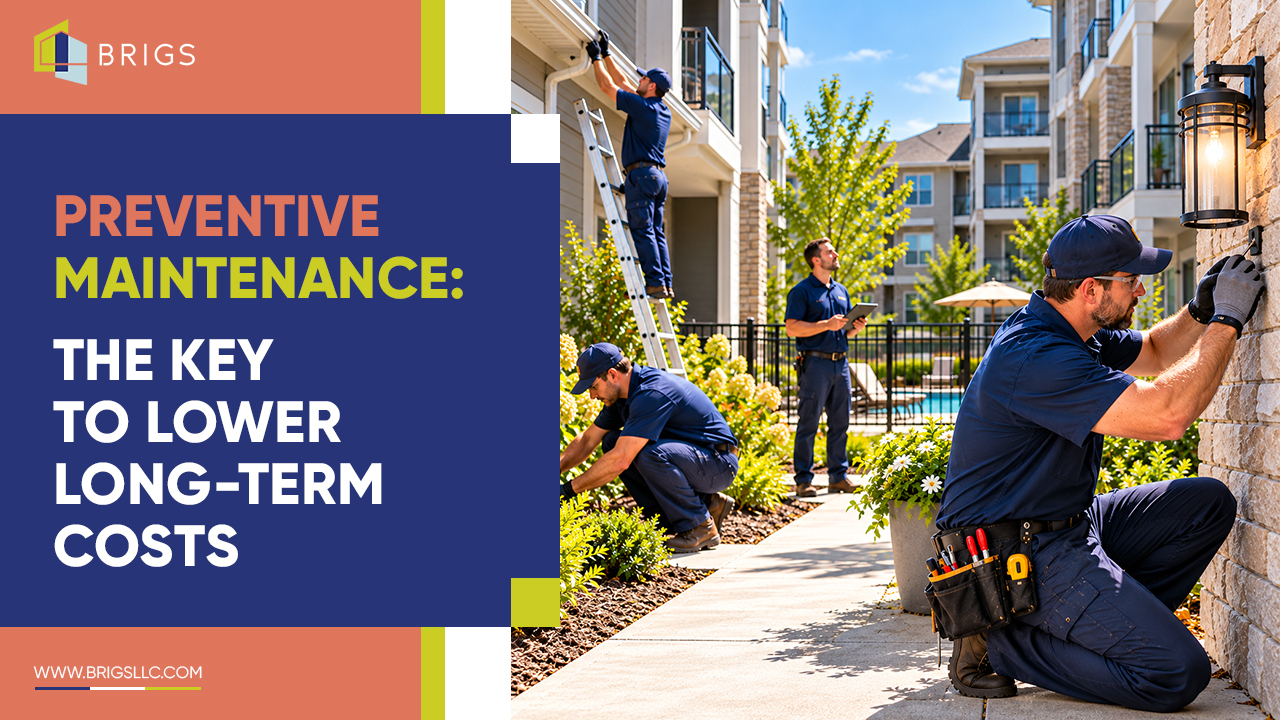
For condominium associations, HOAs, and multi-family property owners, controlling maintenance expenses is one of the most important aspects of effective property management. Buildings require continuous attention, from roofing and plumbing to HVAC systems, elevators, exterior structures, and common areas. While some maintenance costs are unavoidable, the way a property approaches these responsibilities can have a significant impact on its long-term financial performance.
One of the biggest mistakes a community can make is treating maintenance as something that only needs attention when a problem occurs.
A leaking roof, malfunctioning HVAC system, deteriorating parking lot, or plumbing failure may seem like an isolated issue. However, many expensive property repairs begin as relatively minor conditions that develop gradually over time. Without regular inspections, scheduled servicing, and ongoing monitoring, these issues can remain unnoticed until they become emergencies requiring immediate attention.
This reactive approach to property maintenance can create substantial financial challenges.
Emergency repairs often involve higher labor costs, limited contractor availability, unexpected disruptions, and additional damage that could potentially have been avoided. A small plumbing leak that goes undetected may eventually damage walls, flooring, insulation, or neighboring units. A neglected drainage system may contribute to water intrusion or deterioration of surrounding building components. An HVAC system that does not receive regular servicing may experience reduced efficiency, unexpected breakdowns, or premature component failure.
In each situation, the original maintenance issue may represent only a portion of the eventual expense.
Preventive maintenance takes a different approach.
Rather than waiting for building components to fail, preventive maintenance focuses on inspecting, servicing, and maintaining property systems at appropriate intervals. The objective is to identify developing problems early, preserve the performance of major building components, and reduce the likelihood of avoidable repairs.
For condominium associations and multi-family properties, this approach can provide meaningful financial and operational benefits.
A well-structured preventive maintenance program helps property managers establish predictable maintenance schedules, coordinate qualified contractors, monitor building conditions, and identify repairs before they become more extensive. It also provides valuable information for annual budgeting and long-term capital planning.
This is particularly important for condominium associations, where maintenance expenses are funded through assessments paid by individual unit owners.
Unlike a traditional apartment property, where a centralized owner generally controls capital investment decisions, condominium associations must balance the needs of the building with the financial responsibilities of the entire community. Major repairs, unexpected replacements, and emergency projects can place significant pressure on operating budgets and reserve funds.
When these expenses exceed available funding, boards may need to consider increased assessments, financing, or special assessments to address urgent property needs.
Preventive maintenance cannot eliminate every unexpected expense, but it can help reduce avoidable financial surprises and provide boards with more time to plan for necessary work.
Consider a condominium building with an aging roofing system.
Without regular inspections, the association may not become aware of deteriorating flashing, damaged membrane seams, or drainage problems until water begins entering residential units. By that point, the association may be facing roofing repairs alongside interior restoration, insurance coordination, and disruption to residents.
With a proactive maintenance program, those same conditions may be identified during a scheduled inspection. Management can then coordinate appropriate repairs, document the roof’s condition, and help the board understand whether additional maintenance or future replacement planning is necessary.
The difference is not simply whether the association spends money on maintenance.
It is whether those expenditures are planned and targeted toward preserving the property or made reactively after a failure has already occurred.
The same principle applies to mechanical equipment, plumbing systems, building exteriors, drainage infrastructure, parking facilities, and other major common elements.
Regular servicing can help mechanical systems operate more reliably. Routine inspections can identify deterioration before it becomes extensive. Scheduled cleaning can prevent certain drainage-related problems. Monitoring building conditions can also help management recognize when a component is approaching the point where replacement may be more practical than continued repairs.
Over time, these activities contribute to a more informed and financially responsible approach to property management.
Preventive maintenance also supports better decision-making at the board level.
Condominium board members are responsible for overseeing community assets, but they are not necessarily construction professionals, engineers, or building maintenance specialists. They rely on their management company and qualified vendors to provide accurate information about property conditions, maintenance priorities, and potential financial implications.
A consistent preventive maintenance program creates the documentation needed to support those decisions.
Inspection reports, service histories, repair records, contractor recommendations, and maintenance schedules help establish a clearer understanding of how the property is performing. They can also reveal recurring issues, identify components that require closer monitoring, and provide useful context when evaluating major repair or replacement proposals.
This information becomes particularly valuable when preparing annual budgets or reviewing reserve studies.
A reserve study may estimate that a major building component will require replacement within a particular timeframe, but actual conditions can change. Regular inspections and maintenance records help boards evaluate whether those projections remain reasonable and whether financial planning adjustments may be necessary.
Instead of reacting to unexpected failures, associations can begin preparing for future capital needs well in advance.
There is also an important distinction between minimizing maintenance expenses and managing maintenance costs effectively.
Reducing the maintenance budget may appear financially attractive in the short term. However, postponing necessary inspections, servicing, or repairs can sometimes result in significantly higher expenses later.
A lower annual maintenance expenditure does not automatically translate into lower long-term property costs.
In fact, consistently delaying necessary maintenance may accelerate deterioration, increase the frequency of emergency repairs, and shorten the useful life of major building systems.
Effective property management requires understanding when maintenance expenditures help protect larger investments.
At BRIGS, we believe preventive maintenance should be viewed as an essential component of responsible property management rather than an optional expense. Maintaining a building involves more than responding to service requests. It requires understanding the condition of major systems, anticipating future needs, coordinating qualified professionals, and helping property owners and condominium boards make informed decisions.
The goal is not to eliminate maintenance spending.
It is to make that spending more predictable, more effective, and better aligned with the long-term needs of the property.
For condominium associations, HOAs, and multi-family property owners, this proactive approach can help preserve building conditions, reduce avoidable disruptions, support financial stability, and protect property values over time.
Ultimately, the most cost-effective maintenance strategy is not necessarily the one that costs the least today. It is the one that helps prevent unnecessary expenses tomorrow.
One of the most significant financial advantages of preventive maintenance is its ability to reduce the frequency and severity of unexpected repairs. For condominium associations, HOAs, and multi-family property owners, emergency maintenance situations can create substantial financial and operational challenges, particularly when multiple building systems or residential units are affected.
While no property can completely eliminate the possibility of equipment failures, weather-related damage, or unexpected building issues, a consistent preventive maintenance program can help identify many developing problems before they become emergencies.
The distinction between preventive and reactive maintenance is important because the cost of a repair often increases as the underlying problem becomes more extensive.
A minor plumbing leak may initially require a relatively straightforward repair. However, if the leak remains undetected, moisture can spread into walls, ceilings, flooring, insulation, and other building materials. What began as a small plumbing issue may eventually require water mitigation, demolition, reconstruction, and repairs to multiple affected areas.
In a condominium community, the situation can become even more complicated when water damage affects neighboring units or common elements. Management may need to coordinate plumbers, restoration contractors, insurance representatives, individual owners, and the association’s board while determining the appropriate responsibilities for repairs and associated expenses.
The original plumbing failure may represent only a small portion of the total cost.
Preventive maintenance helps reduce this exposure by creating opportunities to identify deterioration, evaluate vulnerable components, and address known deficiencies before they lead to more extensive damage.
For example, periodic inspections of accessible plumbing systems may reveal corrosion, deteriorating connections, recurring moisture, or other conditions that warrant professional attention. Addressing these findings through planned maintenance can help reduce the likelihood of unexpected failures.
The same principle applies to roofing systems.
A deteriorated section of flashing, damaged roof membrane, or blocked drainage component may not immediately cause visible problems inside a building. However, continued exposure to rain, snow, and temperature fluctuations can worsen the condition over time.
Without regular inspections, management may not become aware of the issue until residents report water entering their units or common areas.
By that point, the association may be responsible for coordinating roofing repairs alongside additional work to address damaged interior materials or other affected building components.
Scheduled roof inspections and appropriate maintenance allow property managers to identify these conditions earlier and coordinate repairs before water intrusion becomes more extensive.
Emergency repairs can be more expensive than comparable work performed through a scheduled maintenance program.
When a building experiences an urgent failure, management may have limited flexibility in selecting contractors, obtaining multiple proposals, or scheduling work under favorable conditions. Immediate action may be necessary to protect residents, prevent additional property damage, or restore essential building services.
Emergency service rates, after-hours labor, temporary repairs, expedited materials, and additional restoration requirements can increase the overall expense.
For example, a mechanical system that fails during extreme weather may require immediate attention because residents depend on the equipment for heating or cooling. If replacement components are unavailable, temporary solutions may be necessary while permanent repairs are arranged.
Similarly, a major plumbing failure may require emergency water shutoffs, immediate contractor mobilization, and restoration work that disrupts multiple units.
These situations can place significant pressure on a condominium association’s operating budget.
The association may need to authorize expenses that were not anticipated during annual budgeting. If the costs are substantial, the board may need to evaluate whether operating funds, reserves, insurance proceeds, or additional funding will be required.
Planned maintenance generally provides greater financial flexibility.
When inspections identify a developing problem before failure occurs, management can often obtain proposals, evaluate the appropriate scope of work, coordinate scheduling, and present recommendations to the board for consideration.
This allows the association to make decisions with more complete information and less urgency.
Although planned maintenance still requires financial investment, it can help reduce the additional expenses and complications associated with emergency conditions.
The financial benefits of preventive maintenance extend beyond avoiding individual repairs. Regular servicing and inspections can also help protect the performance and useful life of major building systems.
Mechanical equipment, roofing systems, plumbing infrastructure, elevators, drainage systems, and other common elements represent significant investments for condominium associations and multi-family properties.
When these components are not properly maintained, deterioration may occur more quickly, operational problems may become more frequent, and equipment may require replacement earlier than anticipated.
HVAC systems provide a useful example.
Heating and cooling equipment contains mechanical and electrical components that require appropriate inspection and servicing. Depending on the system, maintenance may involve replacing filters, inspecting electrical connections, evaluating operating conditions, cleaning components, and addressing issues identified by qualified technicians.
When maintenance is neglected, certain components may operate under unnecessary stress or experience reduced efficiency.
Over time, this can contribute to increased operating costs, unreliable performance, and avoidable repairs.
Elevator systems present another example.
In multi-story condominium buildings, elevators are essential to accessibility and daily operations. Unexpected elevator failures can inconvenience residents, disrupt building operations, and create significant concerns for individuals who rely on elevators for access to their homes.
Routine inspections, servicing, and compliance with applicable safety requirements help identify mechanical concerns and support reliable operation.
While maintenance cannot prevent every equipment failure, a consistent service program can reduce certain risks and provide management with better visibility into equipment conditions.
This information also supports long-term replacement planning.
If a mechanical system begins requiring increasingly frequent repairs, management can document those expenses and help the board evaluate whether continued maintenance remains practical or whether replacement should be considered.
Rather than making that decision during an unexpected breakdown, the association may have time to assess available options and prepare financially.
One of the greatest risks associated with reactive property management is the accumulation of deferred maintenance.
Deferred maintenance occurs when necessary repairs, servicing, or replacements are postponed rather than completed within an appropriate timeframe.
In some situations, delaying work may be reasonable when a qualified professional determines that the condition can be safely monitored. However, repeatedly postponing necessary maintenance because of budget constraints can create larger problems.
Building components do not stop deteriorating simply because repairs have been delayed.
A parking lot with developing cracks may experience additional deterioration as water enters the pavement structure and repeated traffic places stress on weakened areas. Exterior masonry with deteriorated joints may allow moisture to penetrate building assemblies. A drainage system that is not properly maintained may contribute to water accumulation and damage to surrounding materials.
When these conditions are ignored, the eventual repair may involve a larger area or a more extensive scope of work.
This can create a cycle in which an association postpones maintenance to control current expenses, only to face greater financial obligations later.
For condominium boards, this is particularly challenging because annual assessment decisions are often influenced by the desire to keep costs manageable for residents.
While controlling expenses is important, reducing maintenance spending without considering the long-term consequences can create financial exposure for the community.
A preventive maintenance program helps boards distinguish between expenditures that can reasonably be deferred and those that should be addressed to prevent further deterioration.
This requires accurate information about building conditions, professional recommendations, and an understanding of the potential consequences of delaying work.
Management plays an important role in presenting that information clearly so board members can make informed decisions.
The consequences of emergency repairs are not limited to financial costs.
Unexpected building failures can disrupt residents, interfere with daily operations, create safety concerns, and place additional demands on property management personnel.
A major plumbing problem may require shutting off water to multiple units. An elevator failure may temporarily limit access within a building. Roofing leaks may require residents to accommodate contractors or restoration crews inside their homes.
Even when repairs are completed quickly, these disruptions can create frustration and uncertainty within the community.
Preventive maintenance allows many necessary repairs to be coordinated under more controlled circumstances.
When work is planned, management can notify residents in advance, establish appropriate schedules, coordinate access, and explain how the project may affect building operations.
For condominium associations, advance communication is particularly valuable because individual owners may need to make arrangements around scheduled maintenance activities.
Planned work also provides more opportunities to coordinate multiple maintenance needs efficiently.
For example, if a contractor is already scheduled to inspect rooftop mechanical equipment, management may be able to coordinate related maintenance activities when appropriate. If exterior repairs are being planned, management can evaluate whether nearby components should be inspected or serviced during the same project.
This coordination can help reduce repeated mobilization costs and minimize disruptions, provided the work is properly scoped and performed by qualified professionals.
The result is a more organized approach to maintaining the property.
Unexpected maintenance expenses are particularly difficult for condominium associations because their budgets are funded through assessments collected from unit owners.
Annual budgets are generally established based on anticipated operating expenses, contracted services, utilities, insurance, maintenance, and other community obligations.
When major emergency repairs occur, they can place pressure on funds intended for other purposes.
A significant unexpected expense may require the board to reconsider planned projects, adjust spending priorities, or evaluate additional funding options.
Preventive maintenance helps improve financial predictability by identifying necessary work before it becomes urgent.
Inspection reports, service records, maintenance schedules, and contractor recommendations can help management estimate upcoming expenses and incorporate appropriate work into the association’s budgeting process.
This does not mean every repair can be predicted accurately. Building systems can fail unexpectedly, and severe weather or other unforeseen events can create expenses regardless of how well a property is maintained.
However, a documented maintenance program provides more information than a reactive approach that relies primarily on resident complaints and equipment failures.
For example, if routine inspections reveal that several drainage components are deteriorating, management can begin evaluating repair options and associated costs before a significant failure occurs.
If an HVAC system is approaching the end of its expected useful life, the association can review its condition, maintenance history, and anticipated replacement needs rather than waiting until the equipment stops functioning.
This advance knowledge supports more informed budgeting and reserve planning.
It can also help boards explain maintenance priorities to homeowners.
When owners understand that planned expenditures are intended to prevent more costly problems and protect common assets, they may have a clearer understanding of why appropriate maintenance funding is necessary.
The most effective maintenance programs do not attempt to eliminate every repair or predict every equipment failure.
Instead, they establish a structured process for monitoring property conditions, identifying developing issues, and addressing problems before they become unnecessarily expensive.
For condominium associations and multi-family properties, that process should include regular inspections, appropriate servicing of major building systems, documentation of maintenance findings, timely evaluation of recommended repairs, and clear communication with decision-makers.
It should also account for the unique characteristics of each property.
An older condominium building with aging mechanical infrastructure may require a different maintenance strategy than a newer community with recently installed systems. A property with extensive exterior amenities may have different priorities than a high-rise building with elevators, central mechanical equipment, and complex roofing systems.
Preventive maintenance should reflect those differences.
The objective is to allocate maintenance resources where they provide the greatest long-term value while protecting the building from avoidable deterioration.
For condominium boards, this approach offers an important financial advantage.
Instead of allowing unexpected failures to determine when money must be spent, the association can use professional evaluations and documented maintenance needs to make more deliberate decisions.
That does not eliminate the cost of maintaining a property, but it can help reduce unnecessary expenses, improve operational reliability, and make future financial obligations easier to anticipate.
Ultimately, preventive maintenance is not simply about fixing small problems before they become larger ones. It is about creating a more predictable, responsible, and sustainable approach to protecting the community’s physical assets and financial resources.
One of the greatest challenges facing condominium associations and multi-family property owners is balancing immediate operating expenses with the long-term financial needs of the property. Buildings contain numerous systems and components that require ongoing maintenance, periodic repairs, and eventual replacement. While some expenses are relatively predictable, others can become significant financial burdens when they are not anticipated or properly planned.
Preventive maintenance plays an important role in making these expenses more manageable. By regularly inspecting building systems, documenting their condition, and addressing deterioration before it becomes extensive, property managers can provide boards and owners with a clearer understanding of upcoming maintenance needs. This information helps transform property maintenance from a series of unpredictable expenditures into a more structured financial planning process.
For condominium associations, this connection between maintenance and financial planning is particularly important. Unlike properties owned by a single investor or company, condominium communities rely on assessments collected from individual owners to fund operating expenses and long-term capital obligations. When major building components require unexpected repairs or replacement, the financial impact can extend across the entire community.
A proactive maintenance strategy helps reduce that uncertainty by providing information that supports more accurate annual budgets, better reserve planning, and more informed decisions about when major repairs or replacements should occur.
An effective annual operating budget should reflect the actual maintenance needs of the property rather than simply repeating the previous year’s expenses with minor adjustments. While historical spending provides a useful starting point, it does not necessarily account for aging equipment, deteriorating infrastructure, changing service requirements, or maintenance activities that may have been postponed.
Preventive maintenance programs help close that information gap.
When property managers maintain consistent inspection schedules and service records, they gain a better understanding of which building systems require routine attention and which may need additional repairs in the coming year. This allows maintenance expenses to be evaluated based on observed conditions and professional recommendations rather than relying exclusively on assumptions.
For example, routine inspections may reveal that a condominium building’s exterior drainage systems require more frequent cleaning because of surrounding trees and seasonal debris. A mechanical contractor may identify components that will need servicing or replacement within the next budget cycle. A roofing inspection may reveal several areas requiring localized repairs before the next winter season.
Individually, these may not represent major capital projects. However, they can affect the association’s annual maintenance expenses and should be considered when preparing the operating budget.
Without this information, boards may approve budgets that underestimate the property’s actual needs. As maintenance issues arise throughout the year, management may then need to request additional funding, postpone other planned work, or shift resources away from previously established priorities.
A documented preventive maintenance program allows these conversations to occur earlier. Management can present anticipated maintenance needs, explain the reasons behind recommended expenditures, and help the board understand how those activities support the long-term condition of the property.
This creates a more informed budgeting process and reduces the likelihood that necessary maintenance will be overlooked simply because it was not included in the previous year’s spending.
While operating budgets generally address recurring expenses and routine maintenance, reserve planning focuses on major building components that will eventually require significant repair or replacement.
For condominium associations, these components may include roofing systems, elevators, paving, building exteriors, mechanical equipment, common-area infrastructure, and other assets for which the association is responsible.
Reserve studies provide estimates of the remaining useful life and anticipated replacement costs of these components. These projections help associations determine how much funding should be accumulated to prepare for future capital expenditures.
However, reserve studies are most useful when their assumptions are informed by the actual condition of the property.
A roofing system may have an estimated remaining useful life based on its age, material type, and expected performance. Yet that estimate can change if inspections reveal widespread deterioration, recurring leaks, drainage deficiencies, or other significant conditions. Similarly, mechanical equipment that has received consistent servicing may perform differently from comparable equipment that has experienced repeated failures or inadequate maintenance.
Preventive maintenance provides ongoing information that helps boards evaluate these projections.
Inspection reports, service histories, repair records, and professional assessments can reveal whether major building components are performing as expected or whether their anticipated replacement timelines should be reconsidered.
This information can also help distinguish between components that may benefit from continued repairs and those approaching the point where replacement is likely to be the more practical long-term option.
Consider an association with several aging HVAC units serving common areas. If maintenance records show that one unit requires increasingly frequent repairs while the others remain reliable, management can help the board evaluate whether the deteriorating unit should receive priority in the capital plan.
Rather than replacing all equipment based solely on age or waiting until individual units fail, the association can use documented conditions to develop a more informed replacement strategy.
This approach does not eliminate the need for professional reserve studies or engineering evaluations. Instead, it provides useful information that can complement those assessments and help keep long-term planning aligned with the property’s changing conditions.
Special assessments can be a significant concern for condominium owners, particularly when they arise from major expenses that were not adequately anticipated.
Although special assessments may be necessary for a variety of reasons, unexpected building repairs and capital replacements can create substantial financial pressure when available operating funds and reserves are insufficient.
Preventive maintenance can help reduce certain risks that contribute to these situations.
When an association regularly evaluates its roofing systems, building exteriors, mechanical equipment, and other major common elements, it has more opportunities to identify developing conditions and prepare for future work. Instead of discovering that a major component requires immediate replacement, the board may receive advance notice that repairs are becoming more frequent or that the component is approaching the end of its useful life.
That additional planning time can be valuable.
Management can coordinate professional evaluations, obtain preliminary estimates, review reserve balances, and help the board understand the potential funding requirements. Depending on the circumstances, the association may be able to adjust reserve contributions, schedule work over an appropriate period, or evaluate other financing options before the expense becomes urgent.
For example, an exterior building inspection may identify deteriorating masonry or sealant systems that require attention. If those conditions are recognized early, the association may be able to develop a phased maintenance or restoration plan based on professional recommendations.
If the same deterioration is ignored for several years, the eventual scope of work may become more extensive, potentially requiring larger expenditures within a shorter timeframe.
The difference is not that preventive maintenance eliminates capital expenses. Buildings will continue to age, and major components will eventually need replacement regardless of how well they are maintained.
The benefit is that consistent oversight can provide more time to recognize financial obligations and prepare for them.
For condominium boards, this can help support a more stable and transparent approach to community finances.
Another important benefit of preventive maintenance is that it encourages property owners and condominium boards to evaluate expenses over the full lifecycle of building components.
When considering a maintenance expenditure, it can be tempting to focus exclusively on the immediate cost. A board may question whether a scheduled inspection, equipment service, or recommended repair is necessary when the affected system appears to be functioning adequately.
However, the lowest immediate expense does not always produce the lowest long-term cost.
Building components require ongoing investment to preserve their performance. Neglecting that investment may contribute to accelerated deterioration, reduced efficiency, increased repair frequency, or premature replacement.
The financial impact becomes clearer when maintenance decisions are evaluated over several years rather than a single budget cycle.
Consider a commercial HVAC system serving a condominium building. Regular servicing creates recurring maintenance expenses, but it can also help the equipment operate efficiently, identify worn components, and reduce certain avoidable failures. Skipping recommended maintenance may lower expenses in the current year, but it can increase the likelihood of future problems that require more extensive repairs.
The same principle applies to parking lots, roofing systems, exterior surfaces, and other common elements.
A pavement maintenance program that includes inspections, appropriate crack repairs, drainage evaluation, and timely surface treatments may help preserve the condition of the parking area. If deterioration is allowed to progress, the association may eventually face more extensive pavement repairs or reconstruction.
Preventive maintenance is therefore best understood as part of the total cost of owning and operating a property.
The relevant financial question is not simply how much a maintenance activity costs today. It is whether that activity provides reasonable value by protecting a larger asset, reducing the risk of future damage, or supporting reliable building operations.
This perspective can help condominium boards make more balanced decisions when evaluating maintenance budgets.
Condominium associations rarely have unlimited financial resources. Boards must make decisions about which maintenance and capital projects should receive attention first, often while balancing several competing priorities.
A preventive maintenance program provides valuable information for establishing those priorities.
When property managers consistently document building conditions, they can help boards distinguish between urgent deficiencies, recommended near-term repairs, and longer-term improvements.
For example, a roofing system with recurring water intrusion may require more immediate attention than a common-area improvement that is primarily aesthetic. A deteriorating structural component may warrant professional evaluation before funds are allocated to less critical projects. A mechanical system experiencing repeated failures may deserve priority over equipment that remains in good condition.
These decisions should be informed by safety considerations, professional recommendations, the potential consequences of delaying work, and the association’s available financial resources.
Maintenance records also help identify patterns that might otherwise be overlooked.
If a particular building component requires repeated repairs, the cumulative expense may eventually justify evaluating replacement alternatives. If several components are approaching the end of their expected useful lives at approximately the same time, the board may need to reconsider the timing and funding of planned capital projects.
Having this information available allows the association to establish a more deliberate approach to capital spending.
It also supports clearer communication with homeowners.
When owners understand that maintenance priorities are based on documented conditions and long-term financial considerations, they have a stronger basis for understanding why particular projects are being recommended.
This does not eliminate disagreements about spending, but it helps ensure that discussions are grounded in the actual needs of the property.
The relationship between preventive maintenance and financial stability becomes more significant as a property ages.
Newer buildings may have relatively limited maintenance needs during their early years, but major components begin to deteriorate at different rates over time. Roofing systems, mechanical equipment, exterior materials, drainage infrastructure, and other common elements eventually require increasingly substantial attention.
Without a consistent maintenance and planning process, these obligations can accumulate until multiple expensive projects require attention within a relatively short period.
Preventive maintenance helps property managers and condominium boards recognize these developing needs and incorporate them into financial planning before they become immediate problems.
A well-managed association should have an understanding of its major building components, their current conditions, the maintenance activities required to preserve them, and the anticipated expenses associated with future repairs and replacements.
That understanding should inform both annual operating budgets and longer-term reserve funding decisions.
For condominium boards, maintaining this connection is essential because the financial consequences of deferred maintenance can affect every owner in the community.
Appropriate maintenance spending today may help reduce avoidable expenses tomorrow, while accurate reserve planning can help distribute the financial burden of major capital needs more responsibly over time.
Preventive maintenance does not guarantee that a property will avoid unexpected repairs, assessment increases, or special assessments. Severe weather, unforeseen failures, changing construction costs, and other circumstances can still create financial challenges.
However, it provides a stronger foundation for anticipating expenses, evaluating priorities, and making informed decisions.
Ultimately, effective property management requires more than controlling what a community spends in the current year. It requires protecting the condition of the property while preparing financially for the maintenance and capital obligations that will arise in the future.
By connecting preventive maintenance with budgeting, reserve planning, and long-term asset management, condominium associations and multi-family property owners can take a more proactive approach to managing costs and preserving the financial health of their communities.
While the financial benefits of preventive maintenance are often measured through reduced repair costs and more predictable budgets, its impact extends beyond the association’s operating expenses. The condition of a property influences how residents experience their community, how prospective buyers evaluate individual units, and how effectively the association protects its shared assets over time.
For condominium associations, HOAs, and multi-family property owners, maintaining the physical condition of a building is closely connected to preserving its long-term value. Well-maintained properties tend to present a more positive impression, experience fewer avoidable disruptions, and provide residents with greater confidence that their community is being managed responsibly.
This does not mean that preventive maintenance guarantees higher property values. Real estate values are influenced by numerous factors, including location, market conditions, interest rates, property characteristics, and buyer demand. However, the condition of the building and the financial health of its association can play meaningful roles in how a condominium community is perceived.
A property with visible deterioration, recurring maintenance emergencies, or significant unresolved building issues may raise concerns among existing owners and prospective buyers. Conversely, a community that demonstrates consistent upkeep, organized maintenance planning, and responsible financial oversight may be better positioned to maintain its appeal over time.
Preventive maintenance helps create the foundation for that long-term stability.
The physical condition of a condominium building or multi-family property is an important component of its overall market appeal. While individual unit owners may invest in interior renovations, updated kitchens, modern bathrooms, and other improvements, the condition of shared building components remains largely outside their direct control.
A beautifully renovated condominium unit can still be affected by a deteriorating roof, unreliable elevators, aging exterior infrastructure, or poorly maintained common areas.
These conditions may influence how prospective buyers evaluate the property, particularly when they suggest that significant repairs or capital expenditures could be necessary in the future.
For condominium associations, maintaining common elements is therefore an important part of protecting the collective investment of unit owners.
Roofing systems, building exteriors, mechanical equipment, parking facilities, drainage infrastructure, and shared amenities all contribute to the overall condition of the community. When these components are consistently inspected and maintained, the association has more opportunities to address deterioration before it becomes extensive.
Consider a condominium community with exterior masonry that is beginning to show signs of deterioration. If the association identifies the condition through routine inspections and coordinates appropriate repairs, it may be able to address localized issues before they develop into more significant building envelope problems.
If those conditions are ignored, deterioration may become more widespread, potentially affecting the appearance, performance, and repair costs associated with the building.
The difference can become particularly noticeable when prospective buyers evaluate the community.
Visible signs of neglect may raise questions about whether other maintenance responsibilities have also been postponed. Even when a particular issue is relatively minor, it can contribute to concerns about the property’s overall management.
Consistent preventive maintenance helps reduce these concerns by supporting a more organized approach to maintaining the building’s physical condition.
For many residents, the effectiveness of property management is judged through their daily experience of the community.
They may not regularly review reserve studies, maintenance contracts, or capital improvement schedules, but they notice whether common areas are clean, exterior lighting functions properly, elevators operate reliably, and shared facilities are maintained.
These everyday experiences influence how residents perceive the quality of their property management.
A community with recurring maintenance problems may generate frustration even when individual issues are eventually resolved. Residents may begin to question why the same problems continue occurring or whether sufficient attention is being given to the property’s condition.
For example, repeated elevator outages can become a major source of dissatisfaction in a multi-story condominium building. Even if management responds promptly to each failure, residents may reasonably wonder whether the equipment is receiving appropriate servicing or whether more comprehensive corrective action is necessary.
A preventive maintenance program provides a structured way to evaluate these recurring concerns.
Routine inspections and scheduled servicing can help identify developing issues, while maintenance records allow management to determine whether repeated problems indicate a broader condition requiring attention.
The same principle applies to exterior lighting, parking areas, entrance systems, drainage, common-area HVAC equipment, and other shared building components.
Residents benefit when these systems function reliably, and management benefits from having fewer avoidable disruptions to address.
Preventive maintenance also helps demonstrate that the association is actively caring for the community rather than waiting for residents to report every problem.
This distinction can have a meaningful impact on resident confidence.
Unexpected maintenance failures often affect residents in ways that extend beyond the physical damage or repair expense.
A major plumbing failure may require temporary water shutoffs, access to multiple units, and restoration work that continues for days or weeks. A roofing problem may result in interior water damage, contractor visits, and disruption to residents’ homes. An HVAC breakdown may affect common areas or essential building services during periods of extreme weather.
These situations can be stressful, particularly when residents receive little advance notice or are uncertain about how long repairs will take.
Although preventive maintenance cannot eliminate every emergency, it can reduce certain avoidable failures and provide opportunities to schedule work under more controlled circumstances.
Planned maintenance generally allows property managers to communicate with residents in advance, explain the anticipated scope of work, coordinate access, and establish realistic expectations about potential disruptions.
For example, when a plumbing inspection identifies a component that should be replaced, management may be able to schedule the work during normal business hours and notify affected residents before any necessary water interruption.
If the same component fails unexpectedly, the resulting emergency may require an immediate shutdown, urgent contractor mobilization, and additional repairs.
Both situations involve maintenance expenditures, but the resident experience can be very different.
In condominium communities, where residents have an ownership interest in their units and shared property, reducing avoidable disruptions is an important part of maintaining confidence in the association’s management.
Building maintenance also plays an important role in supporting safe and accessible living environments.
Common areas, walkways, stairs, handrails, exterior lighting, elevators, parking facilities, and other shared components require appropriate inspection and maintenance to remain in serviceable condition.
Deterioration or equipment failures in these areas can create hazards or interfere with residents’ ability to use the property.
For example, damaged pavement or uneven walking surfaces may increase the risk of trips and falls. Inadequate lighting can make common areas more difficult to navigate. Malfunctioning entrance systems may create security or accessibility concerns, while unreliable elevators can significantly affect residents with mobility limitations.
Regular inspections help property managers identify these conditions and coordinate appropriate corrective action.
The specific maintenance requirements will depend on the building, applicable laws and regulations, manufacturer recommendations, and the association’s responsibilities under its governing documents.
Some systems also require specialized inspections or servicing to satisfy regulatory requirements. Elevators, fire protection equipment, and certain mechanical systems are examples of components that may be subject to mandatory inspection or maintenance standards.
A preventive maintenance program should account for these obligations while also addressing routine property conditions that may not be covered by a specific regulatory inspection.
For condominium boards, this creates a more comprehensive approach to protecting the community.
Rather than relying exclusively on resident complaints to identify potential problems, management can use scheduled evaluations to monitor building conditions and recommend appropriate action.
This supports both the physical condition of the property and the daily well-being of the people who live there.
Prospective condominium buyers often evaluate more than the individual unit they are considering purchasing.
Depending on the transaction and available disclosures, buyers may review association financial statements, budgets, reserve information, meeting records, planned capital projects, and other materials that provide insight into the community’s condition and financial responsibilities.
These documents can reveal whether the association has been planning for major expenses or whether significant maintenance concerns remain unresolved.
A community with recurring building problems, substantial deferred maintenance, or uncertain capital funding may face additional questions from prospective buyers.
In some circumstances, the condition and financial stability of the condominium association may also affect financing considerations, depending on lender requirements and the nature of the property.
Preventive maintenance helps support a more informed and organized approach to these issues.
Inspection reports, service records, completed repair documentation, and long-term maintenance plans can provide evidence that the association is monitoring its common assets and addressing identified concerns.
These records do not guarantee that buyers or lenders will view the property favorably, nor do they replace the need for appropriate reserve funding or major capital repairs.
However, they can help the association demonstrate that maintenance decisions are based on documented conditions and professional recommendations.
This is particularly valuable when a community is preparing for significant capital projects.
An association that can explain the condition of a major building component, the anticipated work, and the financial plan for addressing it may be better positioned to respond to owner and buyer questions than one that has limited information about its infrastructure.
Transparency and documentation help create confidence because they allow stakeholders to understand what is happening and why.
Maintenance issues are among the most common reasons residents contact their property management company or condominium board.
When problems occur repeatedly or remain unresolved, communication can become strained. Residents may question whether management is responding appropriately, while board members may face increasing pressure to authorize repairs or explain unexpected expenses.
A preventive maintenance program can help improve these interactions by creating a clearer framework for identifying, prioritizing, and addressing property needs.
When management has an established maintenance schedule, documented inspection findings, and a process for tracking recommended work, it can provide more meaningful updates to the board.
Board members can then communicate with owners using information about the property’s actual condition, the reasons for planned maintenance, and the expected benefits of recommended projects.
This is particularly important when the association must approve expenditures that are not immediately visible to residents.
An owner may not understand why the community needs to invest in drainage improvements, mechanical servicing, or roof repairs when there is no obvious problem affecting their unit.
Explaining that these activities are intended to preserve building systems and reduce the likelihood of future damage can help residents understand the value of preventive maintenance.
Communication should also acknowledge that maintenance priorities sometimes involve difficult financial decisions.
A condominium association may need to balance necessary repairs against available operating funds, reserve contributions, and other community obligations. Not every recommended project can necessarily be completed immediately.
However, when the board has reliable information and communicates its decisions clearly, residents have a better understanding of how maintenance priorities are established.
This supports a more transparent relationship between management, the board, and the community.
Over time, the cumulative effects of maintenance decisions become increasingly visible.
A community that consistently maintains its buildings, addresses deterioration, and plans for major repairs is generally better positioned to preserve its physical condition than one that repeatedly postpones necessary work.
This applies to both large building systems and smaller elements that contribute to the property’s appearance and functionality.
Well-maintained entrances, clean common areas, functioning lighting, properly serviced equipment, and attractive exterior conditions all contribute to the overall resident experience.
Individually, these details may seem relatively minor. Collectively, they influence how people experience the property and how the community presents itself to prospective residents and buyers.
For condominium associations, this is particularly important because the condition of common property affects the entire ownership community.
Individual owners can maintain and improve their units, but they depend on the association to fulfill its responsibilities for shared building components and common areas.
Preventive maintenance helps protect that shared investment by establishing a consistent approach to property upkeep.
It also helps reduce the likelihood that a series of neglected maintenance issues will eventually require extensive corrective work that disrupts residents and places pressure on association finances.
Ultimately, the value of preventive maintenance should not be measured solely by the repair expenses it may help avoid.
Its benefits also include more reliable building operations, fewer unnecessary disruptions, better-maintained common areas, stronger communication, and greater confidence in the community’s long-term management.
For condominium associations, HOAs, and multi-family property owners, these outcomes contribute to a more stable and desirable living environment.
When preventive maintenance is treated as an ongoing investment in the property rather than an expense to be minimized, it becomes an important part of protecting both the building and the community that depends on it.
For condominium associations, HOAs, and multi-family property owners, preventive maintenance is one of the most important investments that can be made in the long-term condition and financial stability of a property. While unexpected repairs and equipment failures will always be part of managing buildings, a proactive maintenance strategy can help reduce avoidable expenses, preserve major building systems, and create a more predictable approach to property operations.
At BRIGS, we believe effective property management should extend beyond responding to problems as they arise. It should involve understanding the condition of the property, identifying developing maintenance needs, coordinating qualified professionals, and helping condominium boards make informed decisions about how their community’s resources are allocated.
This approach recognizes that maintenance decisions made today can have significant financial consequences years into the future.
A repair that is postponed may eventually require a more extensive scope of work. A building component that receives inadequate servicing may experience premature deterioration. A major capital expense that is not anticipated may create financial pressure when the association is least prepared to address it.
Conversely, a property that receives consistent attention is better positioned to identify problems early, coordinate necessary work, and prepare for future obligations.
The goal of preventive maintenance is not simply to reduce the number of service requests or minimize annual repair expenditures. It is to establish a more responsible and sustainable approach to protecting the property’s physical assets while managing costs over time.
Every condominium community and multi-family property has a different combination of building systems, maintenance requirements, and long-term priorities. A high-rise condominium with elevators, central mechanical equipment, and a complex building envelope will have different maintenance needs than a garden-style community with multiple smaller buildings, extensive landscaping, and shared parking facilities.
An effective preventive maintenance strategy should account for these differences.
The process begins with understanding the property’s major components, their current conditions, and the maintenance activities necessary to preserve their performance. Roofing systems, plumbing infrastructure, HVAC equipment, drainage systems, exterior structures, common areas, and other shared assets should be evaluated according to their specific requirements.
Some components require routine servicing at established intervals. Others benefit from periodic inspections, seasonal maintenance, or specialized evaluations performed by qualified professionals.
The age and condition of each system should also influence how maintenance is prioritized.
For example, an aging roofing system with a history of recurring repairs may require more frequent monitoring than a recently installed roof in good condition. Mechanical equipment approaching the end of its anticipated useful life may warrant additional attention to determine whether continued repairs remain practical. Exterior building components showing early signs of deterioration may require targeted maintenance before more extensive restoration becomes necessary.
Rather than applying the same maintenance schedule to every property, management should help establish an approach that reflects the building’s actual conditions and operational requirements.
This allows maintenance resources to be directed toward activities that provide meaningful value while reducing the risk of unnecessary expenditures.
Regular inspections are an essential part of preventive maintenance, but their value depends on how the findings are used.
An inspection may identify deteriorating materials, equipment deficiencies, drainage concerns, or other conditions requiring attention. Simply documenting those findings does not improve the property unless management and the appropriate decision-makers evaluate the recommendations and coordinate necessary action.
A structured maintenance process should connect inspection findings with repair priorities, contractor coordination, financial planning, and follow-up documentation.
For condominium associations, this means helping the board understand which conditions require immediate attention, which should be addressed through scheduled maintenance, and which may warrant additional monitoring or long-term capital planning.
Not every deficiency requires an emergency response, and not every aging component needs immediate replacement. However, boards should have enough information to understand the potential consequences of delaying recommended work.
For example, a roofing inspection may identify localized flashing deterioration that can be addressed through routine maintenance. A mechanical contractor may recommend replacing a worn component before it causes an equipment failure. An exterior building evaluation may identify conditions that should be monitored and incorporated into future restoration planning.
Each situation requires a different response, but all benefit from clear documentation and informed decision-making.
Maintaining accurate records also creates continuity.
Condominium board members change over time, and the people making maintenance decisions today may not be serving on the board when a major project is eventually completed. Organized inspection reports, maintenance histories, contractor recommendations, and completed repair documentation help preserve the property’s operational history.
This allows future boards to understand what work has been performed, which conditions have been monitored, and why previous decisions were made.
Over time, these records become valuable tools for evaluating recurring problems, monitoring building deterioration, and preparing for future expenditures.
One of the most important responsibilities of professional condominium management is helping boards connect the physical condition of the property with its financial obligations.
Preventive maintenance supports that responsibility by providing information about upcoming repair needs, anticipated equipment servicing, and potential capital expenditures.
When management understands the condition of major building systems, it can help the board evaluate whether sufficient funding is available to address expected maintenance requirements.
This information should inform annual operating budgets as well as longer-term reserve planning.
A condominium association may have adequate funding for routine maintenance but still face significant future obligations involving roofing, elevators, exterior restoration, or mechanical equipment. Recognizing those obligations early allows the board to evaluate reserve contributions and capital priorities before replacement becomes urgent.
Preventive maintenance also helps boards distinguish between necessary expenditures and projects that may reasonably be scheduled for a later date.
This is particularly important when multiple building components require attention at approximately the same time.
Management can help coordinate professional evaluations, obtain appropriate proposals, and provide the board with information about the relative urgency and financial implications of different projects.
The objective is not to eliminate maintenance spending or recommend the least expensive option in every situation.
It is to help the association allocate its resources responsibly while protecting the condition of the property.
A relatively modest preventive repair may help avoid more extensive deterioration. A planned capital replacement may offer better long-term value than repeatedly repairing equipment that is no longer performing reliably. In other situations, continued maintenance may be appropriate when a component remains in good condition.
These decisions should be based on documented conditions, qualified professional recommendations, and a clear understanding of the association’s financial position.
Preventive maintenance also depends on effective communication between the property management company, condominium board, contractors, and residents.
Board members need timely information about significant maintenance concerns and recommended work. Contractors need clearly defined scopes of service and appropriate oversight. Residents need advance notice when scheduled maintenance may affect building access, utilities, parking, or other aspects of daily life.
When these responsibilities are coordinated effectively, maintenance projects can proceed with fewer avoidable disruptions and greater transparency.
For condominium boards, regular maintenance updates also help establish accountability.
Management should be able to explain what work has been recommended, what has been completed, which conditions remain outstanding, and whether additional action is necessary.
This information allows the board to monitor the property’s condition without becoming involved in every routine operational detail.
Communication with owners is equally important, particularly when preventive maintenance requires expenditures that may not produce immediately visible improvements.
Residents may readily understand the need to repair a leaking roof or replace a failed piece of equipment. They may be less familiar with the value of scheduled inspections, mechanical servicing, drainage maintenance, or repairs intended to prevent future deterioration.
Explaining the purpose of these activities helps owners understand how routine maintenance contributes to protecting their property and managing long-term community expenses.
A transparent approach also helps establish confidence that association funds are being used thoughtfully and that maintenance priorities are based on the property’s actual needs.
The financial benefits of preventive maintenance are often most apparent over time.
A single inspection may not reveal a major problem. A routine equipment service may not produce an immediate or measurable reduction in expenses. A minor repair may go largely unnoticed by residents.
However, these activities contribute to a broader maintenance strategy that helps preserve building systems, identify developing issues, and reduce the likelihood of avoidable deterioration.
The cumulative impact can be significant.
Properties that consistently monitor their condition and address necessary maintenance are better positioned to manage aging infrastructure, coordinate planned repairs, and prepare for future capital expenditures.
For condominium associations, this can help reduce the financial uncertainty associated with unexpected building failures and support more responsible long-term budgeting.
It can also contribute to a more positive resident experience.
Reliable building systems, well-maintained common areas, fewer avoidable disruptions, and consistent communication all help create a community where residents can feel confident that their shared property is receiving appropriate attention.
At BRIGS, we view preventive maintenance as an important part of responsible property management. Protecting a community requires more than addressing today’s maintenance requests. It requires anticipating future needs, understanding the financial implications of building conditions, and helping boards make decisions that support the property over the long term.
That philosophy is particularly important as buildings age and maintenance obligations become more complex.
A proactive approach does not guarantee that a condominium association will avoid every emergency, major repair, or unexpected expense. However, it creates a stronger foundation for managing those challenges and making informed decisions when they arise.
Ultimately, lower long-term property costs are not achieved simply by spending less on maintenance. They are achieved by spending wisely, addressing problems at the appropriate time, and protecting major building assets before avoidable deterioration creates larger financial obligations.
For condominium associations, HOAs, and multi-family property owners, preventive maintenance is not merely another operating expense. It is an essential strategy for preserving property conditions, supporting financial stability, and protecting the long-term value of the entire community.