A building’s roof is one of its most important protective systems, yet it is also one of the easiest components to overlook when there are no visible problems. Unlike landscaping, common areas, parking lots, or other highly visible parts of a property, roofing systems are largely out of sight for residents, board members, and property owners. As long as water is not entering the building and no obvious damage is occurring, it can be tempting to assume the roof is performing as expected.
Unfortunately, the absence of an active leak does not necessarily mean a roof is in good condition.
Roofing systems are continuously exposed to weather, temperature fluctuations, ultraviolet radiation, moisture, wind, and other environmental conditions. Over time, these forces can contribute to deterioration of roofing materials, flashing, seams, drainage components, sealants, and other elements that help keep water out of the building. Even relatively small deficiencies can eventually develop into more significant problems when they are not identified and addressed.
For condominium associations, HOAs, and multi-family property owners, the consequences of overlooking roof maintenance can be substantial. A roofing problem may affect more than one residential unit, damage insulation or interior finishes, disrupt building operations, and create unexpected expenses. In more serious situations, water intrusion can lead to extensive restoration work, insurance claims, and disputes over responsibility for resulting damage.
Regular roof inspections are one of the most effective ways to reduce these risks.
A professional inspection provides an opportunity to evaluate the roof’s condition, identify developing problems, review drainage performance, and determine whether repairs or additional maintenance may be necessary. It also helps property managers and boards understand how the roofing system is aging and whether future capital expenditures should be anticipated.
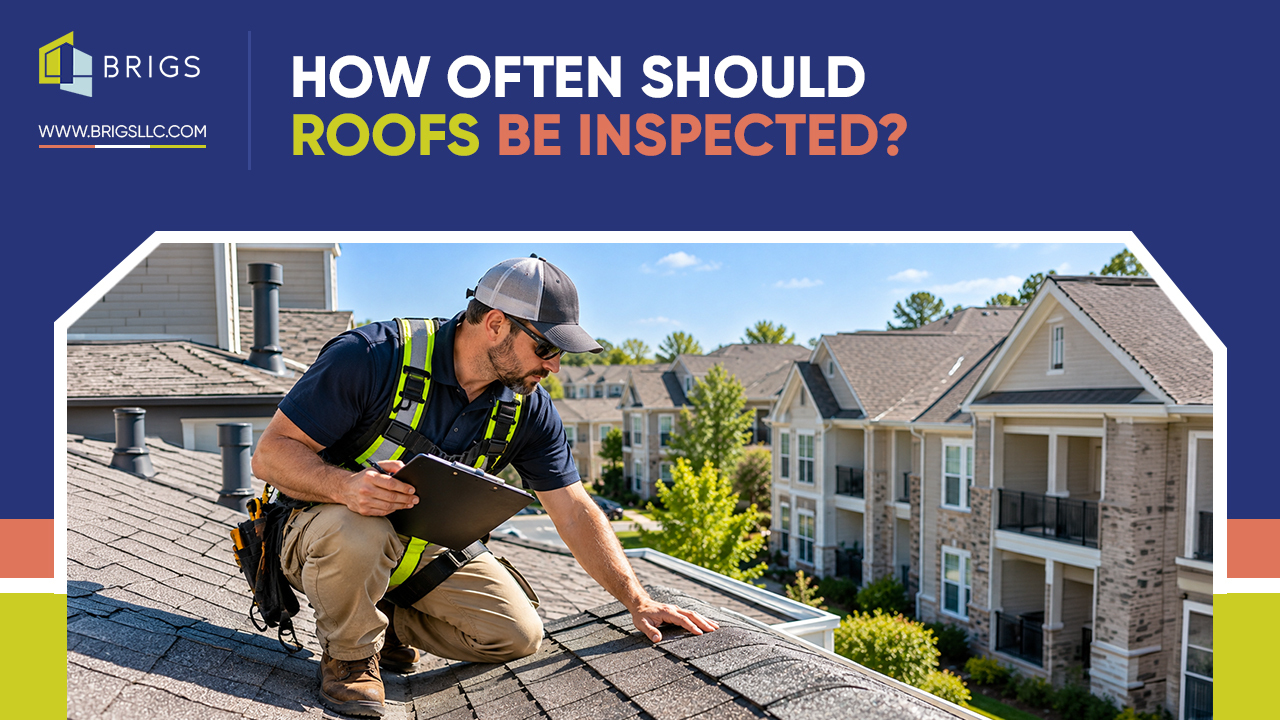
The question many property owners ask is straightforward: How often should a roof be inspected?
For many commercial and multi-family roofing systems, a practical starting point is to schedule professional inspections at least twice per year, typically in the spring and fall. Additional inspections may be appropriate following significant storms, high winds, hail, unusual snow or ice conditions, suspected damage, or recurring water intrusion.
However, the appropriate frequency depends on the roof’s design, materials, age, condition, manufacturer requirements, warranty provisions, and the property’s exposure to environmental conditions. Some systems may require a different schedule, and inspections should always follow applicable professional recommendations and maintenance requirements.
The objective is not simply to meet a predetermined number of inspections each year. It is to establish a consistent process for monitoring the roof and addressing conditions before they result in more extensive damage.
Spring and fall inspections are particularly useful because they allow management to evaluate the roof before and after periods of significant seasonal stress. A spring inspection can identify conditions that developed during winter, including damage associated with snow, ice, freeze-thaw cycles, or severe weather. A fall inspection can help determine whether the roof and drainage systems are prepared for colder temperatures, falling leaves, and winter precipitation.
These inspections may reveal issues that would otherwise remain unnoticed.
A roofing contractor may identify deteriorating flashing around penetrations, areas where seams are beginning to separate, damaged roofing materials, clogged drains, standing water, or deterioration around rooftop equipment. Depending on the roofing system, these conditions may be relatively straightforward to address when identified early.
Left unresolved, however, some can contribute to water intrusion, accelerated deterioration, or more expensive repairs.
This is particularly important for flat and low-slope roofs, which are common on condominium buildings, apartment communities, and other multi-family properties. These systems often rely on carefully designed drainage, membranes, flashing, and penetrations to manage water effectively. Debris accumulation, blocked drains, membrane damage, or improperly maintained rooftop equipment can create problems that are not visible from the ground.
Roof inspections also provide valuable information for long-term capital planning.
A condominium association may have a reserve study estimating when the roof will need replacement, but those projections should be evaluated alongside the roof’s actual condition. A roof that receives appropriate maintenance and remains in good condition may perform differently from one that has experienced repeated leaks, extensive repairs, or accelerated deterioration.
Routine inspections create a documented history that can help boards understand how the roofing system is performing over time.
That information becomes especially important as the roof approaches the later stages of its expected useful life. Rather than waiting for repeated failures to force an emergency replacement, management can begin discussing the condition with the board, consulting roofing professionals, evaluating replacement options, and preparing financially for the work.
For condominium associations, that additional planning time can be extremely valuable. Roof replacements often represent major capital expenditures, and the funding process may involve reserves, assessment adjustments, financing, or other strategies that require advance consideration.
Regular inspections help make those decisions more informed.
They can also improve accountability among vendors. When inspections are scheduled, findings are documented, and recommended repairs are tracked, management can verify that identified problems are being addressed. This creates continuity between individual inspections and helps prevent minor deficiencies from being repeatedly noted without follow-up.
It is important to recognize that a roof inspection is not the same as a roof repair. An inspection identifies conditions that may require attention, but the value comes from what happens afterward. If a contractor identifies deteriorated flashing, drainage problems, damaged materials, or other deficiencies, management should evaluate the recommendations and coordinate appropriate corrective action.
Simply completing the inspection does not protect the property if important findings are ignored.
At BRIGS, we believe roof inspections should be part of a broader preventive maintenance strategy rather than an activity performed only after residents report leaks. Roofing systems protect the building, its contents, and the people who live within it. Maintaining those systems requires consistent oversight, qualified professionals, documentation, and an understanding of how the roof’s condition affects the property’s long-term needs.
The most effective approach is proactive.
Instead of waiting until water enters a unit or common area, property managers should establish an inspection schedule appropriate for the building, monitor known conditions, address recommended maintenance, and use inspection findings to inform future planning.
Because when it comes to roofing, the cost of identifying a problem early is often considerably less than the cost of discovering it after damage has already occurred.
While roof inspections should be performed throughout a building’s lifespan, the timing of those inspections can be just as important as their frequency. For condominium associations, HOAs, and multi-family properties, scheduling inspections in the spring and fall provides an opportunity to evaluate roofing conditions before and after the seasons that typically place the greatest stress on a building.
This seasonal approach allows property managers to identify developing problems, coordinate necessary repairs, and prepare roofing systems for changing weather conditions. Rather than treating roof inspections as isolated maintenance activities, spring and fall evaluations can become part of a broader preventive maintenance program designed to protect the property year-round.
Winter can be particularly demanding on roofing systems, especially in regions like New Jersey and the northeastern United States, where buildings experience freezing temperatures, snow accumulation, ice formation, and repeated freeze-thaw cycles.
Even when a roof appears to have performed adequately throughout the winter, seasonal weather may have contributed to deterioration that is not immediately visible.
As temperatures fluctuate, roofing materials expand and contract. Water can enter small openings, freeze, and expand, potentially making existing deficiencies worse. Snow and ice may place additional stress on drainage systems, flashing, and vulnerable roof components. High winds associated with winter storms can also damage roofing materials or loosen components that help protect the building from moisture.
A spring roof inspection provides an opportunity to identify these conditions before they develop into more serious problems.
For flat and low-slope roofs, which are commonly found on condominium and multi-family buildings, contractors may examine membrane seams, flashing details, roof penetrations, drains, and areas where water may have accumulated during the winter. They may also look for evidence of punctures, displaced materials, deteriorated sealants, or other conditions that could compromise the roofing system.
Drainage deserves particular attention during spring inspections.
Throughout the fall and winter, leaves, branches, dirt, and other debris can accumulate around roof drains, scuppers, and gutters. If these components become obstructed, water may not drain as intended. Standing water can place additional stress on roofing materials, and prolonged ponding may contribute to deterioration or reveal underlying drainage deficiencies.
Clearing debris and evaluating drainage performance can help reduce the likelihood of problems during spring rainstorms.
Spring inspections also create an opportunity to evaluate whether previously completed repairs have remained effective. If a roofing contractor addressed a leak or replaced damaged flashing during the winter, management should verify that the affected area is performing as intended and determine whether additional work is necessary.
For condominium boards, this information can be especially useful when reviewing maintenance priorities and annual budgets.
A spring inspection may identify relatively minor repairs that can be addressed through routine maintenance funding. It may also reveal larger conditions requiring engineering evaluations, additional contractor proposals, or capital planning discussions.
Identifying these needs early in the year can provide more flexibility when scheduling contractors and evaluating financial options.
If spring inspections focus on evaluating the effects of winter, fall inspections focus on preparing the roofing system for the conditions ahead.
As temperatures begin to decline, condominium associations and property managers should be confident that their roofs are ready for colder weather, snow accumulation, ice, and seasonal storms.
Fall is an important time to identify deficiencies that could become more difficult or expensive to address during winter.
Small openings around flashing, deteriorated seams, damaged roofing materials, or compromised roof penetrations may not cause immediate problems during dry weather. However, these conditions can become more significant when exposed to prolonged moisture, freezing temperatures, and snow or ice accumulation.
A fall inspection gives management an opportunity to identify vulnerable areas and coordinate appropriate repairs before winter conditions limit access or make certain roofing work more challenging.
Drainage maintenance is another major consideration.
Falling leaves and seasonal debris can obstruct gutters, roof drains, and scuppers. If water cannot drain properly, it may accumulate on the roof or freeze around drainage components when temperatures drop.
Depending on the roofing system and building design, drainage problems can contribute to water intrusion, ice-related damage, or additional loading concerns.
A professional inspection can help identify these conditions and determine whether cleaning, repairs, or further evaluation is necessary.
Fall is also an appropriate time to review rooftop equipment and penetrations.
Commercial and multi-family roofing systems often contain HVAC units, exhaust fans, ventilation equipment, plumbing vents, and other mechanical components. These installations create transitions between the roof membrane and equipment that must remain properly sealed and maintained.
Over time, vibration, equipment servicing, weather exposure, and material deterioration can affect these areas.
Inspecting the flashing and surrounding roofing materials can help identify problems before winter weather increases the likelihood of water intrusion.
For condominium associations, completing recommended repairs before winter can also reduce the potential for emergency maintenance expenses.
Roofing emergencies during severe weather can be particularly disruptive. Contractors may have limited availability, weather conditions may prevent permanent repairs, and temporary measures may be necessary until conditions improve.
While not every roofing emergency can be prevented, identifying and correcting known deficiencies before winter can help reduce avoidable risks.
Flat and low-slope roofing systems require special attention because their performance depends heavily on properly functioning membranes, seams, flashing, and drainage components.
Unlike steep-slope roofs, which generally shed water more quickly, low-slope roofs are designed to manage water across a relatively shallow surface and direct it toward designated drainage points.
When those drainage points become blocked or the roof develops areas of inadequate drainage, water may remain on the surface longer than intended.
The presence of standing water does not automatically mean a roof has failed. However, persistent ponding can indicate a drainage or structural concern that warrants professional evaluation, particularly when it occurs repeatedly or changes over time.
A qualified roofing professional can assess whether the condition is consistent with the roof’s design and applicable requirements or whether corrective action should be considered.
Flat roofs may also contain numerous penetrations, including mechanical equipment, vents, drains, and access points. Each penetration creates a location where proper installation and maintenance are important to preventing water intrusion.
These details can deteriorate over time, particularly when roofing materials are exposed to repeated temperature changes or when rooftop equipment is serviced.
Seasonal inspections help identify those conditions before they become more extensive.
This is especially relevant for larger condominium communities and multi-family properties with multiple buildings. Different roofs within the same community may have different ages, materials, installation histories, drainage configurations, and maintenance needs.
A single inspection schedule may provide a useful starting point, but the findings should help determine whether certain buildings require more frequent monitoring or specialized attention.
Although spring and fall inspections provide a strong foundation for preventive maintenance, they should not be the only times a roof is evaluated.
Severe weather can damage roofing systems at any point during the year.
High winds may loosen roofing materials or damage perimeter components. Hail can affect certain roofing surfaces and rooftop equipment. Heavy rainfall may expose existing weaknesses in flashing or drainage systems. Snow, ice, and unusual weather conditions can also create circumstances that warrant additional evaluation.
Following a significant storm, management should consider whether the property’s exposure, reported conditions, or visible signs of damage justify an additional professional inspection.
Not every storm requires a comprehensive roof inspection. However, events involving particularly strong winds, substantial hail, unusual loading conditions, or reports of water intrusion should prompt an appropriate assessment.
It is also important to distinguish between an initial visual assessment and a comprehensive professional inspection.
A property manager may be able to observe water stains, damaged ceiling materials, displaced roofing components visible from the ground, or reports of leaks from residents. These observations can help determine whether professional attention is necessary.
However, identifying the actual source of a roofing problem often requires specialized knowledge and safe access to the roof.
Roof inspections should be performed by qualified professionals using appropriate safety procedures. Board members, residents, and management personnel should not attempt to access potentially hazardous roofing areas without the necessary training, authorization, and equipment.
When storm-related damage is suspected, timely documentation can also support insurance reporting and repair coordination.
Photographs, contractor findings, dates of reported damage, maintenance records, and inspection reports can help establish what occurred and what corrective action was recommended. The association should also review applicable insurance requirements and reporting deadlines when a claim may be involved.
For condominium associations and property managers, the most effective inspection program is one that becomes part of the property’s established maintenance calendar.
Rather than waiting until someone remembers to schedule a roofing evaluation, management should identify appropriate inspection periods, coordinate with qualified contractors, and maintain a record of findings and recommended work.
For many multi-family roofing systems, this means planning one inspection in the spring and another in the fall, with additional evaluations when conditions warrant.
The schedule should also account for the roof manufacturer’s maintenance recommendations, warranty requirements, contractor guidance, and the age and condition of the roofing system.
A newer roof may have different inspection priorities than one approaching the end of its expected useful life. A roof with a history of recurring leaks may require more frequent evaluations than a system that has consistently performed well.
The objective is to establish a schedule that reflects the property’s actual needs rather than applying the same assumptions to every building.
Equally important, the results of each inspection should inform the next.
If a contractor identifies a developing problem in the spring, management should not automatically wait until fall to revisit it. Repairs should be prioritized based on the severity of the condition, the potential consequences of delaying work, and the recommendations of qualified professionals.
A seasonal inspection schedule is most valuable when it supports timely action, ongoing monitoring, and informed maintenance decisions.
For condominium associations, that consistency provides an additional benefit: it helps boards move from reacting to roofing emergencies toward understanding and managing the condition of one of the community’s most important assets.
Scheduling regular roof inspections is an important part of preventive property maintenance, but the quality and thoroughness of those inspections are equally important. A roof inspection should provide more than a quick visual assessment or confirmation that no active leaks are present. It should help property managers and condominium boards understand the condition of the roofing system, identify areas of concern, and determine what actions may be necessary to protect the building.
For condominium associations, HOAs, and multi-family property owners, this information plays an important role in both immediate maintenance decisions and long-term financial planning.
A professional roof inspection should evaluate the major components of the roofing system, including the roof surface, flashing, drainage, penetrations, perimeter details, and other areas where deterioration or water intrusion may occur. The exact inspection process will depend on the roofing materials, roof design, building characteristics, and any known maintenance concerns.
Understanding what an inspection should include can help property managers evaluate contractor recommendations, recognize potential deficiencies, and ensure that important roofing conditions are not overlooked.
One of the primary objectives of a roof inspection is to assess the condition of the roofing materials themselves.
Different roofing systems experience deterioration in different ways. Asphalt shingles may become cracked, curled, loose, or missing over time. Flat and low-slope membrane roofing systems may develop punctures, tears, seam separation, blistering, or other signs of material deterioration. Metal roofing systems may experience corrosion, damaged fasteners, or problems at seams and connections.
A qualified roofing professional should understand the characteristics of the specific roofing system and evaluate whether its components are performing as intended.
For condominium buildings with flat or low-slope roofs, membrane condition is particularly important. Roofing membranes are designed to create a continuous protective barrier against water intrusion. Damage to that barrier can create opportunities for moisture to enter the underlying roof assembly.
Even small punctures or deteriorated seams may eventually contribute to more significant problems if they are not addressed.
Inspectors should look for visible deficiencies, areas showing unusual wear, previous repair locations, and conditions that may indicate accelerated deterioration. They should also consider whether the roof’s condition is consistent with its age and maintenance history.
For example, a relatively new roof displaying extensive membrane deterioration may warrant additional investigation. A roof approaching the later stages of its expected useful life may show signs of aging that require closer monitoring and more comprehensive planning.
The goal is not simply to identify whether the roof needs replacement. It is to understand its present condition and determine what maintenance or corrective action may help preserve its performance.
Some of the most vulnerable areas of a roofing system are the locations where different building components meet.
Flashing is used to protect transitions around roof edges, walls, chimneys, skylights, ventilation equipment, plumbing penetrations, and other areas where the roof surface connects to another component.
These details are critical because they help prevent water from entering openings or transitions within the roofing system.
Over time, flashing can deteriorate, separate, become damaged, or lose its ability to provide an effective weather-resistant connection. Sealants may also deteriorate due to temperature changes, ultraviolet exposure, movement, or normal aging.
Roof penetrations deserve particular attention in multi-family properties.
Condominium and apartment buildings often have rooftop HVAC equipment, exhaust fans, plumbing vents, and other mechanical systems that require openings through the roofing assembly. Each penetration must be properly protected to maintain the integrity of the roof.
These areas may also be affected by maintenance activities.
When HVAC technicians or other contractors access rooftop equipment, their work can sometimes place additional stress on nearby roofing materials. Tools, equipment, foot traffic, and modifications to existing installations can create conditions that should be evaluated during subsequent inspections.
A professional roof inspection should examine these vulnerable areas and identify any conditions that may compromise the roofing system.
For property managers, this is also an opportunity to review whether previous repairs remain effective and whether any additional work is necessary.
Proper drainage is essential to the performance of many roofing systems, particularly flat and low-slope roofs commonly found on condominium and multi-family buildings.
Roof drains, gutters, downspouts, scuppers, and related components are designed to direct water away from the roof and building.
When these systems become obstructed or damaged, water may accumulate in areas where it should otherwise drain.
Leaves, branches, dirt, roofing debris, and other materials can collect around drainage points. In some cases, drainage components may become displaced, deteriorated, or otherwise unable to function properly.
A roof inspection should evaluate whether drainage pathways are clear and whether there are visible indications of recurring standing water.
Evidence of ponding may include sediment deposits, staining, vegetation growth, or other conditions suggesting that water regularly remains in a particular area.
Persistent standing water should be evaluated by a qualified professional to determine whether it indicates a drainage problem or another condition requiring corrective action.
For condominium associations, drainage deficiencies can have consequences beyond the roofing materials themselves.
Water that is not properly directed away from the building may contribute to deterioration of exterior components, water intrusion, or damage to other building systems.
Routine inspections and maintenance of drainage components can help reduce these risks.
One of the most important purposes of a roof inspection is to identify conditions that could allow water to enter the building.
However, not every roofing problem is visible from the roof surface.
Water can travel through roofing assemblies, insulation, structural components, and other building materials before becoming visible inside a unit or common area. As a result, the location of an interior water stain may not correspond directly to the location where water entered the roofing system.
This can make identifying the source of a leak more complicated than it initially appears.
A comprehensive evaluation may include reviewing reported leaks, inspecting accessible interior areas, examining previous repair locations, and considering whether additional diagnostic testing is appropriate.
In some circumstances, roofing professionals may recommend moisture surveys, infrared evaluations, electronic leak detection, or other specialized assessment methods.
These techniques are not necessary for every routine inspection, and their suitability depends on the roofing system and the conditions being investigated. However, they can provide useful information when conventional visual inspections do not adequately explain a suspected problem.
For condominium communities, accurately identifying the source of water intrusion is particularly important because leaks may affect multiple units or common areas.
An unresolved roofing problem can lead to repeated interior repairs without addressing the underlying cause.
Property managers should therefore ensure that roofing concerns are investigated appropriately rather than relying solely on temporary repairs or assumptions about where water is entering the building.
Roof inspections become more valuable when contractors have access to the property’s maintenance history.
A roof that has experienced recurring leaks, multiple repairs, drainage problems, or previous storm damage may require a different level of attention than a system with few documented issues.
Reviewing previous inspection reports and repair records can help identify patterns.
For example, repeated repairs around the same rooftop penetration may suggest that the underlying condition has not been fully resolved. Multiple leaks occurring along a particular section of the roof may indicate a broader issue that warrants further investigation.
Similarly, recurring drainage problems may point to a condition that cannot be permanently addressed through cleaning alone.
A qualified contractor should consider these patterns when evaluating the roofing system and recommending corrective action.
For property managers, maintaining accurate records helps ensure that each inspection builds on previous findings.
This is especially important in condominium associations where board membership changes over time. Without organized documentation, newly elected board members may have limited knowledge of the roof’s repair history or the reasons behind previous maintenance decisions.
Consistent records allow management to provide that history and help boards make more informed decisions.
An inspection should conclude with useful documentation that allows the property manager and board to understand the findings.
A verbal statement that the roof is in good condition may be reassuring, but it provides limited information for future maintenance planning.
A written inspection report creates a record of the roof’s condition at a particular point in time.
Depending on the scope of the inspection, the report should identify observed deficiencies, describe areas requiring attention, include photographs where appropriate, and provide recommendations for repairs, maintenance, additional investigation, or continued monitoring.
It should also help distinguish between conditions that require immediate attention and those that can be addressed through planned maintenance.
This distinction is particularly important for condominium boards managing limited operating and reserve funds.
Not every identified deficiency requires an emergency repair. However, boards need to understand which conditions present a meaningful risk of water intrusion or additional damage and which can reasonably be incorporated into a scheduled maintenance program.
A useful inspection report should help support those decisions.
When significant deficiencies are identified, management may need to obtain repair proposals, consult an engineer or other qualified professional, review available funding, and present options to the board.
The report can also serve as a reference during future inspections.
If an area of deterioration is being monitored, subsequent reports can help determine whether the condition has remained stable or progressed. This creates a more objective basis for deciding when repairs or replacement may be necessary.
The greatest value of a roof inspection comes from the decisions and maintenance activities that follow.
A thorough inspection may identify several conditions requiring attention, but those findings do not improve the property’s condition unless appropriate action is taken.
Property managers should establish a process for reviewing inspection reports, prioritizing recommended work, coordinating contractor proposals, obtaining necessary approvals, and tracking repairs through completion.
For condominium associations, this process should also include communicating significant findings to the board and explaining the potential consequences of delaying recommended work.
If an inspection reveals an immediate concern, management should coordinate an appropriate response. If it identifies conditions that may require major repairs or replacement in the future, those findings should become part of the association’s long-term planning discussions.
Routine inspections should therefore be viewed as an ongoing management tool rather than a standalone service.
Over time, the information gathered through inspections can help establish a clearer understanding of the roof’s condition, identify recurring problems, evaluate contractor performance, and support more predictable maintenance expenditures.
For condominium boards, this level of visibility is especially valuable.
A roof is a major building asset, and decisions involving its maintenance, repair, or replacement can have significant financial implications for the entire community.
Professional inspections provide the information needed to approach those decisions proactively, with a better understanding of the property’s actual condition and the work that may be required.
Ultimately, the purpose of a roof inspection is not simply to determine whether a leak exists today. It is to identify potential problems, preserve the roofing system’s performance, and give property managers and condominium boards the information they need to protect the building over the long term.
One of the most significant benefits of regular roof inspections is their potential to reduce long-term maintenance expenses. For condominium associations, HOAs, and multi-family property owners, roofing systems represent a substantial investment, and unexpected repairs or premature replacements can create considerable financial pressure.
While every roofing system will eventually require replacement, the way a roof is maintained throughout its lifespan can influence how well it performs and whether it reaches its anticipated service life.
Regular inspections help property managers identify developing issues, coordinate preventive repairs, and make more informed decisions about when larger investments may be necessary.
The financial benefits extend beyond the roofing system itself. A properly maintained roof helps protect interior spaces, insulation, structural components, mechanical systems, and other building assets that could be affected by water intrusion.
For condominium associations in particular, proactive roof maintenance can help reduce unexpected expenses and support more predictable reserve planning.
Many major roofing problems begin as relatively minor deficiencies.
A deteriorating section of flashing, a damaged membrane seam, or a small puncture in the roofing material may not immediately cause noticeable water intrusion. In some cases, the condition may remain undetected for months while exposure to rain, wind, temperature changes, and other environmental factors gradually makes the problem worse.
Eventually, water may begin entering the roof assembly.
Once moisture reaches underlying insulation or other building materials, the scope of the problem can expand considerably. What might initially have required a localized roofing repair could develop into a project involving damaged insulation, interior ceilings, wall finishes, electrical components, or other affected materials.
In a multi-family building, the consequences can be particularly significant.
A leak originating from the roof may affect several residential units, common hallways, mechanical rooms, or other shared areas. The resulting repairs may require coordination between roofing contractors, restoration professionals, insurance representatives, individual owners, and the property management company.
The financial impact may extend well beyond the cost of repairing the original roofing deficiency.
Regular inspections provide an opportunity to identify problems before they reach this stage.
For example, if a roofing contractor discovers deteriorated flashing during a scheduled inspection, management may be able to coordinate a targeted repair before water enters the building. If a blocked roof drain is identified, clearing the obstruction and evaluating the surrounding area may prevent more extensive drainage-related problems.
Not every deficiency will result in a major failure, and not every repair can prevent future damage. However, addressing identified problems early generally provides more options than waiting until the condition has caused widespread deterioration.
This is one of the fundamental principles of preventive property maintenance.
The objective is to reduce avoidable deterioration by identifying and correcting problems while they are still manageable.
Roofing systems are designed with anticipated service lives, but those estimates are not guarantees.
The actual lifespan of a roof depends on numerous factors, including the roofing materials, installation quality, climate, drainage conditions, building design, maintenance practices, and exposure to severe weather.
Two buildings with similar roofing systems installed at approximately the same time may experience very different long-term results.
One roof may receive consistent inspections, routine drainage maintenance, prompt repairs, and appropriate monitoring of vulnerable areas. Another may receive little attention until leaks occur.
Over time, those differences in maintenance can influence how the roofing systems perform.
A well-maintained roof is not immune to aging or unexpected damage, but regular oversight can help reduce conditions that contribute to premature deterioration.
For flat and low-slope roofs, this may involve keeping drainage systems clear, addressing membrane damage, maintaining flashing details, and monitoring areas affected by rooftop equipment.
For steep-slope roofing systems, preventive maintenance may include identifying damaged or missing shingles, evaluating flashing, clearing gutters, and addressing other conditions that could allow water to enter the building.
The goal is to preserve the integrity of the roofing system for as long as reasonably possible.
This can have meaningful financial implications for condominium associations.
A roof replacement is often one of the larger capital expenditures a community will face. If proper maintenance helps a roof remain serviceable closer to its expected lifespan, the association may have more time to accumulate reserves and prepare for replacement.
Conversely, premature roof failure can force a board to address a major expense before the community is financially prepared.
This may require adjustments to the operating budget, use of reserve funds earlier than anticipated, financing, or a special assessment.
Regular inspections cannot eliminate those possibilities, but they can help boards recognize developing concerns and plan accordingly.
For condominium associations, roof inspections are closely connected to long-term capital planning.
Reserve studies help associations estimate the remaining useful life and anticipated replacement costs of major common elements, including roofing systems. These projections provide a framework for determining how much funding may need to be accumulated over time.
However, reserve study estimates should not be treated as fixed predictions.
A roofing system’s condition can change due to weather exposure, maintenance history, unexpected damage, installation issues, and other factors.
Regular inspections provide current information that can help boards evaluate whether existing replacement assumptions remain reasonable.
For example, a reserve study may project that a particular roof has several years of remaining useful life. If subsequent inspections reveal widespread deterioration, recurring water intrusion, or other significant deficiencies, the association may need to revisit that projection.
Alternatively, if inspections consistently indicate that the roof remains in good condition, the board may have greater confidence in its existing maintenance and replacement planning, subject to professional evaluation.
This relationship between inspections and reserve planning is important because condominium boards must balance current operating needs with future capital obligations.
Underfunding reserves can create problems when major building components reach the end of their service lives. At the same time, boards need reliable information to make responsible decisions about how community funds are allocated.
Inspection findings help connect the physical condition of the property with its financial planning.
When significant roofing concerns are identified, management can coordinate additional evaluations, obtain preliminary repair or replacement estimates, and help the board understand the potential financial implications.
This gives the association an opportunity to prepare before an emergency forces an immediate decision.
The difference between planned maintenance and emergency repairs is not limited to cost.
Planned work generally provides property managers and condominium boards with more flexibility in selecting contractors, reviewing proposals, coordinating schedules, and communicating with residents.
When an inspection identifies a repair that should be completed within a reasonable timeframe, management may be able to obtain multiple proposals, evaluate the recommended scope of work, and schedule the project under appropriate weather conditions.
The board can review the anticipated expense and determine how the work fits within the association’s maintenance budget or reserve planning.
Residents can also receive advance notice when the work may affect parking areas, building access, noise levels, or other aspects of daily life.
Emergency roofing repairs are often more complicated.
If a significant leak develops during a major storm, management may need to arrange temporary mitigation before permanent repairs can be completed. Contractor availability may be limited, weather conditions may restrict access, and the association may have less time to compare proposals or evaluate alternatives.
Interior damage may also require immediate attention.
In a condominium community, this can create additional coordination challenges when multiple units are affected or when questions arise regarding insurance coverage and maintenance responsibility.
Although emergencies cannot always be prevented, consistent inspections and timely repairs can help reduce the likelihood of avoidable failures.
They also allow management to approach roofing work as part of an organized maintenance program rather than a series of unexpected crises.
A consistent inspection program creates a history of the roofing system’s condition and the maintenance activities performed over time.
That documentation can be extremely valuable when a condominium board needs to evaluate repair recommendations or determine whether replacement should be considered.
Without inspection reports and maintenance records, decisions may rely heavily on individual recollections, recent complaints, or the opinion of a contractor evaluating the roof for the first time.
With organized documentation, management can provide a clearer picture.
The board can review when problems were first identified, which repairs were completed, whether particular areas have experienced recurring issues, and how the roof’s condition has changed.
This information can help distinguish between an isolated deficiency and a broader pattern of deterioration.
For example, one localized leak may justify a targeted repair. Repeated leaks across multiple roof areas, extensive material deterioration, or consistently unsuccessful repairs may indicate that a more comprehensive evaluation is necessary.
The decision to repair or replace a roof should be based on its condition, anticipated remaining performance, professional recommendations, and the financial implications of available options.
Regular inspections help provide the information needed for that evaluation.
Documentation can also be useful when reviewing warranty conditions or potential insurance claims. Many roofing warranties include inspection and maintenance requirements, and maintaining records may help demonstrate that required activities were performed. Associations should review the specific terms of their warranties and insurance policies rather than assuming that inspections automatically establish coverage.
For condominium boards, this organized approach also supports continuity when leadership changes.
New board members can review the roof’s history and understand why previous decisions were made, helping the association maintain a consistent approach to long-term property maintenance.
The financial benefits of roof inspections are not always immediately visible.
An inspection that identifies no major deficiencies may appear less valuable than one that uncovers an urgent repair. However, confirming that a roofing system is performing as expected provides useful information and establishes a record of its condition.
Likewise, a relatively small repair completed after an inspection may prevent a larger problem, even though the association will never know precisely how much damage might have occurred without the intervention.
The value lies in reducing uncertainty and creating opportunities for informed decisions.
For condominium associations and multi-family property owners, roofing expenses should be evaluated over the entire life of the system rather than solely through the cost of individual inspections or repairs.
A low-cost maintenance approach that postpones necessary work may ultimately prove more expensive if it contributes to premature deterioration or extensive water damage.
Conversely, a consistent program of inspections, appropriate repairs, and long-term planning can help preserve building components and make future expenses more predictable.
This does not mean every roofing recommendation should automatically be approved.
Property managers and boards should evaluate the severity of identified conditions, the qualifications of the contractor, the proposed scope of work, and whether additional professional opinions are appropriate for significant expenditures.
The objective is responsible maintenance, not unnecessary spending.
For condominium communities, that distinction is particularly important because the association is managing funds contributed by individual owners.
Every maintenance decision should consider both the immediate needs of the property and the long-term financial interests of the community.
Regular roof inspections help support that balance by giving boards the information they need to prioritize repairs, monitor deterioration, prepare for future replacements, and reduce avoidable surprises.
Ultimately, the cost of a roof inspection should be viewed in the context of the much larger investment it helps protect. A roofing system may represent hundreds of thousands of dollars in building assets, depending on the property’s size and complexity, while its failure can affect far more than the roof itself.
By identifying deficiencies early, documenting conditions, and connecting maintenance findings to financial planning, condominium associations can take a more proactive approach to protecting both their buildings and their long-term financial stability.
For condominium associations, HOAs, and multi-family property owners, roof maintenance should never be viewed as an isolated responsibility. A building’s roofing system is directly connected to its structural integrity, interior conditions, operating expenses, insurance considerations, and long-term capital needs. Managing that system effectively requires more than responding to leaks or scheduling occasional repairs.
It requires a proactive approach that combines regular inspections, preventive maintenance, qualified contractors, clear documentation, and responsible financial planning.
At BRIGS, we believe that protecting a property’s long-term condition begins with understanding its maintenance needs before they become emergencies. Roofing systems are a particularly important part of that philosophy because deficiencies can develop gradually, remain unnoticed for extended periods, and eventually result in significant damage if they are not addressed.
For condominium associations, the stakes are especially high. A roof is generally a major common asset, and its condition can affect multiple owners, shared building systems, and the association’s financial stability. When roofing problems occur, the consequences can extend beyond the immediate repair to include interior restoration, insurance coordination, resident disruption, and potentially substantial unplanned expenditures.
A consistent roof inspection and maintenance program helps associations approach these responsibilities more strategically.
Effective roof management begins with a clearly defined inspection and maintenance schedule appropriate for the building.
For many multi-family and condominium roofing systems, professional inspections in the spring and fall provide a practical foundation. Additional evaluations may be necessary following severe weather, reported leaks, or other conditions that suggest potential damage.
However, the appropriate inspection frequency should reflect the specific characteristics of the property.
Roof age, material type, installation history, drainage configuration, previous repairs, warranty requirements, and overall condition can all influence how frequently inspections should occur.
A newer roofing system with no history of significant problems may require a different level of monitoring than an older roof approaching the end of its anticipated useful life.
Similarly, a property with recurring drainage problems or repeated water intrusion may benefit from additional inspections and more detailed evaluations.
The goal is to establish a maintenance program that responds to the actual condition of the building rather than relying exclusively on a standardized schedule.
For property managers, this means maintaining visibility into the roofing system’s condition and ensuring that inspection recommendations receive appropriate attention.
If a contractor identifies deteriorated flashing, damaged membrane materials, blocked drains, or other deficiencies, those findings should be reviewed, prioritized, and addressed according to their severity.
A preventive maintenance program is only effective when inspection findings lead to informed action.
Roofing systems require specialized knowledge, particularly when dealing with large condominium buildings, flat roofs, complex drainage systems, and rooftop mechanical equipment.
Property managers play an important role in coordinating qualified contractors who understand the roofing materials and building conditions involved.
This includes ensuring that inspections are performed by appropriate professionals, reviewing recommended repairs, obtaining proposals when necessary, and helping the board understand the scope and urgency of proposed work.
Not every roofing problem requires a complete replacement, and not every contractor recommendation should automatically result in a major expenditure.
In many situations, targeted repairs and routine maintenance may be sufficient to address identified deficiencies.
However, when inspections reveal widespread deterioration, recurring failures, or conditions that could affect the roof’s structural performance, additional professional evaluation may be appropriate.
An independent roofing consultant or engineer can provide valuable insight when a condominium association is considering significant repairs or a major replacement project.
For condominium boards, this professional guidance is particularly important because roofing decisions can involve substantial financial commitments.
Management should help directors understand the available options, the potential consequences of delaying work, and how proposed repairs or replacement projects fit within the association’s broader maintenance and financial priorities.
One of the most important responsibilities of condominium management is helping boards prepare for future capital expenditures.
Roofing systems represent a significant component of that planning.
Although reserve studies provide estimates of remaining useful life and anticipated replacement costs, regular inspections help determine whether those assumptions remain consistent with the roof’s actual condition.
A roofing system that is deteriorating more rapidly than expected may require the association to reconsider its replacement timeline or reserve funding strategy.
Conversely, a roof that remains in good condition through appropriate maintenance may provide the board with greater confidence in its existing capital plan.
The important distinction is that replacement decisions should be informed by professional evaluations and current property conditions rather than relying solely on the roof’s age.
For condominium associations, this connection between physical maintenance and financial planning can help reduce the likelihood of unexpected funding challenges.
When boards have advance notice of major roofing needs, they have more time to evaluate replacement options, obtain professional assessments, review reserve balances, and consider how the project should be funded.
Without that preparation, a significant roofing failure may require urgent financial decisions under less favorable circumstances.
Proactive management helps create opportunities for planning rather than forcing associations to react after a problem has become critical.
Consistent documentation is another essential component of effective roof management.
Inspection reports, photographs, maintenance records, contractor proposals, completed repairs, warranty information, and other relevant materials should be organized so the association can understand the roofing system’s history.
This information becomes particularly valuable when board membership changes.
A newly elected condominium board may not be familiar with previous roofing problems, repair recommendations, or decisions involving major maintenance expenditures. Organized records help preserve that knowledge and provide continuity between successive boards.
Documentation can also help management identify recurring conditions.
If the same roof area requires repeated repairs, historical records may reveal a pattern that warrants additional investigation. If drainage problems have been documented over multiple inspections, the association may need to consider whether a more comprehensive corrective approach is appropriate.
Without that information, recurring problems may be treated as isolated incidents rather than symptoms of a larger issue.
Communication is equally important.
Board members need to understand what inspections have identified, which conditions require attention, what repairs are recommended, and how those recommendations may affect the association’s budget.
Providing clear explanations and actionable information allows directors to make decisions based on the property’s needs rather than reacting only when a resident reports a problem.
For significant roofing projects, communication with residents also becomes essential. Owners may need advance notice of construction activity, access restrictions, noise, temporary disruptions, or other conditions associated with the work.
A well-coordinated approach helps reduce confusion and supports a more organized project.
Ultimately, the purpose of regular roof inspections is not simply to identify defects.
It is to help preserve one of the property’s most important building systems while reducing avoidable risks and supporting responsible financial decisions.
A roof that receives consistent attention is more likely to have developing problems identified before they become extensive. A board that receives regular condition reports is better positioned to evaluate maintenance priorities. An association that connects roofing conditions to reserve planning has a stronger foundation for preparing for future capital needs.
These benefits are interconnected.
Preventive maintenance supports building performance. Building condition information supports financial planning. Financial planning supports timely repairs and replacement. Clear documentation and communication help the board make informed decisions throughout that process.
At BRIGS, our approach to property management emphasizes the importance of these connections. We believe that effective management should help condominium associations and property owners move beyond reactive maintenance toward a more organized, informed, and proactive approach to protecting their properties.
Roof inspections are one important part of that responsibility.
By establishing appropriate inspection schedules, working with qualified roofing professionals, tracking recommended repairs, and incorporating roof conditions into long-term planning, communities can better protect their buildings and the investments of the people who own them.
So, how often should roofs be inspected?
For many condominium and multi-family buildings, twice-yearly professional inspections, generally in the spring and fall, provide a strong starting point. Additional inspections should be considered following significant storms, suspected damage, recurring leaks, or other conditions that warrant professional attention. The final schedule should reflect the roofing system’s specific needs and applicable manufacturer or warranty requirements.
But the more important question is whether the association has a consistent process for identifying, evaluating, and addressing roofing concerns.
A roof inspection is only one step in protecting the property. What matters most is how that information is used to prevent avoidable damage, guide maintenance decisions, and prepare for the future.
For condominium boards and multi-family property owners, investing in proactive roof oversight is ultimately an investment in the long-term condition, financial stability, and value of the entire community.