
Hi friends,
If you live in the Boston area, there’s a high chance you have a September-to-September lease, with your move-out day fast approaching. Yikes! Stay calm and read on for our tips on having a seamless, simple move. (Or, as seamless and simple as a move can possibly be.)
1. Do a quick clean-out.
Before you spend time and energy packing up all your belongings, decide which items will make it to your new place. When you are looking through your closets and kitchen cabinets, think about things like how much storage space your new home has. Are you moving in with a partner or roommates? If so, consider which items might be duplicates, and donate any extras to free up some room. A move is a great reason to go through old clothes that no longer fit or that you haven’t worn in awhile—if you find items you no longer need, check online for local donation drop-off locations.
2. Order boxes.
It really makes everything easier. It might be tempting to use containers and bags that you already have handy, but these can be unwieldy to maneuver up and down flights of stairs, and tough to keep organized. Boxes are generally easy-to-assemble, can be labeled (do label them!), and will be easier to transport and pack into your car or a moving truck.
3. Pack by room.
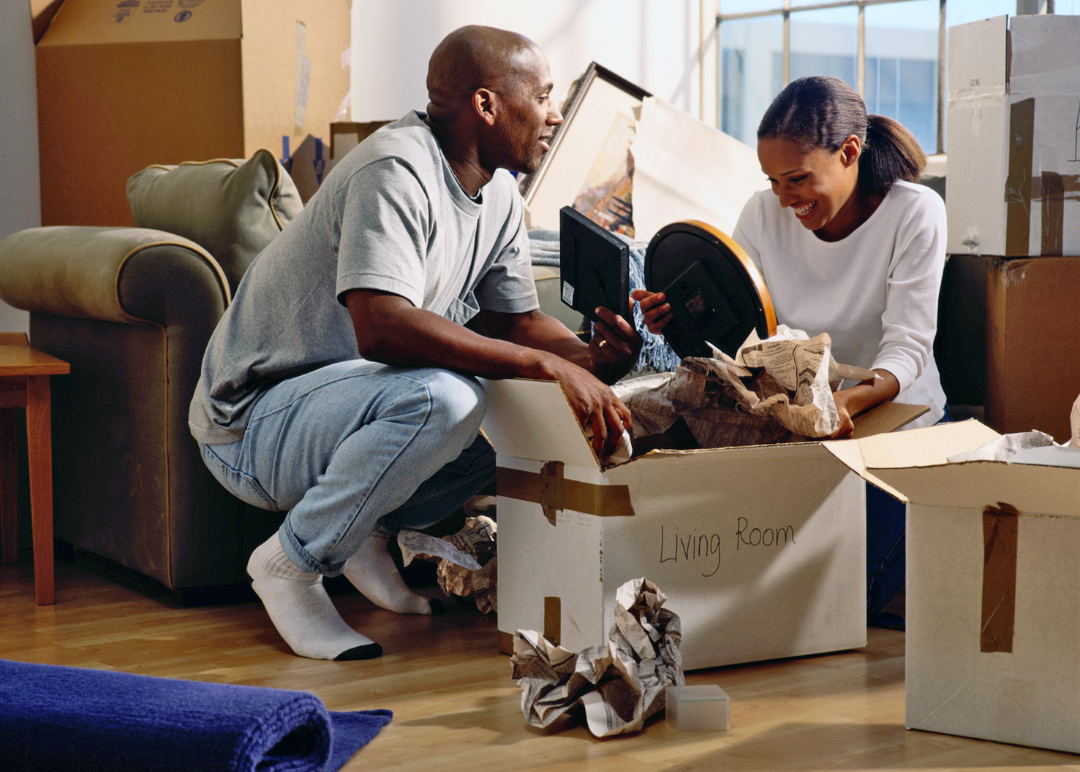
As much as you can, pack up items from the same rooms together. So kitchen items with kitchen items, living room items with living room items. That way, when you show up to your new place, unpacking will be a breeze.
4. Pack a suitcase for yourself.
Definitely use any luggage that you have as a means of packing and transportation. Beyond that though, be sure to pack a bag with all of your overnight essentials. That way, when you arrive at your new home, you won’t need to go digging through boxes for things like pajamas, a toothbrush, or any other items that you use on a daily basis.
5. Reserve a parking spot for your tow truck.
While this isn’t required, it’s generally recommended to reserve a parking spot for your tow truck if it will need to be parked on a city street. It’s a bit costly, but it will ensure that there’s a space for the truck (and that it won’t block the road and/or incur a ticket that you have to pay for.
6. Remain calm.
Throughout the moving process, some things will inevitably go wrong. Your couch might be too large to transport through the stairwell (been there!), a lamp might break, something could get scuffed. Prepare for a few mishaps and then breathe a sigh of relief when it’s all done. Now, on to unpacking and making your new place a home!
Until next time,
The BRIGS Team